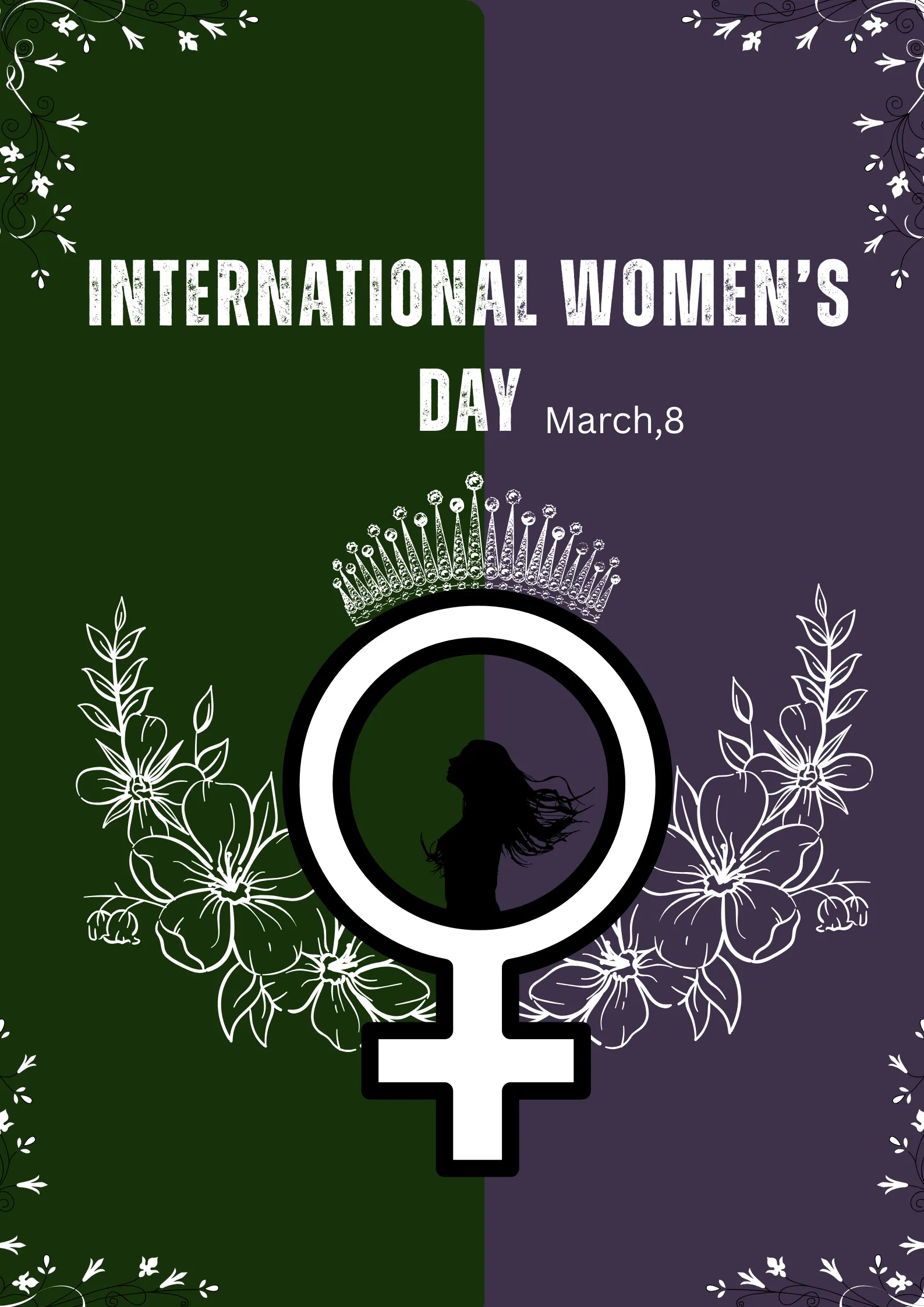
International Women’s Day (IWD) is celebrated annually on March 8 to honor women’s accomplishments and raise awareness about gender equality. It’s a day that celebrates women’s roles in families, workplaces, schools, and governments, and also highlights the work still needed to build a fair world for all genders.
| Date | 8 March |
| First Observed | 1911 (in Austria, Denmark, Germany, and Switzerland) |
| Declared By | United Nations (official recognition) |
| UN Recognition Year | 1975 |
| Type of Event | International Awareness and Advocacy Day |
| Observed By | Globally, UN member states, governments, schools, universities, workplaces, NGOs, communities, and individuals |
| Primary Focus | Gender equality, women’s rights, empowerment, leadership, education, safety, and economic participation |
| Purpose | To celebrate women’s achievements, raise awareness about gender inequality, promote women’s rights, and encourage action toward a fair and inclusive society |
| Holiday Status | Not a public Holiday |
International Women’s Day originated in the early 1900s, when women across Europe and North America fought for improved working conditions, equal pay, and the right to vote. The first National Women’s Day was celebrated in the United States in 1909. Activist Clara Zetkin then proposed a global day for women’s rights at a 1910 conference, and the first international celebration took place in 1911 in several European countries. Over the decades, more nations joined the observance, and in 1975, the United Nations officially recognized the day.
The date 8 March became meaningful after women workers in Russia protested for “Bread and Peace” in 1917 during World War I. Their strike contributed significantly to major political change and became a symbol of women’s collective strength and determination. Since then, the date has been internationally recognized as the official day for celebrating women.
Each year, the United Nations chooses a theme to focus attention on a particular message. Here are some:
2021: Women in leadership: Achieving an equal future in a COVID-19 world
2022: Gender equality today for a sustainable tomorrow
2023: DigitALL: Innovation and technology for gender equality
2024: Invest in Women: Accelerate Progress
2025: For ALL Women and Girls: Rights. Equality. Empowerment
This theme focuses on advancing rights, promoting equality, and fostering empowerment across all sectors.
International Women’s Day is both a celebration and a call to action. Here’s why it matters:
To Honor Women’s Achievements: Women have made significant contributions in every field, from science and education to business and politics. This day highlights those accomplishments.
To Promote Gender Equality: Although progress has been made, no country has achieved full gender equality yet. The day encourages continuous work toward fairness in rights, opportunities, and treatment.
To Highlight Key Issues: Issues like unequal pay, unpaid care work, and lack of leadership opportunities still exist. International Women’s Day brings these problems to the spotlight so they can be addressed meaningfully.
To Inspire Action: From individuals to governments, this day motivates people to take steps big and small that support women’s rights and equality.
Certain symbols are commonly used around this day:
Colors:
Purple — justice and dignity
Green — hope
White — purity
Venus Symbol: Represents women and female identity.
Flowers and Banners: Used in marches and celebrations.
These symbols help communicate the message of equality and strength across events worldwide.
Protecting women’s rights is not just fair, it’s essential for social progress. Here are strong facts showing why this matters:
As of early 2025/late 2024, the world's female population is around 4.09 to 4.1 billion, making up nearly half (about 49.7%) of the total global population. Ensuring their rights influences the lives of families, communities, and economies everywhere, not just for women themselves.
About 60% of chronically hungry people are women.
Women hold only about 21.4% of parliamentary seats globally.
Three out of ten women report physical or sexual violence by an intimate partner.
Women perform approximately 66% of the world’s work but earn only about 10% of the income and own only 1% of the property.
Girls and women are nearly twice as likely to be food insecure compared to men.
These facts show that women often face greater burdens and fewer opportunities, even today. Protecting women’s rights means building stronger societies for all.
The world has made important gains, but challenges remain:
Maternal mortality dropped significantly, with a nearly 40% decline in deaths related to childbirth over the last two decades.
Girls’ school attendance has improved in many regions.
More women serve in government and leadership roles than in the past, though progress is slow.
In education and health access, many countries are closer to parity.
Laws against violence and discrimination have been adopted in many nations.
These changes show that action works.
Despite progress:
About 9–10% of women and girls still live in extreme poverty.
Women spend 2.5 times more hours per day on unpaid domestic and care work than men.
Women hold only around 27% of national parliamentary seats globally.
Complete gender parity in many leadership roles will take decades at the current pace.
These statistics remind us that equality is not yet achieved and requires continuous effort.
The Constitution of Nepal (2015) is one of the most progressive in South Asia regarding gender rights. It guarantees:
Article 18 – Right to Equality
Prohibits discrimination based on gender
Ensures equal treatment under the law
Article 38 – Rights of Women
Equal lineage rights
Right to safe motherhood and reproductive health
Protection from violence and exploitation
Right to participate in all state bodies through proportional inclusion
Special opportunities in education, health, employment, and social security
Article 42 – Right to Social Justice
Prioritizes affirmative action for marginalized women
Article 84 & 86 – Political Representation
Mandates at least 33% representation of women in federal and provincial legislatures
These provisions form the backbone of Nepal’s legal commitment to gender equality.
International Women’s Day is more than a date on the calendar; it’s a global movement toward fairness, dignity, and opportunity for women everywhere. While progress has been made, facts show that inequality continues to affect the lives of millions. Celebrating International Women’s Day helps honor achievements, raise awareness about challenges, and motivate everyone to work together for a fairer, stronger world.
“Empowered women empower the world.”