
| Date | Occurs 2 to 4 times a year |
| Duration | 1 day |
| Observance | Sun God worship vrata |
| Celebrated in | Temples throughout Nepal and India |
| Observing Communities | Hindu devotees, sun worshippers, yoga practitioners |
| Type of Event | Religious observance |
| Purpose of Event | To honor Surya (Sun God) and seek health, vitality, and spiritual connection with solar energy |
| Holiday Status | No (Not a public holiday) |
| First Observed in | Ancient Hindu tradition |
Quick Fact: Ravisaptami Vrata combines "Ravi" (the sun, also meaning Sunday) with "Saptami" (the seventh lunar day). This vrata falls when a Sunday coincides with the seventh lunar day, a doubly auspicious occasion for sun worship in the Hindu tradition. The sun (Surya) is one of the principal deities in Vedic religion and this observance honors his life-giving power.
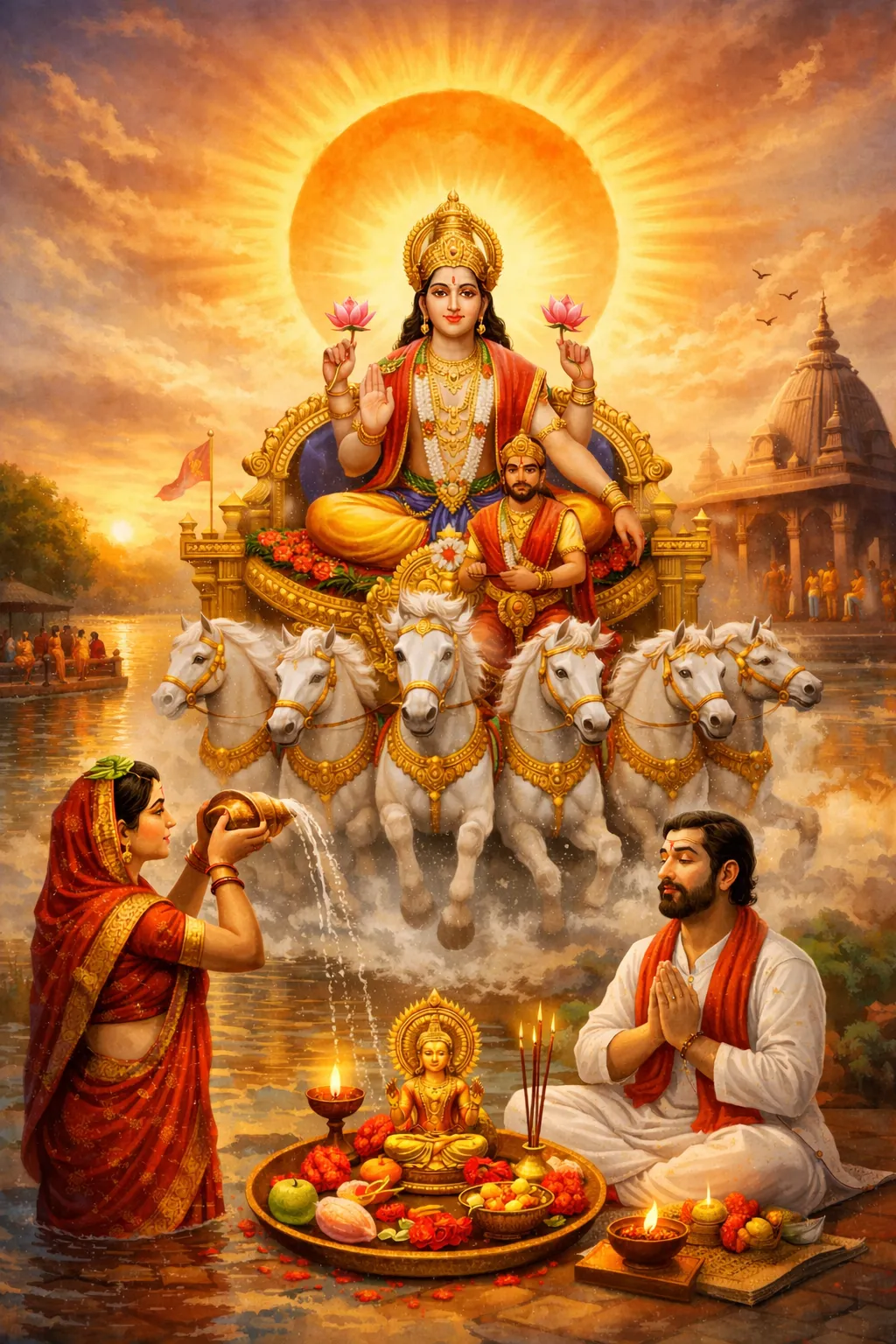
Ravisaptami Vrata is a sacred Hindu observance dedicated to Lord Surya (the Sun God), observed when the seventh lunar day (Saptami) coincides with Sunday (Ravivar). "Ravi" is one of the Sanskrit names for the sun, and this vrata honors the sun's life-giving, illuminating, and purifying energy. Solar worship is one of the most ancient dimensions of Vedic religious practice, reflecting the central importance of the sun in agricultural, seasonal, and spiritual life.
Sun worship (Surya puja) is among the oldest religious practices in Vedic tradition. Lord Surya is prominently featured in the Rig Veda, one of humanity's oldest religious texts, with many hymns dedicated to his glorious power. The Saptami (seventh day) is traditionally associated with the sun in Hindu astrology and the week-day system, making the conjunction of Sunday and Saptami particularly powerful for solar worship. Classical Hindu texts describe the observance of Ravisaptami as bringing health, longevity, and spiritual merit to devoted practitioners. The practice of Surya Namaskar (sun salutation), practiced by millions of yoga practitioners today, has its roots in this ancient tradition of solar worship.
This vrata is observed to:
Honor Surya (Sun God) and the solar energy that sustains all life on earth.
Achieve physical health, vitality, and robust energy through the sun's life-giving blessings.
Strengthen spiritual practice by connecting with the illuminating consciousness of the sun.
Connect with solar consciousness as a path to spiritual awakening and enlightenment.
Devotees observe this vrata through sun-centered practices:
Ritual bathing is performed at sunrise, ideally in sacred rivers or at temple water sources.
Surya Namaskar (sun salutation) yoga practice is performed facing the rising sun.
Temple visits and prayers are offered at sun temples and Surya shrines.
Light, simple food is consumed throughout the day in line with the vrata's spirit.
Meditation on solar energy and consciousness is practiced throughout the day.
Evening water offerings (Arghya) are made to the setting sun as a closing ritual.
This observance holds importance because:
It celebrates the life-giving solar principle upon which all biological existence depends.
Regular sun worship supports physical health, vitality, and overall well-being.
It emphasizes humanity's connection with nature and the cosmic forces that sustain life.
Solar worship has deep spiritual significance in yoga traditions and Vedic philosophy.
It is observed in traditional communities as a meaningful connection to Vedic heritage.
Ravisaptami Vrata invites devotees to pause and honor the most visible and life-sustaining of all cosmic forces, the sun. In a world increasingly disconnected from nature's rhythms, this ancient practice of solar worship offers a meaningful reconnection with the source of light, warmth, and life energy that the sun has provided since the beginning of time. The Vedic sages who composed hymns to Surya recognized what modern science confirms: without the sun, no life is possible.