
| Date | May 15 |
| Duration | 1 day |
| Observance | Religious bathing ritual completion |
| Celebrated in | Temples and sacred water bodies, Nepal |
| Observing Communities | Hindu devotees, temple-goers |
| Type of Event | Ritual observance |
| Purpose of Event | To conclude the sacred month-long bathing ritual of Baisakh and mark spiritual purification |
| Holiday Status | No (Not a public holiday) |
| First Observed in | Ancient Hindu tradition |
Quick Fact: Baisakh Snan Samapti marks the completion of the sacred Baisakh Snan (bathing ritual), a month-long purification practice observed by Hindu devotees during the auspicious Baisakh month. The conclusion ceremony formally closes the bathing season with prayers and offerings at temples and sacred rivers.
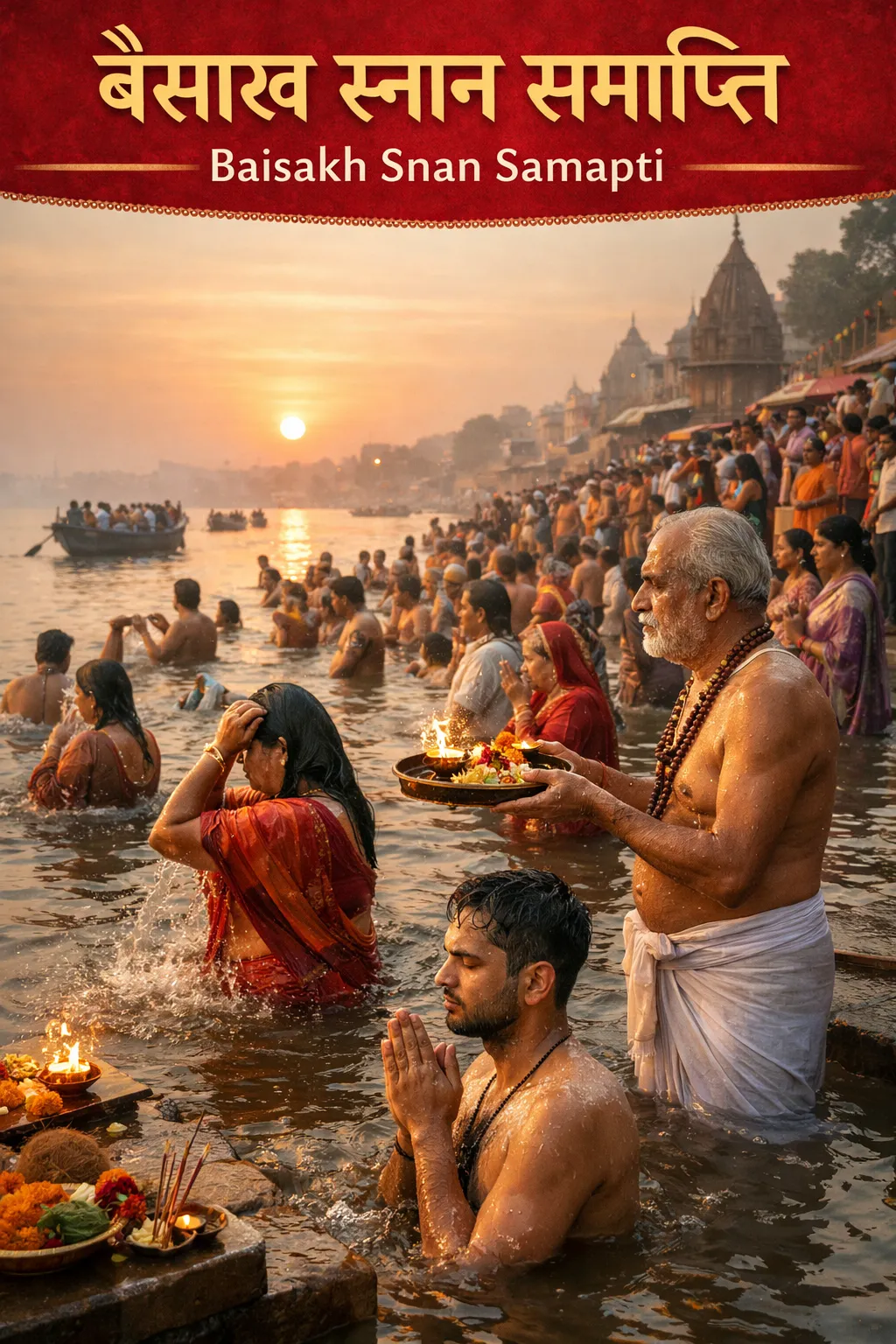
Baisakh Snan Samapti marks the joyful conclusion of the sacred Baisakh Snan, a month-long religious bathing practice observed by devout Hindus throughout the auspicious Baisakh month. The Baisakh month, being the first month of the Nepali calendar year, holds special sanctity in Hindu tradition, and ritual bathing during this period is believed to bring immense spiritual merit and purification.
The tradition of sacred bathing during the Baisakh month has its roots in ancient Hindu scripture and practice. The Baisakh month is considered especially holy as it marks the beginning of the Nepali New Year and coincides with many spiritually significant events including Buddha Purnima. Devotees who observe the Baisakh Snan wake before dawn each day to bathe in sacred rivers, ponds, or at temple water sources. This culminating day, Baisakh Snan Samapti, formally concludes the month-long practice with special prayers, offerings, and gratitude to the deities.
This observance is performed to:
Complete the sacred bathing ritual cycle initiated at the beginning of Baisakh month.
Finalize the spiritual purification of body, mind, and soul through the month-long practice.
Formally conclude the ceremonial bathing season with gratitude and devotional offerings.
Transition into the next phase of the religious calendar with renewed spiritual energy.
The concluding day is observed through special rituals:
A final ritual bath is taken in sacred waters, rivers, or at temple ponds at dawn.
Special completion prayers and offerings are made to deities for successful completion of the vow.
Blessed water is distributed to family members as a symbol of purification.
A formal closing ceremony is conducted at temples with priests and devotees.
Prasad (blessed food) is prepared and distributed among the community.
This observance is important because:
It culminates a month-long spiritual purification practice, bringing it to a meaningful close.
It holds deep significance in daily Hindu religious practice and the ritual calendar.
It marks a liturgical calendar transition between the new year's holy month and the next phase.
It is believed to cleanse accumulated karma and bestow merit upon faithful practitioners.
It is essential in maintaining the continuity of ritual calendar observances across generations.
Baisakh Snan Samapti is a spiritually meaningful conclusion to one of Hinduism's most disciplined monthly observances. The conclusion of the Baisakh Snan is a moment of gratitude, celebration, and spiritual renewal for those who have undertaken this sacred practice. By completing this ancient ritual, devotees affirm their commitment to spiritual discipline and their connection with the sacred traditions of Nepali Hindu life.