
| Date | Jyeshtha Shukla Paksha Dashami (May 25) |
| Duration | Single day |
| Observance | Religious observance honoring the sacred Ganges River |
| Celebrated in | Across Hindu communities, especially along river regions in Nepal and India |
| Observing Communities | Hindus, river devotees, priests, and communities near sacred rivers |
| Type of Event | Vrata honoring the sacred Ganges River |
| Purpose of Event | Honor the sacred descent of the Ganges to Earth, perform ritual bathing for spiritual purification, and remember ancestral liberation through divine waters. |
| Holiday Status | Not an official public holiday |
| First Observed in | Ancient period (mentioned in Hindu scriptures including Agni Purana) |
Quick Fact: Gangadasahara commemorates the legendary descent of the celestial Ganges River to Earth, brought down by the great king Bhagiratha through years of intense penance, specifically to purify the ashes of 60,000 royal ancestors who had been cursed by the sage Kapila. This event is one of the most profound acts of ancestral devotion in Hindu mythology, making Ganga Dussehra a festival of both purification and ancestral honor.
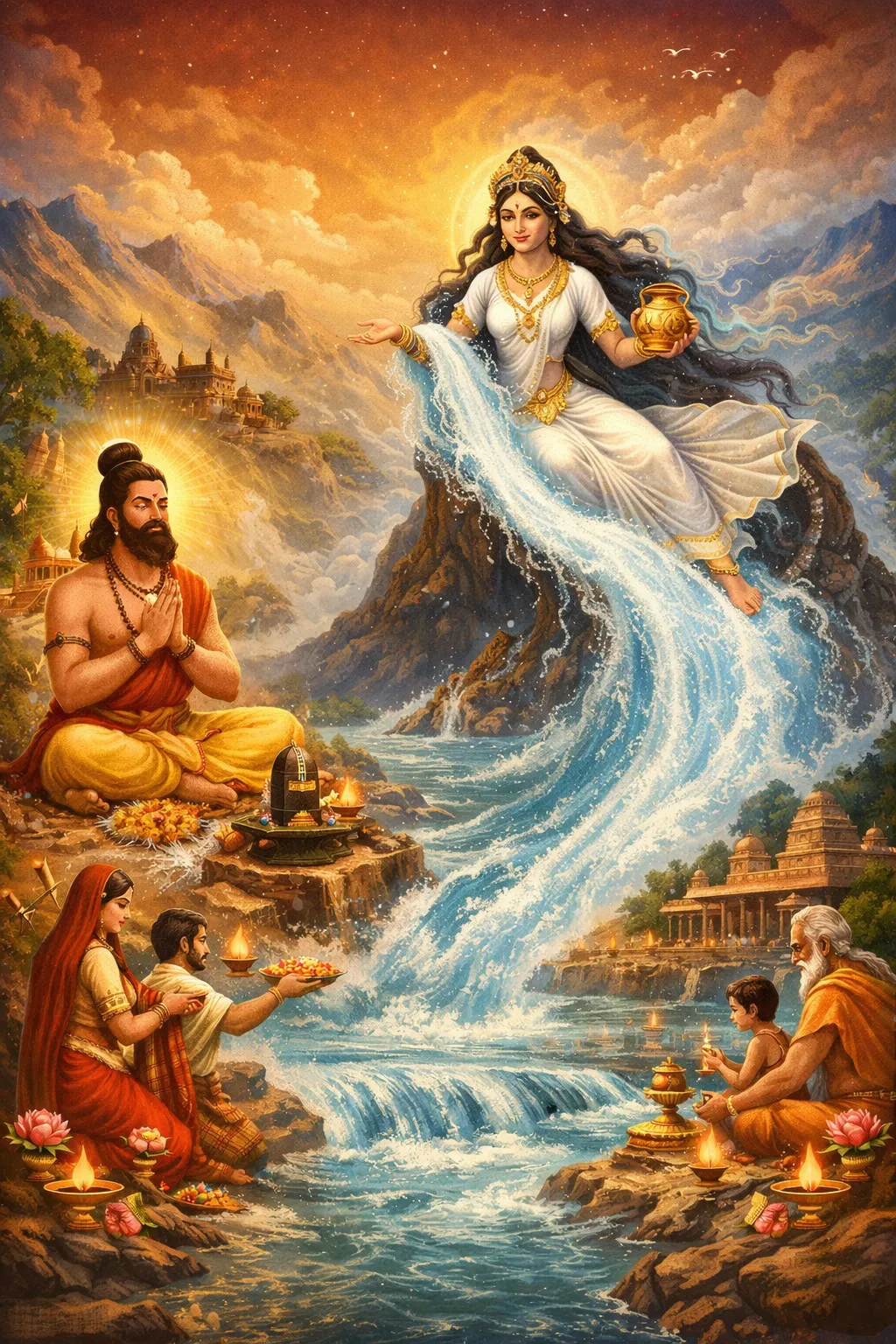
Gangadasahara Vrata, commonly known as Ganga Dussehra, is observed on the tenth day of the bright lunar fortnight (Shukla Paksha Dashami) of the Jyeshtha month. This sacred day commemorates one of Hinduism's most profound mythological events: the celestial descent of the Ganges River to Earth. Bathing in sacred rivers on this day is considered extraordinarily purifying, capable of washing away the accumulated sins of ten lifetimes, making it one of the most spiritually potent bathing occasions in the Hindu calendar.
Ganga Dussehra (Gangadasahara) celebrates the descent of the Ganges River to Earth on the tenth day of Jyeshtha month's bright fortnight. According to Hindu mythology, the celestial Ganges was brought to Earth by the great king Bhagiratha through years of intense penance and spiritual austerity. His mission was singular and sacred: to purify the ashes of 60,000 royal ancestors, the sons of King Sagara, who had been reduced to ash by the furious gaze of the sage Kapila after they disturbed his meditation. Only the pure waters of the Ganges could liberate these ancestral souls. Bhagiratha's penance moved Lord Brahma to release the Ganges from the heavens, and Lord Shiva caught her force in his matted locks to prevent her from destroying the Earth with her force. This event is considered one of Hinduism's most significant mythological occurrences, reflecting the power of devotion, filial duty, and divine compassion.
This vrata is observed to:
Honor the sacred descent of the celestial River Ganges to Earth through King Bhagiratha's devotion.
Celebrate King Bhagiratha's extraordinary spiritual achievement and selfless ancestral sacrifice.
Attain spiritual purification through ritual bathing in sacred rivers and waters.
Remember and honor ancestral liberation through the divine, purifying waters of the Ganges.
Devotees observe Gangadasahara through sacred water rituals:
Ritual bathing in the Ganges River or other sacred rivers and water bodies at sunrise for maximum spiritual benefit.
Offering of flowers, diyas (lamps), incense, and prayers to River Ganges in her divine feminine form.
Fasting or partial fasting throughout the day with sattvic foods permitted for modified observers.
Visiting temples dedicated to River Ganges and performing elaborate water-based puja ceremonies.
Reading and recitation of the mythological story of Bhagiratha's penance and Ganga's descent.
Gangadasahara holds deep significance in Hindu spiritual life:
It commemorates one of the most significant mythological events in Hindu tradition, the landing of the sacred Ganges on Earth.
River Ganges is revered as the embodiment of divine purification, and bathing on this day is exceptionally merit-giving.
Ritual bathing on Ganga Dussehra is believed to absolve accumulated karmic sins of ten lifetimes.
It honors the profound Hindu value of ancestral reverence and the lengths to which devotion can achieve liberation.
It maintains the sacred, living relationship between Hindu communities and the divine rivers of the subcontinent.
Gangadasahara Vrata is a celebration of water as divinity, a reminder that for Hindus, rivers are not merely geographical features but living goddesses carrying the grace of heaven to Earth. On this day, when Bhagiratha's devotion is remembered and Ganga's descent is honored, every sacred river becomes a portal to liberation. To bathe in these waters with faith and reverence is to receive the blessing that was won by one man's centuries of prayer.