
Quick Reference Card
| Date | Jyeshtha Amavasya / New Moon (May 16; regional variation: June 28) |
| Duration | Single day |
| Observance | Religious fast/vow for married women |
| Celebrated in | Across Hindu communities in Nepal and India |
| Observing Communities | Married Hindu women |
| Type of Event | Matrimonial devotion vrat honoring Savitri's love |
| Purpose of Event | Ensure husband's long life, health, and well-being through fasting, prayer, and worship of the sacred Banyan tree (Vat/Bata). |
| Holiday Status | Not an official public holiday |
| First Observed in | Ancient period (documented in the Mahabharata) |
Quick Fact: Savitri's story from the Mahabharata is one of the most celebrated examples of devotion and determination in Hindu literature. When Yama, the god of death, came to take her husband Satyavan's soul, Savitri refused to accept the loss and followed Yama himself. Through her wisdom, she cleverly framed her boons until Yama had no choice but to restore Satyavan to life, making her the archetype of the devoted, courageous wife in Hindu tradition.
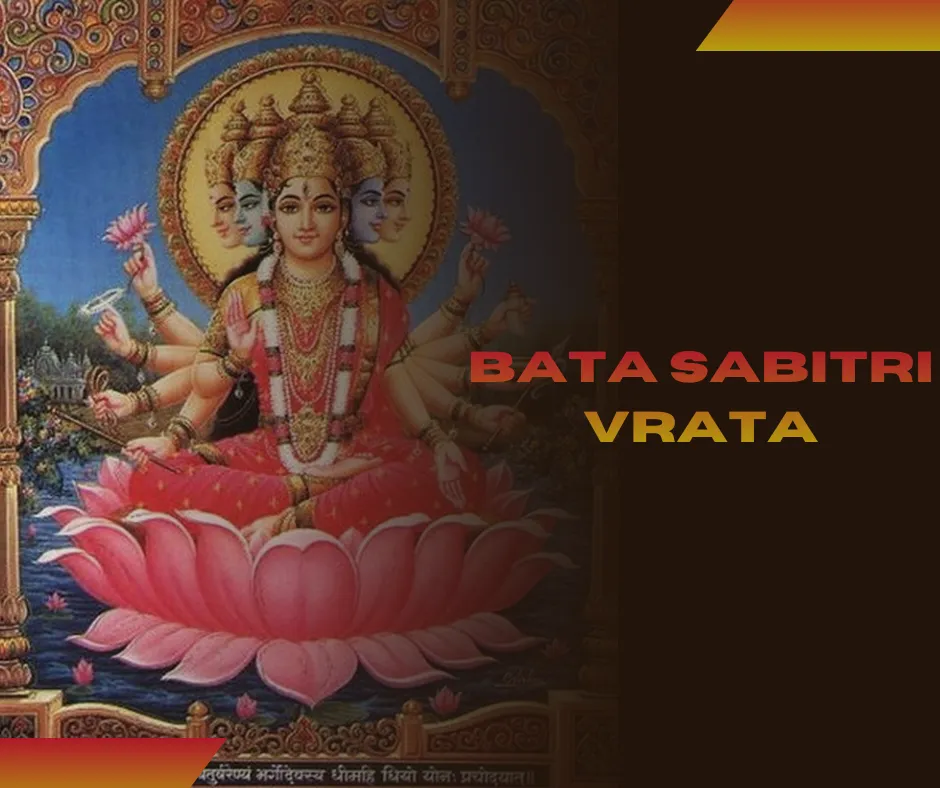
Bata Sabitri Vrata (also known as Vat Savitri Vrat) is one of the most beloved fasting observances in Hindu tradition, performed exclusively by married women for the long life, health, and prosperity of their husbands. The festival takes its name from two central symbols: Bata (the sacred Banyan tree, known as Vat in Sanskrit) and Sabitri (Savitri, the devoted wife whose extraordinary love defeated death itself). Rooted in the epic story from the Mahabharata, this vrat celebrates not just marital devotion but also feminine courage, wisdom, and the transformative power of love.
Bata Sabitri Vrata is rooted in the legendary story of Savitri from the Mahabharata. Princess Savitri chose to marry Satyavan, the son of a blind forest king, despite an oracle's prophecy that Satyavan would die within one year of their marriage. When the fateful day arrived and Yama, the god of death, came to claim Satyavan's soul, Savitri followed him into the realm of death. Through a series of cleverly framed boons, she asked Yama to restore her husband's sight, restore his father's kingdom, and grant children to herself, boons Yama could not refuse. When Yama realized the last boon could only be fulfilled if Satyavan were alive, he had no choice but to restore him. Savitri thus became the embodiment of selfless devotion, intelligence, and the ultimate triumph of love over death. The Banyan tree under which Satyavan rested when he died has become the central ritual symbol of this vrat.
This vrata is observed by married women to:
Ensure their husband's long life, robust health, and sustained prosperity through sincere fasting and prayer.
Strengthen the bonds of marriage through a shared act of devotional practice and spiritual commitment.
Honor the ideal of Savitri's unwavering devotion, courage, and wisdom in the face of the ultimate challenge.
Seek divine blessings for the complete well-being and happiness of the entire family.
Married women observe this vrat through these traditional practices:
Married women observe a full-day fast, either Nirjala (completely waterless) or fruit-based, from sunrise.
The central ritual is circumambulating (parikrama) around a Banyan tree while winding a red thread around its trunk.
Women water and worship the Banyan tree as a living symbol of strength, longevity, and divine protection.
The sacred story of Savitri and Satyavan (Savitri Katha) is recited or listened to by all participating women.
The fast is broken with family members after all rituals are completed, celebrating the day's spiritual work together.
This vrat holds deep cultural and spiritual significance:
It celebrates women's devotion, intelligence, and agency in Hindu tradition through Savitri's extraordinary example.
It symbolizes the depth of marital commitment and mutual responsibility between husband and wife.
The Banyan tree represents eternal strength, shelter, and divine protection, its evergreen canopy symbolizing undying love.
It is an ancient practice spanning thousands of years, connecting modern women to a lineage of devoted practitioners.
It is observed across diverse Hindu communities with rich regional variations in ritual and food traditions.
Bata Sabitri Vrata is far more than a fast for a husband's long life, it is a celebration of a woman's capacity for love that knows no boundaries, not even the boundary between life and death. Savitri did not merely pray for her husband; she fought for him, outwitted the god of death, and brought him home. In threading the Banyan tree and reciting her story, women across Nepal and India affirm this same ferocity of devotion, and renew the sacred bond of love at the heart of family life.