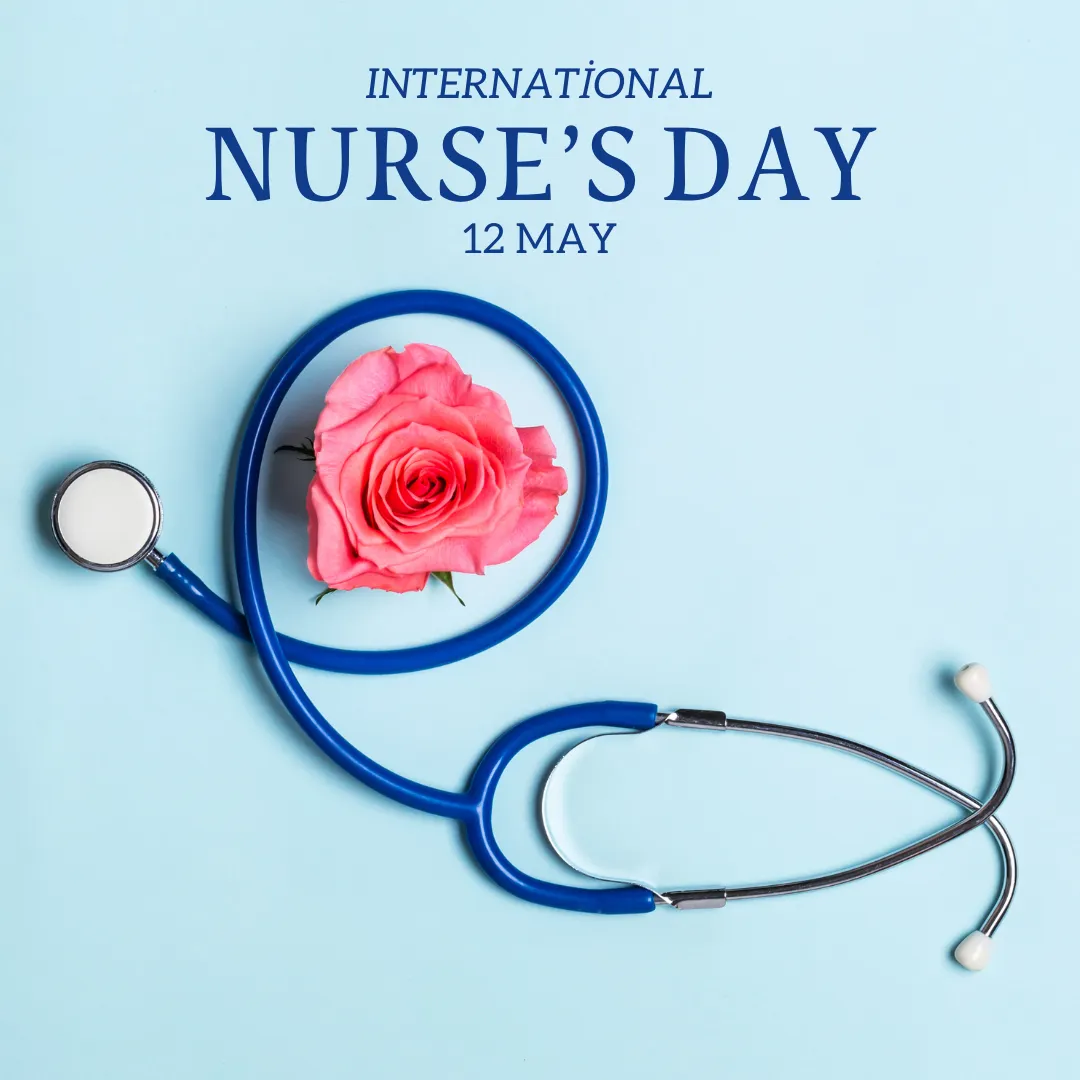
International Nurses Day falls on 12 May every year. The date never moves, because it is fixed to a birthday. Florence Nightingale was born on 12 May 1820, and the profession she reorganised chose her birth date as its own.
Nurses are the largest single group of health workers on the planet. There are close to 30 million of them, which is more than half of the entire global health workforce. In most countries, and certainly in Nepal, a nurse is the first health worker a patient meets and the last one they see before going home. Doctors visit. Nurses stay.
This page covers the international observance in full, and it also covers the part that most international pages leave out: Nepal has its own separate nursing day, and the two are often confused.
|
Detail |
Information |
|
Date |
12 May, every year (fixed) |
|
Marks |
The birth anniversary of Florence Nightingale, born 12 May 1820 |
|
Led By |
International Council of Nurses (ICN), Geneva |
|
First Observed by ICN |
1965 |
|
Date Formally Fixed |
January 1974 |
|
2026 Theme |
Our Nurses. Our Future. Empowered Nurses Save Lives. |
|
Scope |
Observed worldwide; not a public holiday in Nepal |
|
Related Week |
National Nurses Week, 6 to 12 May in several countries |
|
Nepal's Own Nursing Day |
Nepal Nursing Day on Magh 15, which is separate from 12 May |
|
Global Nursing Workforce |
About 29.8 million nurses as of 2023 |
The date exists for one reason. Florence Nightingale was born on 12 May 1820, in Florence, Italy, which is where her name came from. She died on 13 August 1910.
Nursing existed long before her. What did not exist before her was nursing as a trained, salaried, regulated profession with its own schools, its own standards and its own body of written knowledge. That is the thing she built, and that is why the profession dated itself to her birthday rather than to any treaty, charter or founding meeting.
Most short articles reduce her to a woman with a lamp. The real record is far more interesting, and it explains why nurses today keep claiming her.
Britain entered the Crimean War in 1854. Reports came back that wounded soldiers were dying in the British military hospital at Scutari, near Constantinople, in conditions worse than the battlefield. Nightingale was sent out with a party of 38 volunteer nurses.
What she found was not a shortage of medicine. It was sewage under the floors, no clean water, no laundry, no ventilation, no supplies and no records. Soldiers were dying of typhus, cholera, dysentery and infection, not of their wounds.
This is the part that gets left out. Nightingale collected mortality data systematically and analysed it. She showed that the overwhelming majority of deaths at Scutari came from preventable disease caused by the state of the hospital, not from combat injuries.
She then presented that data in a form that non-specialists could not argue with. Her polar area diagram, often called the coxcomb or the rose diagram, showed month by month how much of the death toll was preventable. It is one of the earliest examples of data visualisation used to force a policy change, and it worked. Sanitary reform of army hospitals followed.
In 1858 she became the first woman elected to the Royal Statistical Society.
The nickname the Lady with the Lamp came from her night rounds through the wards at Scutari, carrying a lamp. It became the enduring image of the profession, and it is why lamp lighting ceremonies still open nursing graduations and Nurses Day programmes around the world, including in Nepal.
She published Notes on Nursing: What It Is, and What It Is Not in 1859. It was written for ordinary households, not only for professionals, and it argued that ventilation, light, warmth, cleanliness, diet and quiet were not comforts but treatments. Much of it still reads as current.
The Nightingale Training School opened at St Thomas' Hospital in London in 1860. It was the first secular nursing school in the world, funded by a public subscription raised in her name. Its graduates went on to set up training schools across Britain and abroad, which is how the model spread.
She was awarded the Order of Merit in 1907, the first woman to receive it.
One correction worth making
The Nightingale Pledge, still recited at nursing ceremonies, was not written by Florence Nightingale. It was composed in 1893 by a committee led by Lystra Gretter in Detroit and named in her honour. Many pages get this wrong.
The observance did not arrive fully formed. It took about twenty years.
Dorothy Sutherland, an official at the United States Department of Health, Education and Welfare, proposed a national day to honour nurses and asked President Dwight D. Eisenhower to proclaim it. He did not.
The International Council of Nurses began marking International Nurses Day. At this stage the date was not fixed, and the observance was largely internal to the profession.
ICN formally fixed 12 May as the date, tying it permanently to Florence Nightingale's birthday, and began issuing an annual theme and a kit of materials to member associations. This is the year the day became what it is today.
A presidential proclamation marked National Nurses Week. In 1982, the United States Congress designated 6 May as National Recognition Day for Nurses, which later expanded into National Nurses Week from 6 to 12 May, ending on Nightingale's birthday. In 2003, the American Nurses Association extended it further into Nurses Month across the whole of May.
The International Council of Nurses was founded in 1899 and is one of the oldest international professional organisations in the world. It is based in Geneva and is a federation of national nurses associations from more than 130 countries. The Nursing Association of Nepal is one of its members.
Every year ICN sets the theme for International Nurses Day and publishes an evidence-based report to go with it. The theme is not decoration. It is the campaigning line that national associations use for the whole year when they lobby their own governments.
| Year | International Nurses Day Theme |
|---|---|
| 2020 | Nursing the World to Health - marking the bicentenary of Florence Nightingale's birth and the WHO Year of the Nurse and the Midwife |
| 2021 | A Voice to Lead: A Vision for Future Healthcare |
| 2022 | Nurses: A Voice to Lead, Invest in Nursing and Respect Rights to Secure Global Health |
| 2023 | Our Nurses. Our Future. |
| 2024 | Our Nurses. Our Future. The Economic Power of Care |
| 2025 | Our Nurses. Our Future. Caring for Nurses Strengthens Economies |
| 2026 | Our Nurses. Our Future. Empowered Nurses Save Lives |
The direction of travel across those years is clear. The campaign has moved from asking the public to appreciate nurses towards asking governments to fund, protect and empower them, and towards arguing that nursing is an economic investment rather than a cost line.
The WHO State of the World's Nursing 2025 report, released on 12 May 2025 with data from 194 countries, gives the clearest current picture.
The global nursing workforce grew from 27.9 million in 2018 to 29.8 million in 2023
Nurses make up more than half of the entire global health workforce
The global shortage fell from 6.2 million in 2020 to 5.8 million in 2023, and is projected to fall to 4.1 million by 2030
The workforce is projected to reach about 36 million by 2030
About 78 percent of the world's nurses work in countries that hold only 49 percent of the world's population
By 2030, close to 70 percent of the remaining shortage is expected to sit in Africa and the Eastern Mediterranean region
The headline improvement hides the real problem. The shortage is shrinking on paper because wealthy countries are recruiting faster, not because low-income countries are training and keeping more nurses. This is why the migration question has become the central argument of International Nurses Day, and it is the argument that matters most to Nepal.
Nepal has two nursing days, not one
This trips up a lot of people, so it is worth stating plainly.
12 May is International Nurses Day. It is the global observance tied to Florence Nightingale's birthday, run by ICN.
Magh 15 is Nepal Nursing Day. It marks the founding of the Nursing Association of Nepal on Magh 15, 2018 BS, which is 1962. Nepal marks its own national nursing day on the anniversary of its own professional body, not on a foreign birthday.
Both are observed in Nepal. Neither is a public holiday. Hospitals, nursing campuses and health offices usually hold programmes on both.
Nepal's formal nursing history is recent. Before it existed, a handful of Nepali women had gone abroad for training. Bidhyawati Kansakar, Radha Devi Malakar, Dharma Devi Kansakar and Bishnu Devi Rai trained as health assistants in Allahabad, India, during the Rana period, and are remembered as the first generation.
Formal training inside the country began in 2013 BS, which is 1956. The first nursing school in Nepal opened at Surendra Bhawan in Sanepa, Lalitpur, with support from the World Health Organization and international assistance. It later moved to Chhetrapati and then into the Bir Hospital compound at Mahaboudha.
Bir Hospital itself, established in 1946 BS, which is 1889, is the oldest hospital in the country and is the institution most closely tied to the early years of Nepali nursing.
The Nursing Association of Nepal was founded on Magh 15, 2018 BS. It was first registered as the Trained Nurses Association of Nepal and became a member of the International Council of Nurses in 1969. It remains the only national professional organisation for nurses in Nepal.
Nepal now trains nurses at several levels, and the ladder matters when reading job advertisements or planning a career.
PCL Nursing, the three-year proficiency certificate level programme, the traditional entry route
BSc Nursing, a four-year degree taken after science in higher secondary
BN, Bachelor in Nursing, a two-year degree for those who already hold PCL Nursing and have working experience
MSc Nursing and MN at master's level, with specialisations including adult nursing, child health, community health, midwifery, psychiatric nursing and nursing education
Doctoral study, still limited inside Nepal, with most PhDs earned abroad
The Nepal Nursing Council is the regulator. It registers nurses, sets the licensing examination and maintains the register. Registration with the council is what makes a nurse legally able to practise in Nepal.
Migration. Nepal trains a large number of nurses and loses a significant share of them to the United Kingdom, Australia, the Gulf states, Japan and elsewhere. The reasons repeat every year in the same order: pay, contract security, staffing ratios, career progression and the treatment of junior staff.
Domestic pay levels for nurses in private hospitals in particular have been a running dispute, with minimum salary rules for nurses repeatedly announced and unevenly enforced. UK NHS band five salaries convert to many times a typical starting salary in a Nepali private hospital, and the NHS has run tens of thousands of nursing vacancies for years. Nurses trained in Nepal who want to register in the United Kingdom must pass an English language test, with IELTS commonly requiring an overall 7.0 and no band below 6.5, and then complete the Nursing and Midwifery Council registration process.
The result is that on 12 May in Nepal, the speeches are less about lamps and more about retention, staffing ratios, night duty allowance, safety from workplace violence and contract terms. That is the honest version of this day here.
Lamp lighting ceremonies, echoing Nightingale's night rounds
Recitation of the Nightingale Pledge, especially by graduating students
Rallies and marches by nursing staff, often in uniform with caps
Cake cutting, felicitation of long-serving nurses and awards for outstanding staff
Free health camps, blood donation drives and screening camps run by nursing staff
Continuing education sessions and clinical skill workshops
Capping and pinning ceremonies for new students
Speech, essay and poster competitions
Cultural programmes and drama on health themes
Alumni interaction sessions
The Nursing Association of Nepal and its branches hold central and district programmes
Position papers and press statements on pay, safety and staffing
Meetings with the Ministry of Health and Population
Hospitals put out public thank you messages and social media posts
Employers give small gifts, meal vouchers or bonus payments
Media run interviews with senior nurses and features on working conditions
Nurse-to-patient ratios in public hospitals in low- and middle-income countries, including Nepal, are far outside the levels considered safe in high-income systems. High ratios are directly linked in the research literature to higher patient mortality and higher staff burnout.
Nursing remains underpaid relative to responsibility in most of the world. In Nepal, minimum pay rules for nurses in private institutions have been announced repeatedly, and enforcement has been uneven.
Countries that train nurses at public cost lose them to countries that did not pay for their training. The WHO health workforce support and safeguards list exists to slow active recruitment from the countries least able to lose staff.
Assaults on health workers by patients' relatives are a recurring problem in South Asian hospitals, and nurses are the most exposed group because they are the ones on the ward.
Nursing worldwide is heavily female, and the profession's pay and status problems cannot be separated from that fact. ICN campaigns have made this point explicitly.
Burnout, compassion fatigue and post-traumatic stress rose sharply after the COVID-19 pandemic period and have not returned to earlier levels.
Short and formal
Happy International Nurses Day. Thank you for the care you give when no one is watching.
For a colleague
You do the work that keeps every other part of the hospital standing. Happy Nurses Day.
For a nursing student
Every senior nurse you admire started exactly where you are. Happy International Nurses Day.
In Nepali
अन्तर्राष्ट्रिय नर्स दिवसको हार्दिक शुभकामना।
सेवा, करुणा र समर्पणको प्रतीक सम्पूर्ण नर्स दिदीबहिनी तथा दाजुभाइहरूलाई नर्स दिवसको शुभकामना।
When is International Nurses Day?
12 May, every year. The date is fixed and does not move.
Why is International Nurses Day celebrated on 12 May?
Because Florence Nightingale, the founder of modern professional nursing, was born on 12 May 1820. The International Council of Nurses fixed the date in January 1974.
What is the theme of International Nurses Day 2026?
Our Nurses. Our Future. Empowered Nurses Save Lives. The International Council of Nurses set it to push for safe and fair working environments and for nurses to be allowed to practise, influence and lead to their full capacity.
Who organises International Nurses Day?
The International Council of Nurses, based in Geneva, was founded in 1899. It publishes the annual theme, an evidence-based report and a resource kit that national nursing associations use.
Is International Nurses Day a public holiday in Nepal?
No. It is an observance. Hospitals, campuses and associations hold programmes, but offices, banks and schools remain open.
Is Nepal Nursing Day the same as International Nurses Day?
No. International Nurses Day is 12 May. Nepal Nursing Day is Magh 15, marking the founding of the Nursing Association of Nepal on Magh 15, 2018 BS. Nepal observes both.
Did Florence Nightingale write the Nightingale Pledge?
No. The pledge was written in 1893 by a committee led by Lystra Gretter in Detroit and named in her honour. She had no part in writing it.
Why is Florence Nightingale called the Lady with the Lamp?
Because she made rounds through the wards at the Scutari military hospital at night carrying a lamp during the Crimean War. The image became the profession's symbol and is why lamp lighting ceremonies are still held.
How many nurses are there in the world?
About 29.8 million as of 2023, up from 27.9 million in 2018, according to the WHO State of the World's Nursing 2025 report. Nurses make up more than half of the global health workforce.
Is there a global nursing shortage?
Yes. The shortage was 5.8 million in 2023, down from 6.2 million in 2020, and is projected to fall to 4.1 million by 2030. The improvement is uneven, and close to 70 percent of the remaining shortage is expected to sit in Africa and the Eastern Mediterranean.
When did nursing education start in Nepal?
Formal training inside Nepal began in 2013 BS, which is 1956, at the first nursing school at Surendra Bhawan in Sanepa, Lalitpur, supported by the World Health Organization. The school later moved to Chhetrapati and then into the Bir Hospital compound.
Which body regulates nurses in Nepal?
The Nepal Nursing Council. It registers nurses, runs the licensing examination, and maintains the register. The Nursing Association of Nepal is the professional association, not the regulator, and the two are different things.
What is the difference between International Nurses Day and International Day of the Midwife?
International Day of the Midwife falls on 5 May and is led by the International Confederation of Midwives. International Nurses Day falls on 12 May and is led by the International Council of Nurses. They are separate professions with separate global bodies, though the two overlap in many countries.
How can I mark the day if I am not a nurse?
Say it directly to a nurse you know rather than only posting about it, support campaigns on staffing and pay, donate to a nursing scholarship fund, and if you work in health administration, use the day to look honestly at your own ward ratios.