
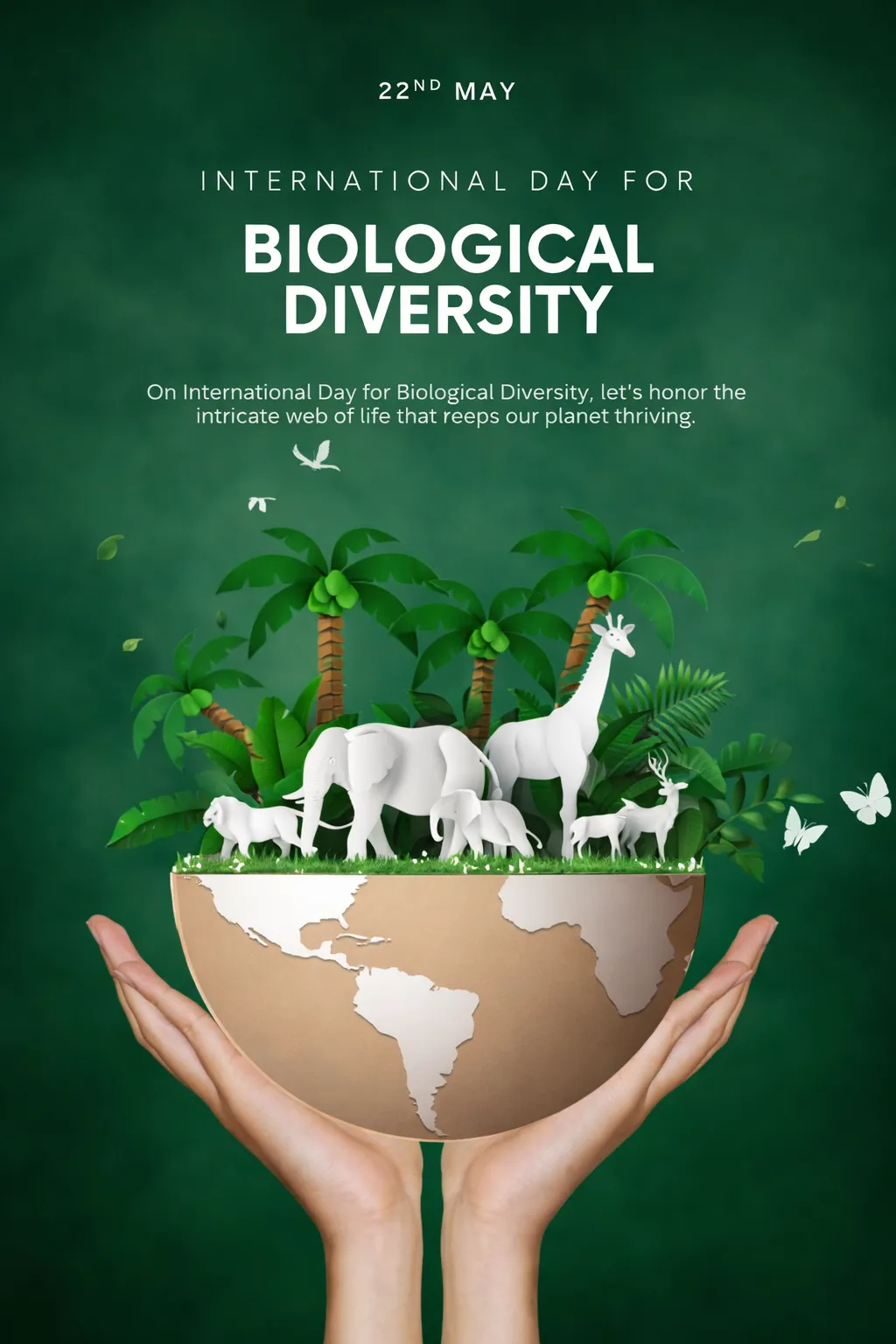
The International Day for Biological Diversity is observed every year on 22 May to raise global awareness about biodiversity conservation and sustainable development. This United Nations observance highlights the importance of protecting ecosystems, species, and genetic diversity for present and future generations.
Biodiversity refers to the variety of life on Earth. It includes plants, animals, microorganisms, and the ecosystems they form. Healthy biodiversity supports food security, clean water, climate stability, medicine, and livelihoods. However, biodiversity loss is happening at an alarming rate due to human activities such as deforestation, pollution, overfishing, and climate change.
The day commemorates the adoption of the Convention on Biological Diversity in 1992, a landmark global agreement aimed at conserving biological diversity and ensuring its sustainable use.
| Item | Details |
| Observed on | 22 May every year |
| Established by | United Nations General Assembly |
| First officially observed | 2001 on 22 May |
| Originally celebrated on | 29 December |
| Related treaty | Convention on Biological Diversity |
| Main focus | Biodiversity conservation and sustainable use |
| Linked to | Sustainable Development Goals |
| Holiday status | Not a public holiday |
Biodiversity means the variety of life on Earth. The term combines “biological” and “diversity,” and it refers to all living organisms, including plants, animals, fungi, and microorganisms, as well as the ecosystems they form.
In simple terms, biodiversity is the natural richness of life in forests, oceans, rivers, mountains, and even cities. It includes three main levels:
Genetic diversity: The variation of genes within a species. This helps species adapt to environmental changes and resist diseases.
Species diversity: The variety of different species living in a particular area or on the planet.
Ecosystem diversity: The range of ecosystems includes forests, coral reefs, wetlands, grasslands, and deserts.
All three levels are connected. When one level is damaged, it affects the balance of the others. Protecting biodiversity means protecting the natural systems that support life on Earth.
Biodiversity is essential for life on Earth. It supports both nature and human societies.
Here is why it matters:
Provides food such as crops, fish, fruits, and vegetables
Supplies medicines derived from plants and animals
Maintains clean air and water
Supports pollination and soil fertility
Protects against floods and climate impacts
Supports cultural traditions and tourism
According to global scientific assessments, around one million species are at risk of extinction. Habitat destruction and climate change are among the biggest threats. Protecting biodiversity also supports the UN Sustainable Development Goals, especially those related to climate action, life below water, and life on land.
In the late twentieth century, scientists and governments recognized that biodiversity was declining rapidly. This led to global discussions on conservation and sustainable development.
In 1992, world leaders met at the Earth Summit in Rio de Janeiro. During this summit, the Convention on Biological Diversity was opened for signature. The agreement aimed to:
Conserve biological diversity
Promote sustainable use of its components
Ensure fair sharing of benefits from genetic resources
The treaty entered into force on 29 December 1993.
Initially, the International Day for Biological Diversity was celebrated on 29 December, the date the Convention entered into force. However, in 2000, the United Nations General Assembly changed the observance date to 22 May to mark the adoption of the Convention text in 1992. The new date also made it easier for schools and institutions to participate.
The International Day for Biological Diversity is supported by several UN bodies.
The United Nations promotes global cooperation on biodiversity protection. Through the Convention on Biological Diversity, countries meet regularly to review progress and set new targets.
The Secretariat of the Convention coordinates annual campaigns and theme announcements.
UNESCO plays an important role in linking biodiversity with education, science, and culture. Through World Heritage Sites and Biosphere Reserves, UNESCO promotes conservation of unique ecosystems and sustainable development practices.
Each year, a specific theme is announced to focus global attention on priority issues. Here are some recent official themes:
| Year | Theme |
| 2025 | Harmony with nature and sustainable development |
| 2024 | Be part of the Plan |
| 2023 | From Agreement to Action: Build Back Biodiversity |
| 2022 | Building a Shared Future for All Life |
| 2021 | We are part of the solution |
| 2020 | Our solutions are in nature |
| 2019 | Our Biodiversity, Our Food, Our Health |
These themes reflect growing concern about biodiversity loss and the need for urgent global action.
Here are some key facts that show the urgency of biodiversity conservation:
Around 75 percent of land environments have been significantly altered by human activity.
More than 66 percent of marine areas are affected by human pressures.
Forest loss continues in many parts of the world.
Biodiversity loss can increase the risk of pandemics.
Nature-based solutions can help fight climate change.
These facts highlight the need for stronger policies and public awareness.
The International Day for Biological Diversity is marked in many ways across the world.
Common activities include:
Educational programs in schools and universities
Tree planting campaigns
Public seminars and workshops
Social media awareness campaigns
Government policy announcements
Many environmental organizations use this day to promote conservation efforts and encourage community participation.
The International Day for Biological Diversity is more than an annual observance. It is a reminder that life on Earth depends on healthy ecosystems. Biodiversity supports food, health, culture, and economic development. As biodiversity continues to decline, global cooperation and individual action are both essential. Protecting nature today ensures a safer and more sustainable future for generations to come.