Bhotojatra
Quick Reference Card
| Date | Jestha (May-June), climax of Rato Machindranath Jatra |
| Duration | One-day event (climax of month-long Rath Yatra) |
| Observance | Regional (Kathmandu Valley) |
| Celebrated in | Lalitpur (Patan), Kathmandu Valley, Nepal |
| Observing Communities | Newars, Hindus, Buddhists, local residents and tourists |
| Type of Event | Religious and Cultural |
| Purpose of Event | To display the sacred jeweled vest (Bhoto) from the chariot of Rato Machindranath and to honor the rain god for agricultural prosperity and monsoon blessings. |
| Holiday Status | Yes (Public holiday in Kathmandu Valley) |
| First Observed in | Licchavi period (3rd-9th century CE, over 1,600 years ago) |
Quick Fact: Bhotojatra is the grand climax of the month-long Rato Machindranath Jatra where a sacred jeweled vest (Bhoto) is displayed from four cardinal directions from atop the chariot, awaiting a legitimate claimant who has never arrived for over a thousand years.
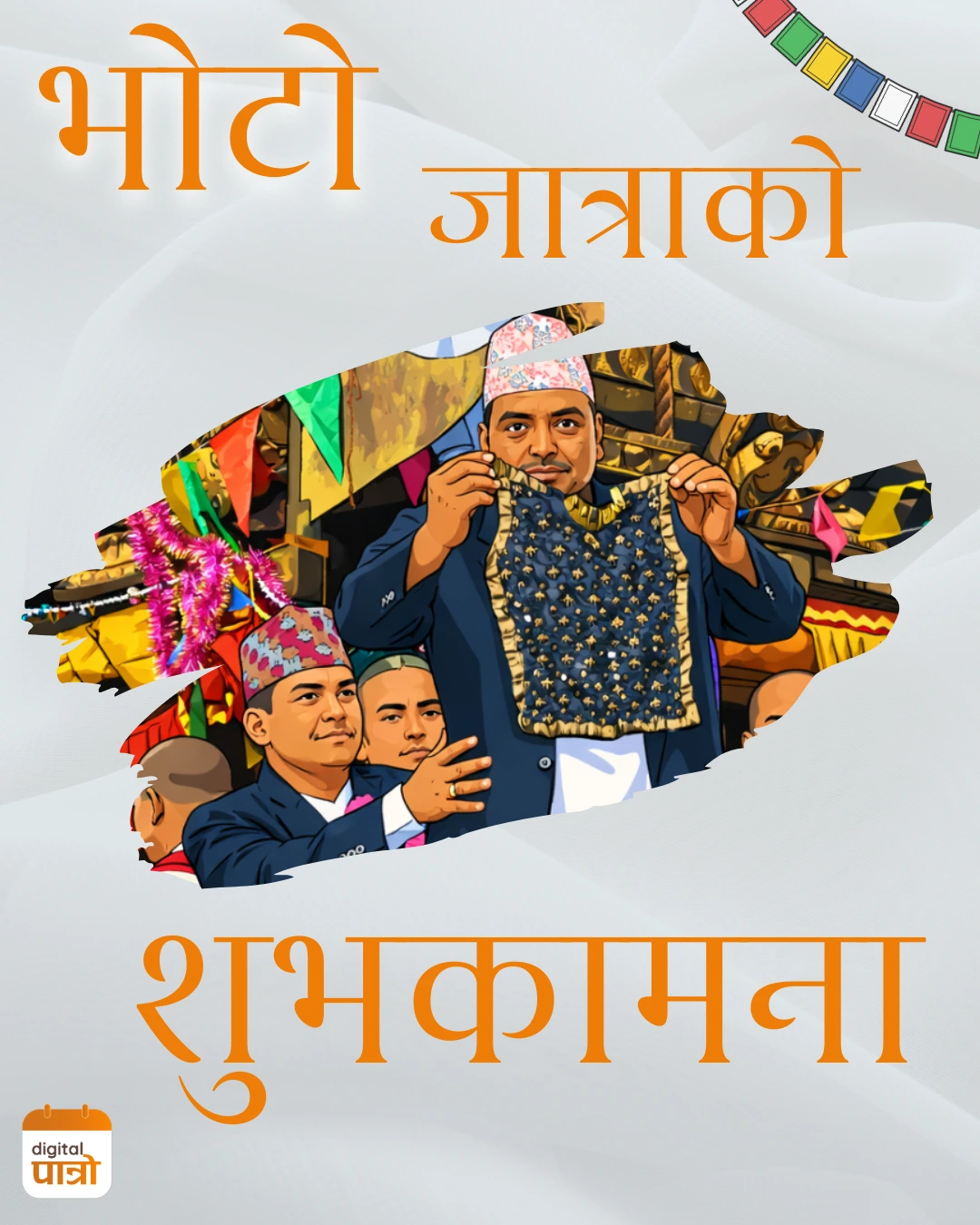
Bhotojatra, also known as Bhoto Jatra, is the grand finale of the month-long Rato Machindranath Rath Yatra held in Lalitpur (Patan) in the Kathmandu Valley. This ancient festival marks the display of a sacred jeweled vest (Bhoto) from atop the massive chariot of Rato Machindranath, the rain god. The festival is one of the most important cultural events in Nepal and draws thousands of devotees and spectators every year.
History and Background
Bhotojatra originated during the Licchavi period, over 1,600 years ago. According to legend, during King Gunakamdev's reign (949-994 CE), a severe 12-year drought plagued the Kathmandu Valley. A sandalwood idol of Rato Machindranath was brought from Kamrup Kamakhya in Assam and upon its arrival, the rains returned. The festival was established as a thanksgiving and rain invocation ritual. The Bhoto (sacred vest) is said to have been given to a farmer by the serpent king Karkotaka as a reward for healing his wife. It was later stolen by a ghost, creating an unresolved ownership dispute that is symbolically represented during the festival.
Purpose of Bhotojatra
This festival is mainly observed to:
-
Honor Rato Machindranath, the rain god and deity of harvest and prosperity.
-
Celebrate agricultural prosperity and seek monsoon blessings.
-
Display the sacred Bhoto to the masses awaiting its rightful claimant.
-
Preserve and celebrate Newari cultural heritage and traditions.
How is Bhotojatra Observed?
Bhotojatra is observed through various rituals and celebrations:
-
Chariot Procession: A massive wooden chariot is pulled through the streets of Lalitpur by thousands of devotees over a month.
-
Bhoto Display: A government official climbs the chariot and displays the sacred vest from four cardinal directions for public viewing.
-
Government Ceremony: The head of state or a government representative officially participates in the display.
-
Public Gathering: Thousands congregate at Jawalakhel, Lalitpur to witness the historic display.
-
Cultural Programs: Traditional music, dance and Newari food are shared during the celebration.
Importance of Bhotojatra
Bhotojatra is important for several reasons:
-
It is one of the most important chariot festivals in Nepal after Dashain.
-
It represents a unique synthesis of Hindu, Buddhist and local animistic traditions.
-
It demonstrates Newari cultural sophistication and artistic excellence in chariot building.
-
It has maintained historical continuity spanning over 1,600 years.
-
It unites communities across caste, class and religious boundaries.
Conclusion
Bhotojatra is a remarkable celebration that brings together religion, culture, history and community in the Kathmandu Valley. The display of the sacred Bhoto from the chariot of Rato Machindranath continues to captivate thousands every year and stands as a testament to Nepal's rich cultural heritage that has endured for over a millennium.