
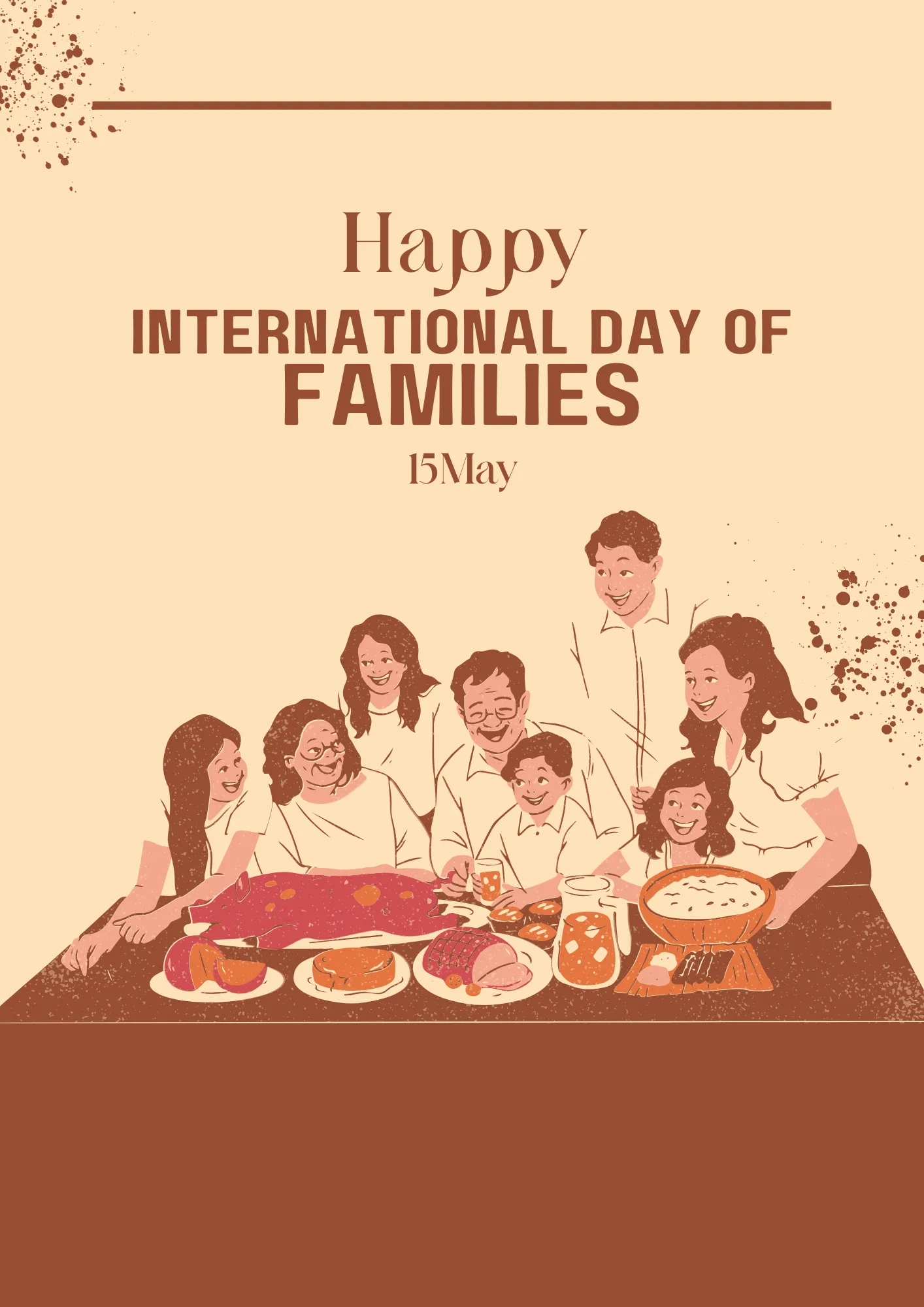
In today’s rushing world, where work, technology, and endless responsibilities pull us in every direction, it is easy to forget the importance of our closest connections. The International Day of Families, celebrated every year on 15 May, is a gentle reminder of the central role families play in shaping our lives, values, and communities. Families provide emotional support, nurture growth, and sustain society through their everyday acts of care and love.
This day, proclaimed by the United Nations General Assembly in 1993, offers a moment to reflect on the challenges families face globally and the policies that can support their well-being. Since its first observance in 1995, it has grown into a platform for governments, organizations, and communities to celebrate families and promote social inclusion.
| Fact | Detail |
| Date | 15 May (Annually) |
| First Observed | 1995 |
| Proclaimed by | United Nations General Assembly (Resolution A/RES/47/237) |
| Purpose | Raise awareness of family-related issues and support family well-being |
| UN Focal Point | Division for Inclusive Social Development – UN DESA |
| Associated Event | International Year of the Family (1994) |
| Typical Observances | Workshops, panel discussions, media campaigns, community events |
| Holiday Status | Not a public holiday |
The concept of an international observance for families emerged in the 1980s when the United Nations began focusing on the central role of families in social development. The International Year of the Family in 1994 brought attention to family issues globally, highlighting the need for awareness, policy support, and research.
Following this, the UN General Assembly adopted Resolution A/RES/47/237 in 1993, officially establishing the International Day of Families. The first celebration occurred in 1995, emphasizing the growing recognition of families in shaping societies and supporting social cohesion.
The International Day of Families serves several key purposes:
Raising Awareness: It brings global attention to issues affecting families, such as poverty, education, health, and gender equality.
Promoting Policy Actions: Governments and organizations are encouraged to implement family-friendly policies and social support programs.
Fostering Dialogue: The day provides a platform for discussions on emerging global issues, including climate change, demographic shifts, and technology’s impact on family life.
Highlighting Diversity: Families come in all forms, single-parent, blended, multi-generational, and extended households reflecting social and cultural diversity worldwide.
The United Nations actively promotes the International Day of Families through UN DESA and other agencies like UNICEF and UNFPA. While UNESCO does not officially observe this day, it indirectly contributes through programs related to education, cultural diversity, and gender equality. The UN encourages global awareness campaigns, community events, and policy discussions to support family well-being.
The UN selects a theme each year to guide discussions and activities:
| Year | Theme |
| 1994 | Family: Resources and Responsibilities in a Changing World |
| 1995 | Tolerance Begins in the Family |
| 1999 | Families for All Ages |
| 2004 | Tenth Anniversary of the International Year of the Family |
| 2005 | HIV/AIDS and Family Well-being |
| 2006 | Changing Families: Challenges and Opportunities |
| 2023 | Families and Demographic Change |
| 2024 | Families & Climate Change |
| 2025 | Family-Oriented Policies for Sustainable Development |
These themes reflect shifting global priorities, highlighting emerging challenges and policy considerations for family welfare.
The International Day of Families is celebrated globally through:
Educational programs: Schools and universities organize discussions about family issues.
Community workshops: Local communities host events promoting family health, education, and social cohesion.
Policy dialogues: Governments and NGOs highlight strategies for family support.
Media campaigns: Social media, news outlets, and online platforms engage the public.
Research and reports: Organizations release studies on demographic trends, family well-being, and social challenges.
The International Day of Families is more than a date on the calendar; it is a reminder of the critical role families play in building inclusive and resilient societies. By addressing challenges such as poverty, demographic change, and climate impact, and by promoting supportive policies, communities and governments can ensure families thrive. Observing this day encourages a global commitment to protecting the well-being of families, the cornerstone of every society.