
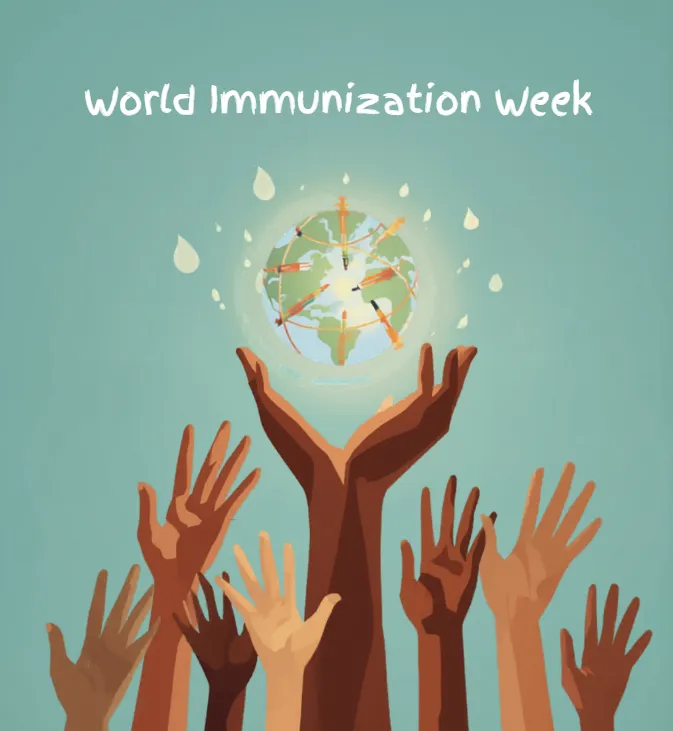
In today’s rushing world, vaccines remain our quiet heroes, protecting millions of lives from preventable diseases. Every year, the last week of April(24-30 April) is dedicated to World Immunization Week, a global campaign that highlights the life-saving power of vaccines and encourages everyone to take part in protecting public health. This week is not just a reminder of past achievements but a call to action to ensure equitable access to vaccines for all.
| Fact | Detail |
| Name | World Immunization Week |
| Observed By | Countries worldwide, led by WHO |
| Date | Last week of April (24–30 April) |
| First Observed | 2012 (unified global observance) |
| Purpose | Promote vaccination awareness and improve access to vaccines |
| Organizers | World Health Organization (WHO), in collaboration with UNICEF, Gavi, and local health ministries |
| Impact | Vaccines prevent 2–3 million deaths annually |
| Target Groups | Children, adults, vulnerable populations |
| Annual Theme | Varies each year to focus on priority vaccination messages |
| Global Coverage | Over 180 countries participate |
| Holiday status | Not a public holiday |
Vaccination is one of the greatest breakthroughs in medical history. From smallpox eradication to polio reduction, vaccines have saved millions of lives worldwide. However, many regions still face challenges in reaching unvaccinated populations, leaving children and adults vulnerable to preventable diseases.
World Immunization Week was established to unify regional immunization efforts into a single global campaign. In 2012, the World Health Assembly endorsed this initiative to raise awareness about vaccines, strengthen immunization programs, and promote access for everyone, everywhere.
The week serves as a reminder that immunization is not only a personal protection measure but also a collective responsibility. Vaccines create community immunity, reducing the spread of disease and saving countless lives.
The goals of World Immunization Week include:
Raising awareness about the importance of vaccines
Encouraging governments to strengthen immunization policies and systems
Promoting universal access to vaccines for all age groups
Highlighting gaps in vaccination coverage, especially in underserved areas
Celebrating global achievements in immunization programs
Vaccines prevent diseases such as measles, polio, diphtheria, and tetanus, saving millions of lives each year. Beyond health, immunization reduces healthcare costs, protects communities, and strengthens societies.
World Immunization Week is a globally coordinated effort, led primarily by the World Health Organization (WHO). Its success depends on collaboration between governments, international agencies, non-governmental organizations, and local communities. Together, these stakeholders ensure that vaccines reach every individual, especially those in vulnerable or hard-to-reach populations.
Key partners include:
WHO (World Health Organization) – Provides leadership, technical guidance, and resources for immunization campaigns worldwide. WHO monitors vaccine coverage, identifies gaps, and supports national immunization programs.
UNICEF (United Nations Children’s Fund) – Focuses on children’s access to vaccines, particularly in low-income countries, and supports logistics, awareness campaigns, and community outreach.
Gavi, the Vaccine Alliance – Works to improve access to vaccines in the world’s poorest countries by funding vaccine programs, strengthening health systems, and advocating for equity in immunization.
Global Polio Eradication Initiative (GPEI) – Partners with WHO, UNICEF, Rotary International, and the CDC to target polio eradication, often using immunization campaigns as platforms to deliver other vaccines.
National Ministries of Health – Implement vaccination programs locally, organize awareness campaigns, and train healthcare workers to deliver vaccines safely and efficiently.
Local NGOs and Community Organizations – Play a critical role in educating communities, mobilizing populations for vaccination campaigns, and addressing vaccine hesitancy.
The collaboration between these organizations allows World Immunization Week to not only raise awareness but also deliver practical action. Campaigns often include door-to-door vaccination drives, school programs, media outreach, and community workshops. This global network ensures that immunization is both a public health priority and a community-centered effort.
Each year, World Immunization Week carries a unique theme to highlight priority areas:
| Year | Theme |
| 2025 | Immunization for All is Humanly Possible |
| 2024 | Humanly Possible: Immunization for All |
| 2023 | The Big Catch-Up |
| 2022 | Long Life for All |
| 2021 | Vaccines Bring Us Closer |
| 2020 | Vaccines Work for All |
| 2019 | Protected Together: Vaccines Work! |
| 2018 | Protected Together, Vaccines Work |
| 2016 | Closing the Immunization Gap |
| 2014 | Immunization for a Healthy Future: Know, Check, Protect |
These themes reflect the evolving priorities in global health, emphasizing catch-up campaigns, inclusivity, and universal access.
Vaccines are among the most cost-effective health interventions:
2–3 million deaths are prevented every year due to immunization
154 million lives have been saved over the past 50 years
Millions of children worldwide still miss basic vaccines due to access gaps
Vaccines reduce the spread of diseases like measles, polio, and influenza
Immunization contributes to stronger communities and healthier societies
Global campaigns reach over 180 countries, emphasizing that no one should be left behind
World Immunization Week is marked by:
Community vaccination drives to reach underserved populations
Media campaigns to inform the public about vaccine benefits
Health education programs in schools and local communities
Government-led awareness initiatives and partnerships with NGOs
Social media campaigns with hashtags to spread awareness globally
These activities aim to increase vaccination coverage, educate communities, and inspire action, ensuring that vaccines reach every corner of the globe.
World Immunization Week is more than just a campaign; it is a global movement to protect lives and promote health equity. In this rushing world, taking a moment to recognize the power of vaccines is essential. Through collective action, global cooperation, and individual responsibility, we can ensure that everyone, everywhere, has access to life-saving immunizations.
Vaccines have proven their value for generations, and this week reminds us that immunization is truly a path to a healthier future for all.