
| Date | May 1-2(Buddha Purnima) |
| Duration | 2 days |
| Observance | Community Jatra (festival procession) |
| Celebrated in | Banepa, Kavre District, Nepal |
| Observing Communities | Local Newar community, pilgrims, tourists |
| Type of Event | Traditional cultural festival |
| Purpose of Event | To celebrate Goddess Chandeshwari's power, protect the community, and honor ancient Newar traditions |
| Holiday Status | Regional festival (not national holiday) |
| First Observed in | Approximately 2,500 years ago |
Quick Fact: Chandeshwari Jatra is one of Nepal's oldest continuous festivals, celebrated for approximately 2,500 years in Banepa, Kavre district. The two-day jatra features a grand chariot procession of Goddess Chandeshwari through the streets of Banepa, drawing thousands of pilgrims and tourists to witness this magnificent living cultural heritage.
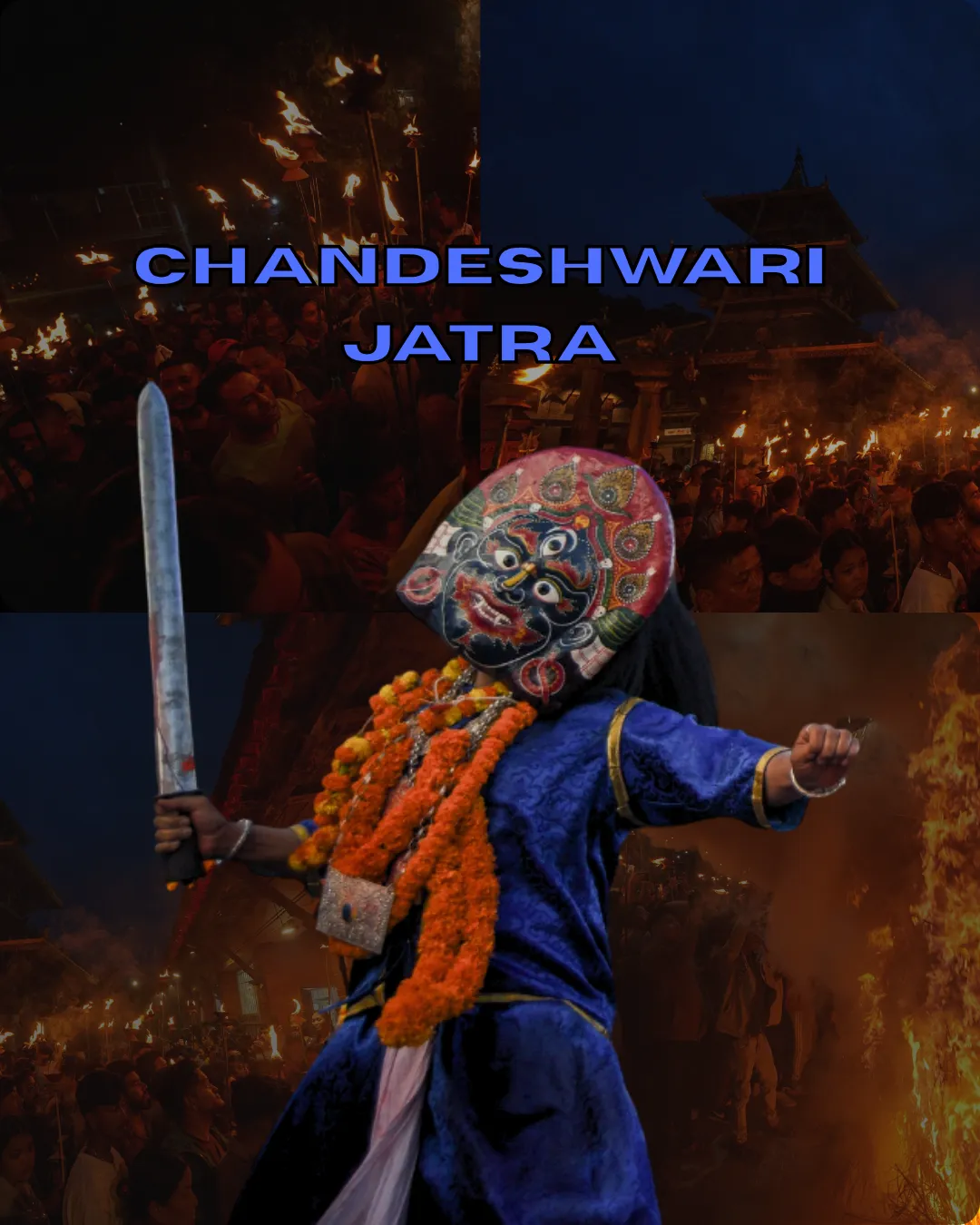
Chandeshwari Jatra is a magnificent and ancient festival celebrated in Banepa, Kavre District, dedicated to Goddess Chandeshwari (Chandika). Among Nepal's oldest continuous cultural traditions with an estimated history of 2,500 years, this jatra features grand chariot processions, traditional music and dance, and elaborate ritual ceremonies that bring the entire community together in celebration and devotion.
The Chandeshwari Jatra has been celebrated in Banepa for approximately 2,500 years, making it one of the most enduring festivals in Nepal's rich cultural tapestry. The festival coincides with Buddha Purnima, creating a uniquely syncretic celebration that reflects Nepal's harmonious blending of Hindu and Buddhist traditions. Goddess Chandeshwari is the principal deity of Banepa and her temple stands as the spiritual heart of the town. The jatra preserves ancient Newar cultural practices including specific chariot construction techniques, traditional music, and ritual protocols passed down through generations.
This festival serves multiple important purposes:
To celebrate Goddess Chandeshwari's protective power over the Banepa community.
To honor Buddha Purnima and the enlightenment of Gautama Buddha.
To maintain and transmit ancient Newar festival traditions across generations.
To foster community unity, cultural identity, and social cohesion in Banepa.
The two-day festival is observed with elaborate ceremonies:
A grand chariot procession carries the idol of Chandeshwari through the streets of Banepa.
Traditional music, dance, and drumming performances accompany the procession.
Ritual offerings and temple ceremonies are conducted by priests and devotees.
Community feasts and cultural programs celebrate the occasion throughout the town.
Pilgrims from across Nepal visit Banepa to witness and participate in the celebrations.
This festival holds profound importance:
It is among Nepal's oldest continuously observed festivals spanning approximately 2,500 years.
It preserves invaluable ancient Newar cultural traditions, rituals, and artistic practices.
It celebrates goddess worship as a living tradition in the Kathmandu Valley.
It draws thousands of pilgrims and tourists, contributing to cultural tourism in Nepal.
It is central to Banepa's unique cultural identity and sense of community pride.
Chandeshwari Jatra stands as a remarkable testimony to Nepal's living cultural heritage, a festival that has endured for 2,500 years and continues to bring communities together in devotion, celebration, and cultural pride. The grand chariot procession of Goddess Chandeshwari through Banepa's streets is not merely a religious event but a powerful expression of cultural continuity that defines the soul of this ancient town.