
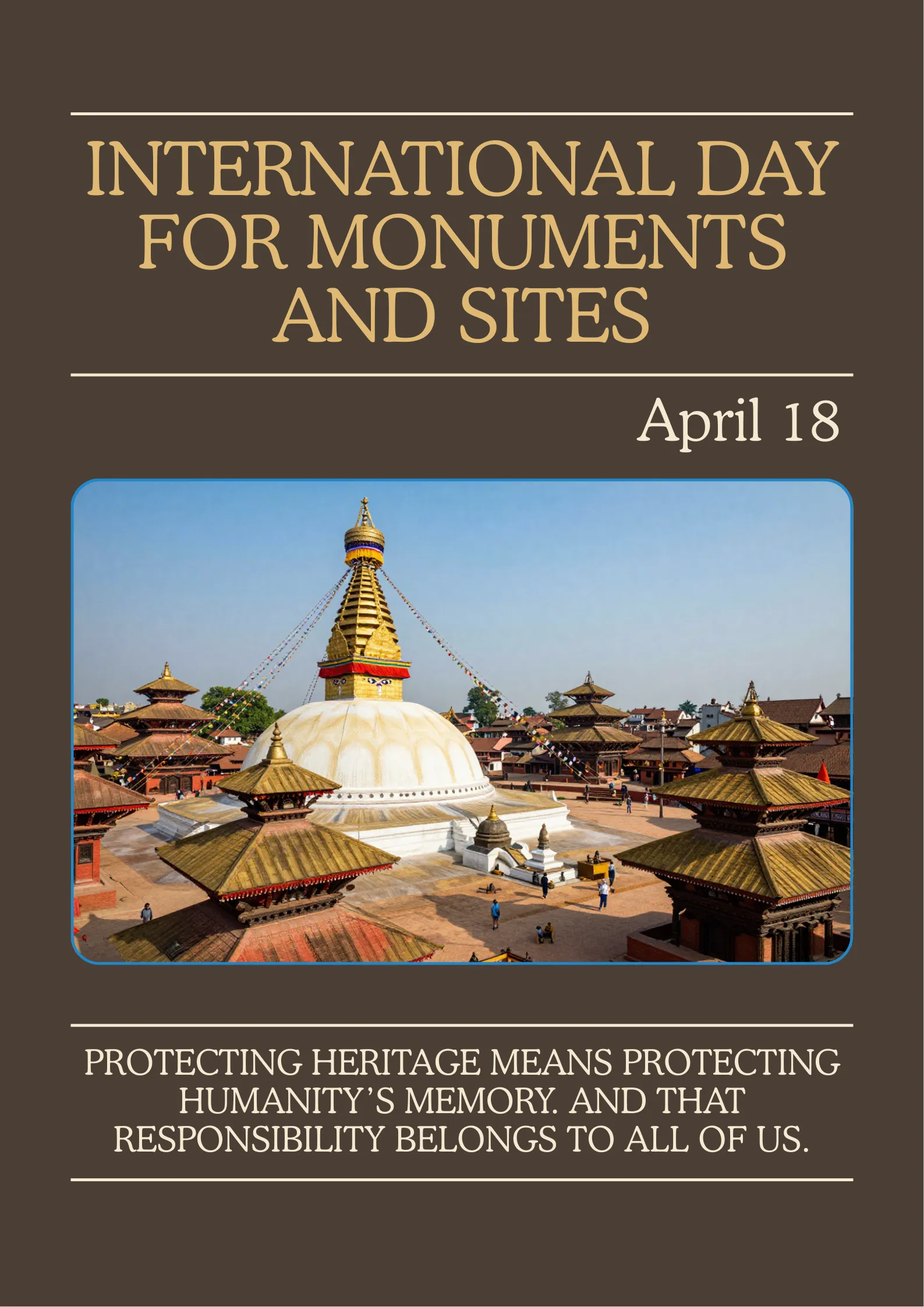
The International Day for Monuments and Sites, widely known as World Heritage Day, is observed every year on April 18. This global observance reminds us that monuments, historic cities, temples, archaeological ruins, and cultural landscapes are not just old structures. They are living stories of humanity.
From the Pyramids of Egypt to the Kathmandu Valley in Nepal, heritage sites connect us to our roots. They teach us about art, science, faith, architecture, and identity. This day encourages people across the world to protect cultural heritage and promote heritage conservation for future generations.
|
Aspect |
Details |
|
Official Name |
International Day for Monuments and Sites |
|
Popular Name |
World Heritage Day |
|
Date |
April 18 every year |
|
Proposed By |
ICOMOS in 1982 |
|
Adopted By |
UNESCO in 1983 |
|
Type |
International Awareness observance |
|
Main Purpose |
Promote heritage awareness and cultural preservation |
|
Celebrated In |
Worldwide |
|
Public Holiday |
Not a Public Holiday |
The idea for this heritage awareness day came from the International Council on Monuments and Sites, also known as ICOMOS. In 1982, ICOMOS proposed that April 18 should be observed to raise global awareness about the importance of monuments and heritage sites.
In 1983, UNESCO officially approved the proposal during its General Conference. Since then, April 18 has been recognized worldwide as a day dedicated to protecting cultural and natural heritage.
Over time, the day has grown beyond a simple observance. It has become a global platform for discussing urgent issues such as climate change, conflict damage, sustainable tourism, and cultural identity.
Many people use the term World Heritage Day instead of the official name. Both refer to the same observance on April 18.
The popular name highlights the connection with UNESCO World Heritage Sites. These are places considered to have outstanding universal value. Examples include:
The Great Wall of China
The Taj Mahal in India
Machu Picchu in Peru
The Historic City of Bhaktapur in Nepal
The Great Barrier Reef in Australia
The term World Heritage Day makes it easier for the general public to relate to the celebration, especially since UNESCO World Heritage Sites are widely known.
The International Day for Monuments and Sites has a clear mission. It aims to strengthen heritage conservation and promote cultural preservation across the world.
Its main purposes include:
Many historic sites face threats from pollution, urban development, war, and climate change. This day helps people understand these risks.
Governments and communities are encouraged to create policies and programs that protect monuments and cultural landscapes.
Heritage reflects who we are. Losing heritage can weaken cultural identity and shared memory.
Young people play an important role in protecting heritage. Educational programs and campaigns are often organized for students.
Heritage conservation is not only about preserving buildings. It is about protecting traditions, craftsmanship, languages, and knowledge passed from one generation to another.
ICOMOS is the main organization behind this observance. It chooses an annual theme and guides global discussions on heritage protection. Experts, architects, historians, and conservation professionals are often involved in these initiatives.
UNESCO adopted the day and promotes it worldwide. Through the World Heritage Convention of 1972, UNESCO works with countries to identify and protect important cultural and natural sites.
UNESCO also supports educational campaigns, youth programs, and international cooperation in heritage conservation.
While ICOMOS initiated the day, UNESCO helped make it globally recognized and widely celebrated.
Different countries celebrate the day in various ways. Common activities include:
School lessons about local heritage
University seminars on conservation
Public lectures by historians and experts
Free or guided tours of heritage sites
Museum exhibitions
Photography competitions
Heritage walks
Social media awareness campaigns
Documentaries and articles
Community storytelling events
In many cities, local governments and heritage organizations collaborate to promote sustainable tourism and responsible site management.
Each year, ICOMOS selects a theme to focus on a specific issue related to heritage protection. Some recent examples include:
2019: Rural Landscapes
2021: Complex Pasts, Diverse Futures
2022: Heritage and Climate
2023: Heritage Changes
2025: Resilient Heritage and Adapting to a Changing World
These themes reflect current global challenges and encourage meaningful discussions about the future of cultural preservation.
International Day for Monuments and Sites plays an important role in sustainable development.
Monuments and historic sites help communities maintain their identity and pride.
Many countries rely on heritage tourism. Responsible management of World Heritage Sites can create jobs and support local economies.
Rising sea levels, natural disasters, and environmental changes threaten many sites. This day highlights the need for climate-resilient heritage planning.
Heritage often represents shared human values. International cooperation in preservation can build stronger global understanding.
When a monument is destroyed, the loss is not only local. It is a loss for all humanity.
The International Day for Monuments and Sites reminds us that heritage is not just about the past. It shapes our present and guides our future. From ancient temples and historic cities to natural landscapes and cultural traditions, every heritage site tells a story that deserves protection. As climate change, conflict, and rapid development continue to threaten monuments and cultural landscapes, the need for heritage conservation becomes even more urgent.
World Heritage Day is an opportunity to learn, visit, share, and protect. Even small actions, such as supporting local heritage initiatives or educating young people about cultural preservation, can make a difference. Protecting heritage means protecting humanity’s memory. And that responsibility belongs to all of us.