
| Date | Baisakh 17 (April 30, 2026) |
| Duration | Month-long festival (30-33 days until Bhoto Jatra) |
| Observance | Regional (Kathmandu Valley) |
| Celebrated in | Lalitpur (Patan), Kathmandu Valley, Nepal |
| Observing Communities | Newars, Hindus, Buddhists, local residents, international visitors and tourists |
| Type of Event | Religious and Cultural |
| Purpose of Event | To begin the chariot procession of Rato Machindranath (Bungadyo), the rain god, through the streets of Lalitpur to invoke monsoon rains and celebrate agricultural prosperity. |
| Holiday Status | Yes (Public holiday in Kathmandu Valley during Rath Yatra period) |
| First Observed in | Licchavi period (over 1,000 years ago, possibly 1,500+ years) |
Quick Fact: The Rato Machindranath Rath Yatra is one of Nepal's longest festivals, lasting over a month. The massive wooden chariot, standing over 45 feet tall, is built anew each year and pulled by thousands of devotees through the streets of Lalitpur.
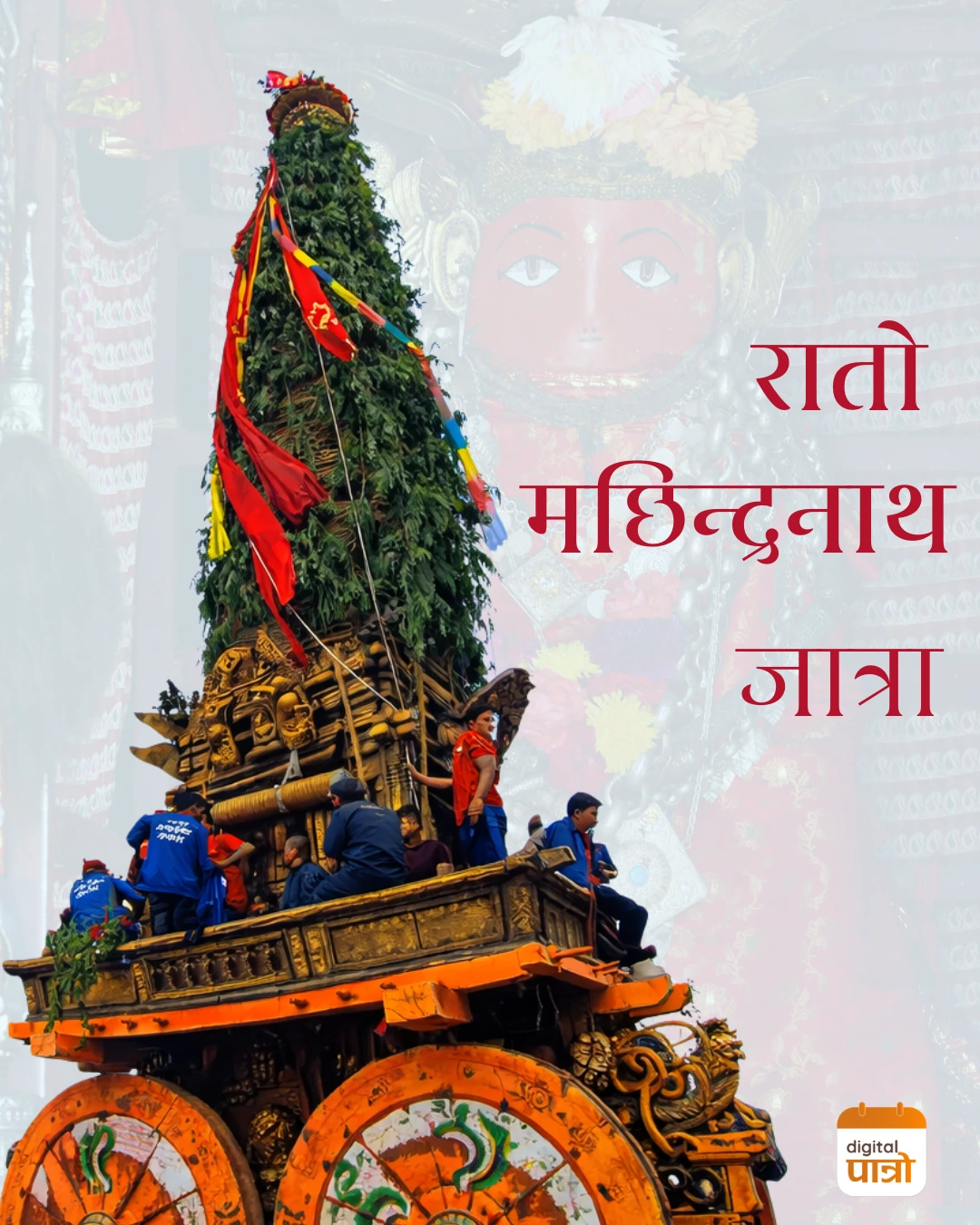
Bungadyo: Rato Matsyandranath Rath Yatra Prambha marks the beginning of the grand chariot procession of Rato Machindranath (Bungadyo), the rain god of Kathmandu Valley. This month-long festival is one of Nepal's most important and longest cultural events, during which a massive wooden chariot carrying the deity is pulled through the streets of Lalitpur (Patan) by thousands of devotees.
The Rato Machindranath Jatra has its origins in the Licchavi period, over 1,000 years ago. According to legend, during King Gunakamdev's reign (949-994 CE), a devastating 12-year drought plagued the Kathmandu Valley. A sandalwood idol of Rato Machindranath was brought from Kamrup Kamakhya in Assam to restore the rains. Upon the deity's arrival, the rains returned and the festival was established as an annual thanksgiving and rain invocation ritual. Over centuries, the festival has merged Hindu, Buddhist and local animistic traditions, making it a unique celebration of religious harmony.
This festival is mainly observed to:
Invoke Rato Machindranath, the rain god, for agricultural prosperity and monsoon blessings.
Provide collective community blessing and purification for all devotees.
Reaffirm Newari cultural identity and artistic traditions.
Strengthen community bonds through collective participation in the chariot pulling.
The festival is observed through elaborate rituals and celebrations over a month:
Chariot Construction: A massive wooden chariot, over 45 feet tall, is built anew each year by specialized Newari craftspeople.
Chariot Pulling: Thousands of devotees collectively pull the chariot through the traditional route in Lalitpur streets.
Daily Rituals: Prayers, offerings and purification ceremonies are performed morning and evening throughout the procession.
Cultural Programs: Traditional music, dance and dramatic performances accompany the procession.
Bhoto Jatra: The climax features the display of the sacred jeweled vest from the chariot at Jawalakhel.
This festival is important for several reasons:
It is one of Nepal's most significant festivals, second only to Dashain in cultural importance.
It demonstrates the living synthesis of Hindu and Buddhist traditions in Nepal.
It showcases Newari artistic genius and craftsmanship in chariot construction.
It unites communities across caste, class and religious boundaries.
It reflects ancient indigenous environmental knowledge connecting spiritual practice to agricultural necessity.
The Rato Machindranath Rath Yatra is a magnificent celebration that brings together faith, culture, art and community. As the massive chariot begins its month-long journey through the streets of Lalitpur, it carries with it over a millennium of tradition, uniting thousands of devotees in a shared prayer for rain, prosperity and blessings.