
| Date | February 17 |
| Duration | 1 day |
| Observance | Cultural/literary celebration |
| Celebrated in | Throughout Nepal, schools, literary institutions |
| Observing Communities | Literary scholars, poets, students, literary organizations |
| Type of Event | Cultural heritage observance |
| Purpose of Event | To celebrate Nepali poetry and rhyming tradition, honor poets, and promote literary appreciation and cultural heritage |
| Holiday Status | No (Not an official public holiday) |
| First Observed in | April 20, 1996 (established by poet Madhav Viyogi) |
Quick Fact: Chhanda Diwas (National Rhyme/Poetry Day) was established in 1996 by Nepali poet Madhav Viyogi to celebrate Nepal's rich tradition of chhanda (metrical poetry). Chhanda refers to the formal metrical structure used in classical Nepali and Sanskrit poetry, an art form with roots in the ancient Vedic tradition of structured verse composition.
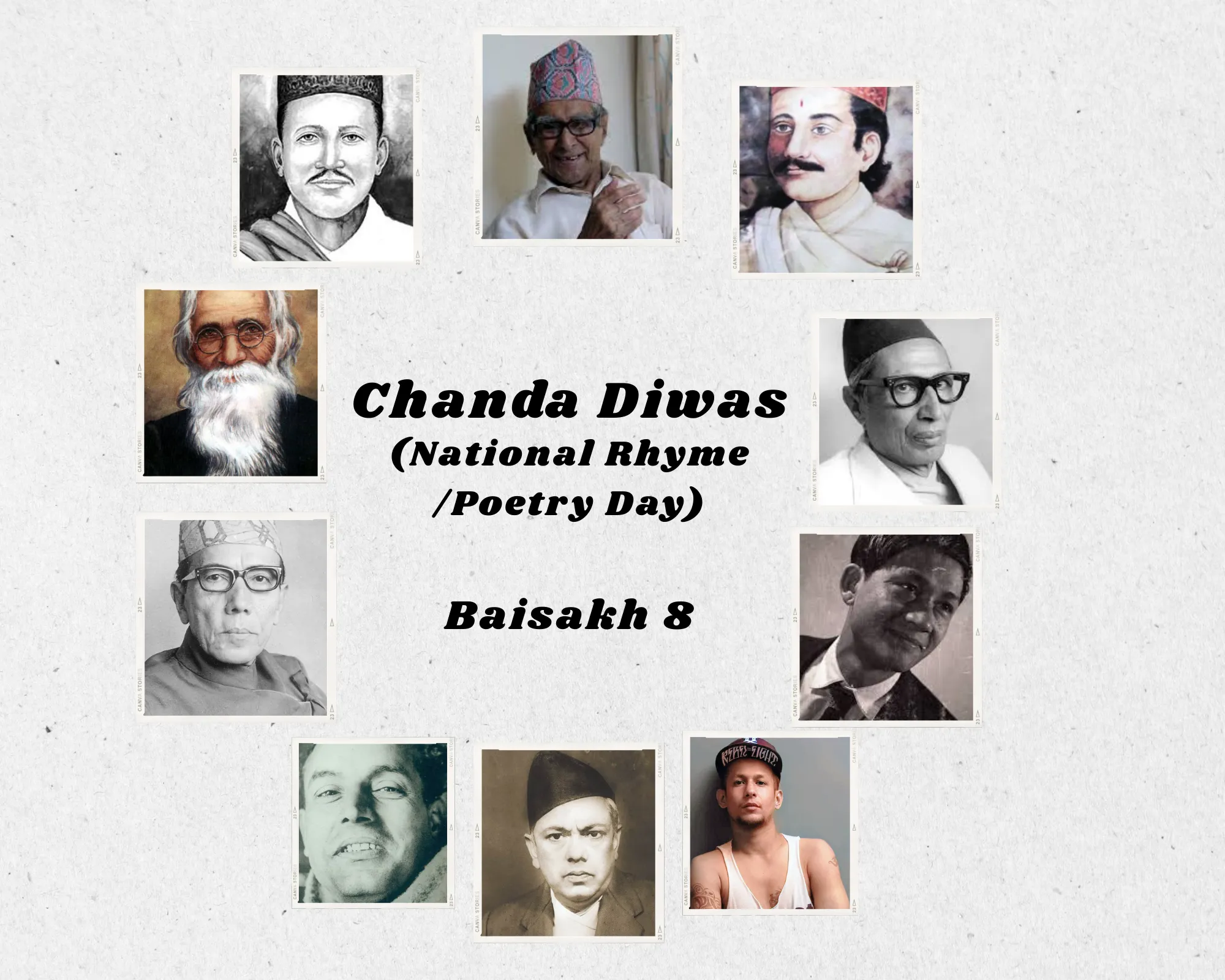
Chhanda Diwas is Nepal's national celebration of poetry and the art of metrical verse composition, honoring the chhanda tradition that forms the backbone of classical Nepali and Sanskrit literary heritage. Established in 1996 by poet Madhav Viyogi, this day recognizes the profound role that poetry has played in preserving Nepali language, culture, spiritual wisdom, and national identity across centuries of literary tradition.
"Chhanda" (छन्द) refers to the metrical structure of poetry, the rhythmic patterns, syllable counts, and verse forms that give classical Nepali and Sanskrit poetry its beauty and memorability. The Vedic tradition gave birth to some of the world's most sophisticated poetic meters, and these classical forms influenced Nepali literary traditions profoundly. For centuries, Nepali poets composed devotional hymns, epics, love poetry, and philosophical verse using these structured forms. Poet Madhav Viyogi recognized the risk of this tradition being lost to younger generations and established Chhanda Diwas in 1996 to revive interest in classical poetic forms and celebrate those who master them.
This literary celebration is observed to:
Celebrate the rich Nepali poetry tradition and the art of chhanda (metrical verse composition).
Honor poets and literary figures who have contributed to Nepali language and literature.
Promote reading, literary appreciation, and creative expression among all age groups.
Strengthen cultural identity and national pride through literature and poetic heritage.
The day is celebrated with literary activities:
Poetry readings and literary events showcase classical and contemporary Nepali verse.
Poet honoring ceremonies recognize distinguished contributors to Nepali literary tradition.
School and cultural programs introduce students to classical chhanda forms and their masters.
Book fairs and literary exhibitions present Nepal's rich poetic heritage to the public.
Awards are given for outstanding poetry written in classical chhanda forms.
Community cultural gatherings bring poetry enthusiasts together across Nepal.
This celebration holds significance because:
It celebrates Nepal's classical literary heritage, a treasure of metrical poetry spanning many centuries.
It promotes poetry and creative expression as vital aspects of a living cultural tradition.
It honors literary figures whose contributions have enriched the Nepali language and literature.
It strengthens cultural consciousness and national literary identity.
It is significant for the preservation of the Nepali language through its most beautiful artistic form.
Chhanda Diwas is a celebration of the soul of Nepali literary culture, the elegant art of metrical verse that has preserved wisdom, beauty, devotion, and identity across generations. By honoring the tradition of chhanda and the poets who master it, this observance ensures that Nepal's rich poetic heritage continues to inspire, educate, and uplift future generations of readers, writers, and literary artists.