
Quick Reference Card
| Date | April 14 (Baisakh 1) |
| Duration | 1 day (celebrations extend) |
| Observance | New Year festival/Seasonal transition |
| Celebrated in | Throughout Nepal |
| Observing Communities | All Nepali ethnic groups and communities |
| Type of Event | National New Year festival |
| Purpose of Event | To mark the sun's entry into Aries zodiac sign, the beginning of Bs, and celebrate spring renewal |
| Holiday Status | Yes (National public holiday) |
| First Observed in | Ancient Hindu calendar tradition |
Quick Fact: Mesh Sankranti marks the entry of the sun into the Aries (Mesh/Mesha) zodiac sign, the first sign of the zodiac which in the Vedic astronomical tradition marks the beginning of a new solar year. In 2026, this marks the start of BS 2083 (Bikram Sambat 2083), Nepal's official calendar year.
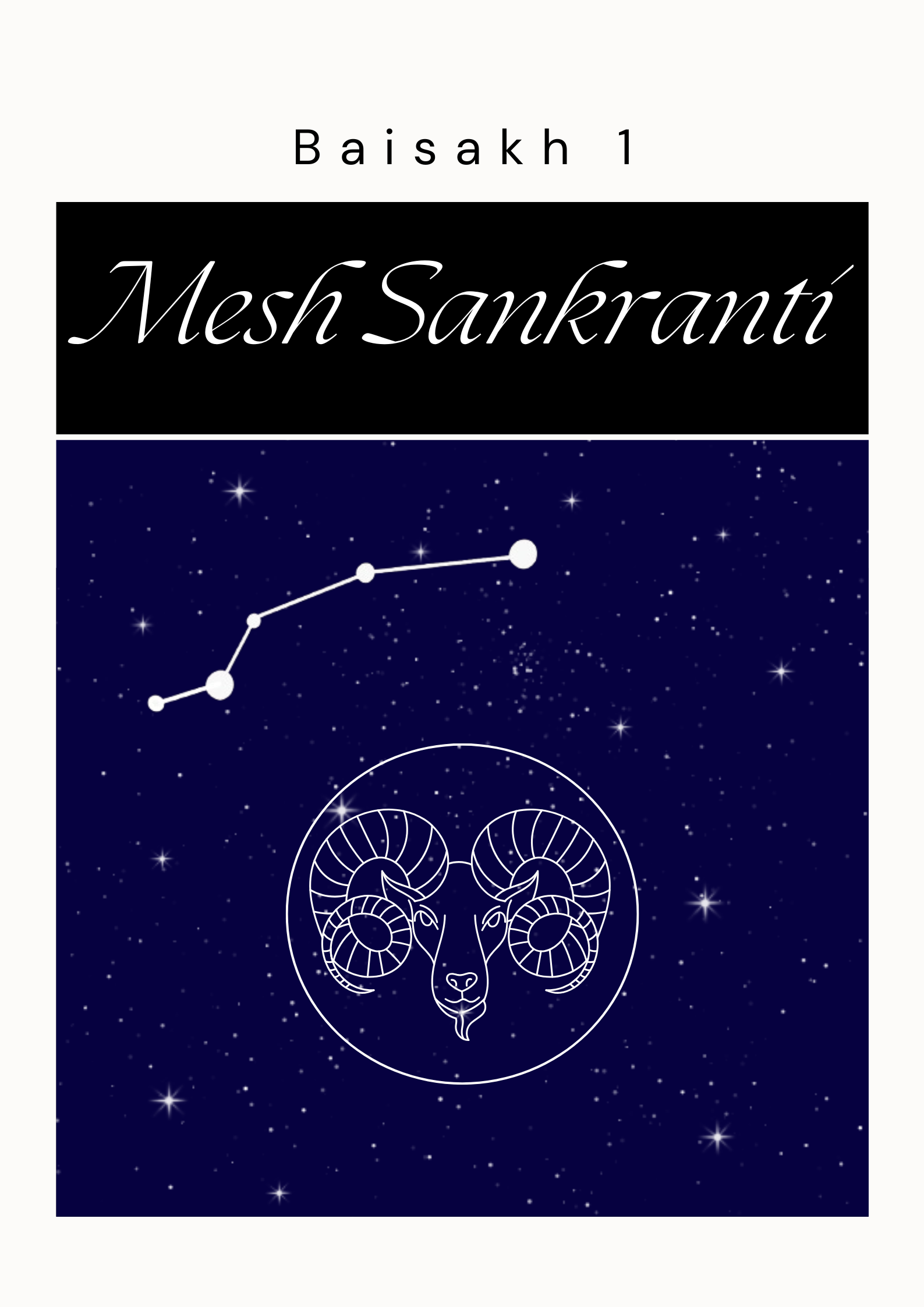
Mesh Sankranti is a significant Hindu festival marking the entry of the sun (Surya) into the Aries (Mesh or Mesha) zodiac sign the first sign of the Hindu zodiac. This solar transition coincides with the beginning of the Nepali New Year (Baisakh 1, BS 2083) and is celebrated as a national public holiday throughout Nepal. Mesh Sankranti combines the astronomical significance of a solar transition with the spiritual, agricultural, and cultural significance of the new year.
History and Background
Sankranti festivals have deep roots in Vedic astronomical tradition, where the sun's entry into each of the 12 zodiac signs was carefully tracked and celebrated. Mesh Sankranti, the sun's entry into the first zodiac sign Aries, carries the greatest significance as it marks the beginning of the solar new year. In the Bikram Sambat (BS) calendar system used in Nepal, Baisakh 1 (the day of Mesh Sankranti) is New Year's Day. The Bikram Sambat calendar, created in 58 BCE during the reign of King Vikramaditya, is Nepal's official calendar used in all government documents, and the new year typically falls around April 14 of the Gregorian calendar each year.
Purpose of Mesh Sankranti
This festival is observed to:
Mark the new year and celebrate fresh beginnings under the auspicious entry of the sun into Aries.
Celebrate the spring season, agricultural renewal, and the blossoming of nature.
Acknowledge the solar and astrological transition that defines the Hindu new year.
Foster hope, positive energy, and aspirations for success in the coming year.
How is Mesh Sankranti Observed?
The occasion is celebrated with traditional new year activities:
Morning prayers, temple worship, and ritual offerings to begin the new year auspiciously.
Preparation of special traditional foods including Sel Roti, Juju Dhau, and sweets.
Family gatherings and celebrations with the exchange of new year greetings.
Ritual bathing in rivers for purification at the start of the new solar year.
Cleaning and decorating homes, and wearing new clothes to welcome the new year.
Importance of Mesh Sankranti
This festival holds great national importance:
It marks the Nepali New Year, the most significant calendar event in Nepal's national life.
It is celebrated nationwide across all communities with shared enthusiasm and joy.
It carries agricultural significance marking the beginning of the spring farming season.
It combines astrological and astronomical significance as a solar zodiac transition.
It is central to Nepal's national cultural identity and annual calendar rhythms.
Conclusion
Mesh Sankranti is Nepal's astrological and astronomical new year, the moment when the sun crosses into the first zodiac sign, signaling cosmic renewal and the beginning of a fresh cycle of time. As Nepal enters Bikram Sambat 2083, Mesh Sankranti invites all citizens to begin the year with spiritual intention, family joy, and hope for the blessings of the sun that has guided Nepal's agricultural and spiritual life since ancient times.