
| Date | May 1 (Vaishakh Purnima) |
| Duration | 1 day |
| Observance | Jayanti (incarnation celebration) |
| Celebrated in | Vishnu temples, Nepal and India |
| Observing Communities | Vaishnavites, Hindu devotees |
| Type of Event | Religious festival |
| Purpose of Event | To honor Lord Vishnu's second incarnation as Kurma (divine turtle) who supported the cosmic ocean churning |
| Holiday Status | No (Not a standard public holiday) |
| First Observed in | Ancient Hindu mythology period |
Quick Fact: Kurma Jayanti celebrates Lord Vishnu's second incarnation as the cosmic turtle (Kurma) who supported Mount Mandaranchal on his back during the great Samudra Manthan (churning of the cosmic ocean). This avatar symbolizes patience, stability, and sacrifice for the greater cosmic good.
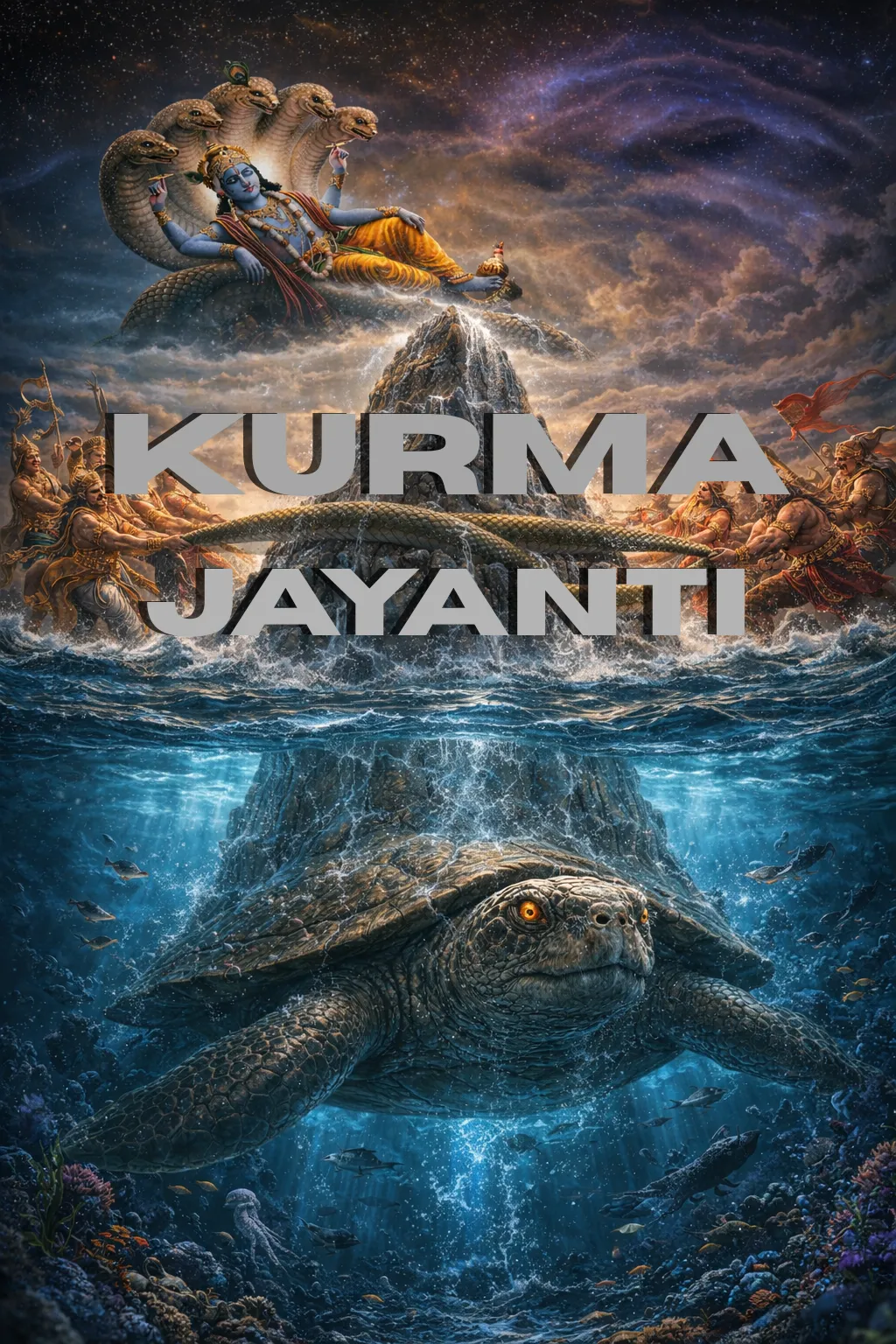
Kurma Jayanti is a sacred Hindu observance celebrating the manifestation of Lord Vishnu in his second avatar form as Kurma, the divine cosmic turtle. Observed on the full moon of Vaishakh month (Baisakh Purnima), this jayanti commemorates one of the most profound episodes in Hindu cosmology, the Samudra Manthan or churning of the cosmic ocean, and honors the divine qualities of patience, stability, and selfless support.
According to Hindu mythology, when the devas (gods) and asuras (demons) attempted to churn the cosmic ocean to obtain Amrita (the nectar of immortality), they used Mount Mandaranchal as a churning rod and the serpent Vasuki as the rope. However, the mountain began sinking without a base. At this critical moment, Lord Vishnu incarnated as Kurma and descended into the ocean, providing his enormous shell as a stable foundation for the mountain. This divine intervention enabled the successful churning that produced many divine treasures, including the goddess Lakshmi, Dhanvantari (physician of the gods), and the life-giving Amrita.
This jayanti is observed to:
Honor the Kurma (turtle) incarnation of Lord Vishnu and his role in cosmic creation.
Celebrate the cosmic principles of stability, patience, and sacrifice for universal welfare.
Acknowledge the importance of steady support and persistence in spiritual practice.
Recognize divine sacrifice and selfless service as core spiritual values.
Devotees observe this jayanti through specific practices:
Fasting from the previous night through the full day in dedication to Lord Vishnu.
All-night vigil and recitation of Vishnu Sahasranaam (the thousand names of Vishnu).
Sunrise rituals including water offerings and sacred bathing.
Temple visits and ceremonial worship at Vishnu shrines.
Breaking the fast with traditional sweets and sanctified foods as prasad.
This celebration holds great importance:
It celebrates the second avatar in the Dashavatara (ten incarnations of Vishnu) tradition.
It symbolizes divine support for maintaining cosmic balance and order.
It teaches the spiritual importance of patience and perseverance in difficult endeavors.
It is observed with devotion by Vaishnav communities in Nepal and throughout the world.
It reinforces core Vedantic philosophical principles about duty, sacrifice, and divine grace.
Kurma Jayanti offers devotees a beautiful opportunity to reflect on the cosmic story of selfless divine support and the power of stability in the face of great challenges. Lord Vishnu's incarnation as Kurma teaches that true strength sometimes lies in providing steady, patient support, a spiritual lesson as relevant today as it was in the age of the Samudra Manthan.