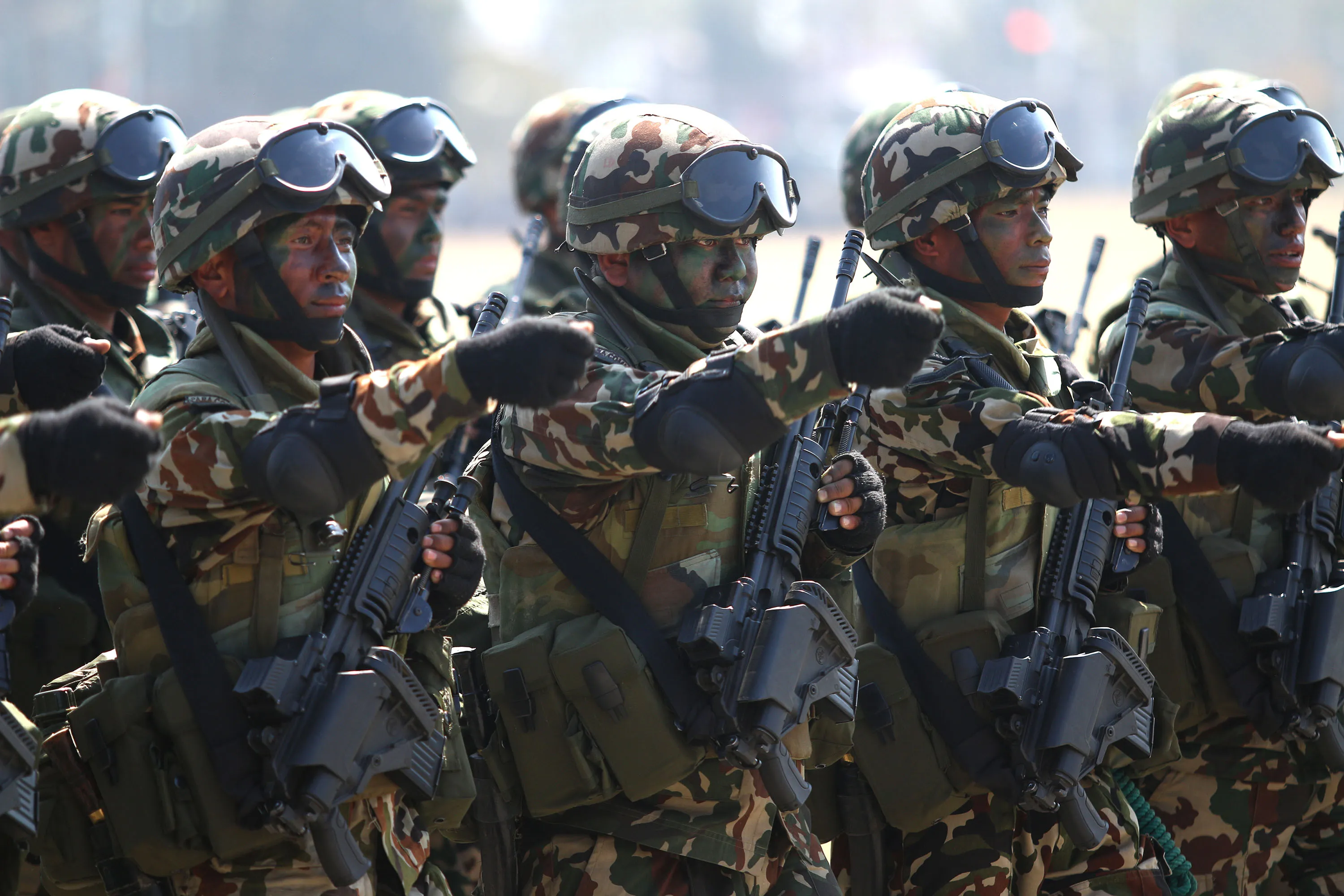
Every year, Army Day is observed in Nepal on the day Maha Shivaratri falls, according to the lunar calendar. This date usually falls in Falgun(February or March) and has become the official day for commemorating the founding and continued service of the Nepal Army. Army Day is a moment of national pride, honoring the dedication, discipline, and bravery of the army that protects the country’s sovereignty and people.
|
Fact |
Details |
|
Name |
Army Day (सेना दिवस) |
|
Observed On |
Maha Shivaratri day falls in Falgun |
|
Celebrated In |
Nepal |
|
Main Venue |
Army Pavilion, Tundikhel, Kathmandu |
|
Purpose |
To honor the Nepal Army’s founding, service, and contributions |
|
Activities |
Parades, military displays, cannon salutes, cultural programs |
|
Holiday Status |
Yes, Public Holiday |
Army Day is a special annual celebration to honor the Nepal Army, which has protected Nepal’s independence and territorial integrity for centuries. The army is one of Nepal’s most respected institutions and plays an important role in national security, disaster response, peacekeeping, and community support. On Army Day, large ceremonies and public programs are organized to celebrate the service of soldiers and to strengthen the bond between the army and the people.
The Nepal Army has an unbroken legacy dating back to the mid‑18th century, when King Prithvi Narayan Shah began the campaign to unify the many small kingdoms of Nepal into a single nation. A strong and disciplined army was at the heart of these unification efforts, which eventually led to the establishment of the modern state of Nepal.
Since then, the army has transformed into a modern military force while maintaining its traditions. It has consistently defended Nepal’s independence and played a key role in shaping the country’s history. Today, Army Day is a day to remember that long heritage and honor those who serve.
Army Day is significant for multiple reasons:
Honoring Service and Sacrifice: It pays tribute to soldiers who protect the Nepali people and the nation.
Inspiring Patriotism: The celebration encourages pride and respect for those who defend the country.
Celebrating Unity and Discipline: As one of Nepal’s oldest institutions, the army represents national unity and discipline.
Though the date of Mahā Shivaratri is tied to Hindu tradition, Nepal Army Day itself focuses on the army’s contributions and service to the nation rather than on religious celebration.
The Nepal Army is organized into various regional divisions and functional units to manage operations throughout the country.
There are eight main geographical commands in the army, each responsible for a different part of Nepal:
Far‑Western Division
North‑Western Division
Mid‑Western Division
Western Division
Mid Division
Valley Division
Mid‑Eastern Division
Eastern Division
Each division ensures peace and security in its region and coordinates training, border security, and local support.
In addition to regional divisions, the Nepal Army includes independent units and brigades that provide specialized operational support, such as:
Army Aviation Directorate – Supports air operations and transport.
Artillery Brigade – Heavy weapons and firepower units.
Signals Brigade – Communication and technology support.
Special Forces Brigade – Elite units for specialized operations.
Engineers Brigade – Infrastructure support and disaster response.
Air Defense Brigade – Protection against aerial threats.
VVIP Security Units – Security for national leaders.
These divisions and units make the army versatile and capable of handling both traditional defense and modern challenges.
Army Day celebrations are both formal and festive. Important parts of the observance include:
A central event is held at the Army Pavilion in Tundikhel, Kathmandu.
The President of Nepal, who is also the Supreme Commander of the Nepal Army, usually attends as the chief guest.
Military parades, rifle and cannon salutes, and aerial displays are organized.
Soldiers perform march‑pasts, physical training displays, cultural dances, and martial arts.
Modern army equipment, vehicles, and tools used in UN peacekeeping missions and national security are displayed to the public.
Army units across Nepal also host local programs with parades, cultural events, and community engagement activities.
The Nepal Army plays many roles beyond defense:
Nepal is one of the top contributors to United Nations peacekeeping missions. Nepali peacekeepers have served in numerous countries worldwide since the late 1950s, helping to maintain peace in conflict zones and post‑conflict areas.
The army is often the first responder when natural disasters strike. Its teams provide rescue operations, emergency medical support, distribution of relief supplies, and infrastructure rebuilding.
The primary role of the army remains the defense of Nepal’s borders and the protection of national sovereignty.
The army also participates in community support, such as building roads, bridges, hospitals, and other essential services in remote areas of Nepal.
The Nepal Army has a long history going back to the time of the unification of Nepal under King Prithvi Narayan Shah in the 18th century.
Nepal’s peacekeepers have served in many international missions and continue to be recognized for professionalism.
The army’s capabilities extend beyond warfare, with roles in engineering, medicine, communication, and aviation support.
Army Day is a day of pride and respect for every Nepali. It celebrates the courage, discipline, and commitment of the Nepal Army, a force that has stood strong through centuries of change. Army Day reminds people of the army’s sacrifices and achievements, and it brings the nation together to honor those who protect its freedom, peace, and safety each day.