
| Date | Ashad Shukla Ekadashi / Harishayani Ekadashi (July 24) |
| Duration | Four-month sacred period (Shrawan, Bhadra, Ashwin, Kartik) |
| Observance | National and Regional |
| Celebrated in | Nepal, India, and Vaishnava communities worldwide |
| Observing Communities | Hindu devotees, spiritual practitioners, monks, and Vaishnava communities |
| Type of Event | Sacred Spiritual Period Commencement |
| Purpose of Event | To mark the commencement of the sacred four-month Chaturmaas period—initiated when Lord Vishnu enters yogic sleep—during which devotees intensify spiritual practices and avoid auspicious ceremonies. |
| Holiday Status | Not an official public holiday in Nepal; recognized in some Indian states |
| First Observed in | Ancient Vedic times (rooted in Puranic and Vedic tradition) |
Quick Fact: The word "Chaturmaas" comes from Sanskrit: "Chatur" (four) and "Maas" (months). During these four months, Hindu tradition prescribes avoidance of major life ceremonies such as weddings, thread ceremonies, and housewarming rituals, a guideline still widely followed across South Asia. Many Hindu saints and monks traditionally observe this as a period of fixed residence and intensified teaching, following the example of ancient Vedic ascetics who halted their travels during the monsoon months.
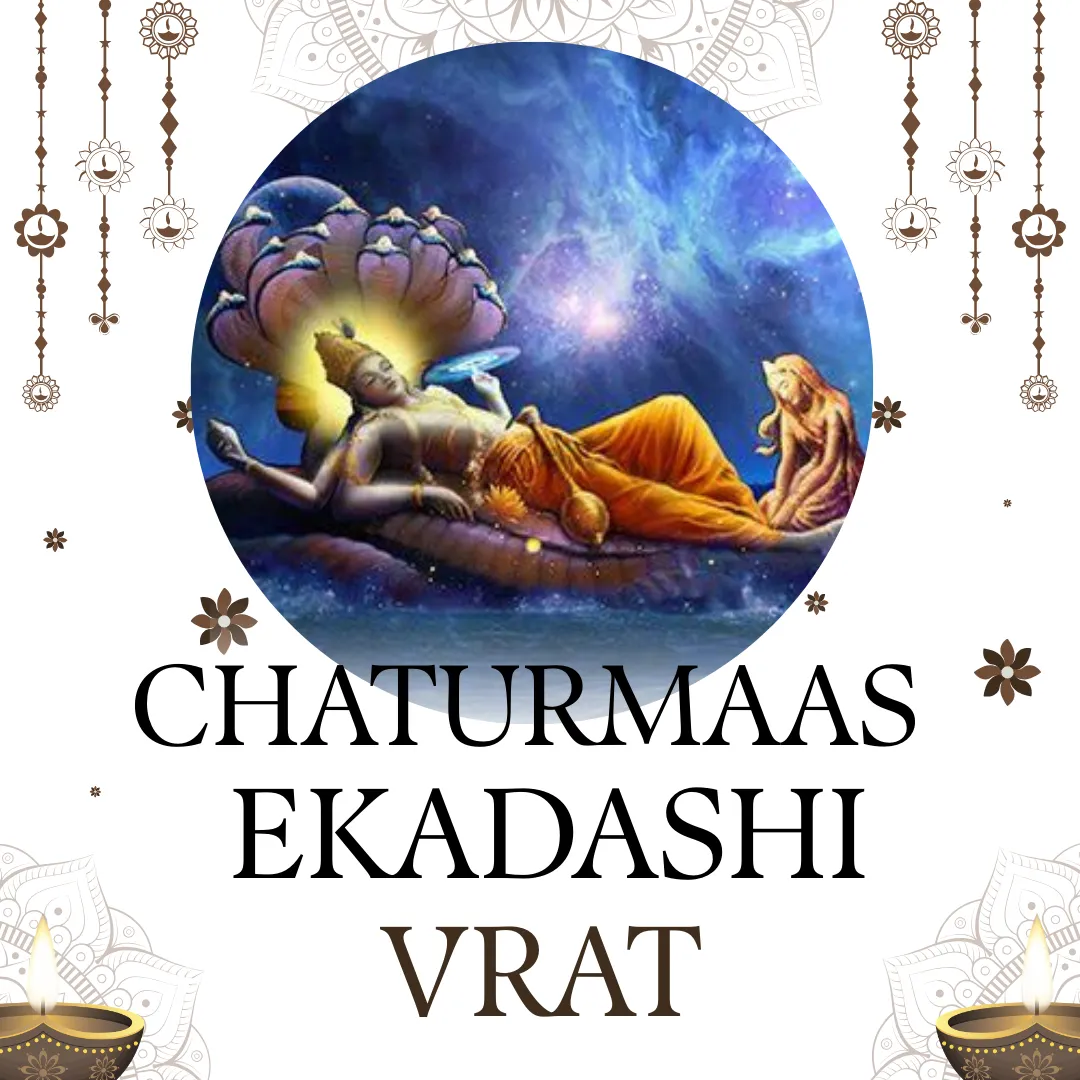
Chaturmaas Vrata Aarambha marks the commencement of the sacred four-month period known as Chaturmaas, one of the most significant spiritual seasons in the Hindu calendar. Beginning on Harishayani Ekadashi (the Ekadashi of the waxing moon of Ashad), this period coincides with the onset of the monsoon season and the mythological yogic sleep of Lord Vishnu. For four months (Shrawan, Bhadra, Ashwin, and Kartik), devotees intensify their spiritual practices and align their lives with the rhythms of cosmic and natural cycles.
The Chaturmaas period is one of the oldest and most universally observed sacred seasons in Hindu tradition, with roots in both practical monsoon-season considerations and deep Puranic theology. According to Hindu mythology, on the Ashad Shukla Ekadashi (Harishayani/Devshayani Ekadashi), Lord Vishnu, the great Preserver of the cosmos, reclines into yogic sleep (yoga nidra) on the cosmic serpent Ananta Shesha. This divine rest of Vishnu lasts for four months, after which he awakens on Kartik Shukla Ekadashi (Prabodhini/Devotthan Ekadashi). During this period, Lord Shiva is said to oversee the governance of the cosmos. Historically, this period also coincided with the monsoon months when wandering ascetics would halt their journeys, reside in one place, and intensify their spiritual practice—a tradition maintained in both Hindu and Jain communities even today.
This sacred commencement is observed to:
Mark the beginning of a four-month period of heightened spiritual practice and devoted discipline.
Honor Lord Vishnu's cosmic yogic sleep and seek his divine protection during this sacred period.
Encourage devotees to intensify devotional practices, fasting, and meditation throughout the four months.
Align daily life with cosmic and natural cycles in accordance with ancient Vedic wisdom.
This commencement is marked through:
Puja and prayers to Lord Vishnu, acknowledging his cosmic sleep and seeking his continued protection.
Initiation of intensified meditation, yoga, and devotional practices for the entire four-month period.
Fasting on specific days (Ekadashis) and observance of spiritual disciplines throughout Chaturmaas.
Deliberate avoidance of weddings, housewarming ceremonies, and other auspicious life events.
Daily temple visits, scripture study, and community religious gatherings throughout the four months.
This sacred period is significant because:
It initiates the most important extended spiritual period in the entire Hindu calendar year.
It represents the cosmic cycle of divine rest and renewal embedded in Puranic cosmology.
It provides a sustained framework for disciplined spiritual practice across four consecutive months.
It governs all major auspicious timing calculations for ceremonies and life events in Hindu tradition.
It aligns the human spiritual calendar with natural monsoon rhythms and cosmic astronomical cycles.
Chaturmaas Vrata Aarambha opens a season of sacred opportunity, four months in which the ordinary pace of life yields to deeper spiritual engagement, devotion, and self-discipline. As Lord Vishnu rests in cosmic sleep, devotees are invited to awaken more fully to the inner life, using this most spiritually potent of seasons to draw closer to the divine through sustained practice and sincere devotion.