| Date | Occurring roughly 2 to 3 times every month |
| Duration | Single day (twilight observance) |
| Observance | Religious fast/vow |
| Celebrated in | Across Hindu communities in Nepal and India |
| Observing Communities | Brahmin, Chhetri, Hindu devotees |
| Type of Event | Pradosh Vrat (Shiva-focused) |
| Purpose of Event | Health, peace, and divine protection through Lord Shiva's blessings on the most auspicious Monday Pradosh. |
| Holiday Status | Not an official public holiday |
| First Observed in | Ancient Vedic period |
Quick Fact: Som Pradosh Vrata falls on Mondays (Soma = Moon) coinciding with the Trayodashi Tithi (13th lunar day). It is considered the most auspicious of all Pradosh observances because both Monday and Trayodashi are associated with Lord Shiva, doubling the spiritual potency of the fast.
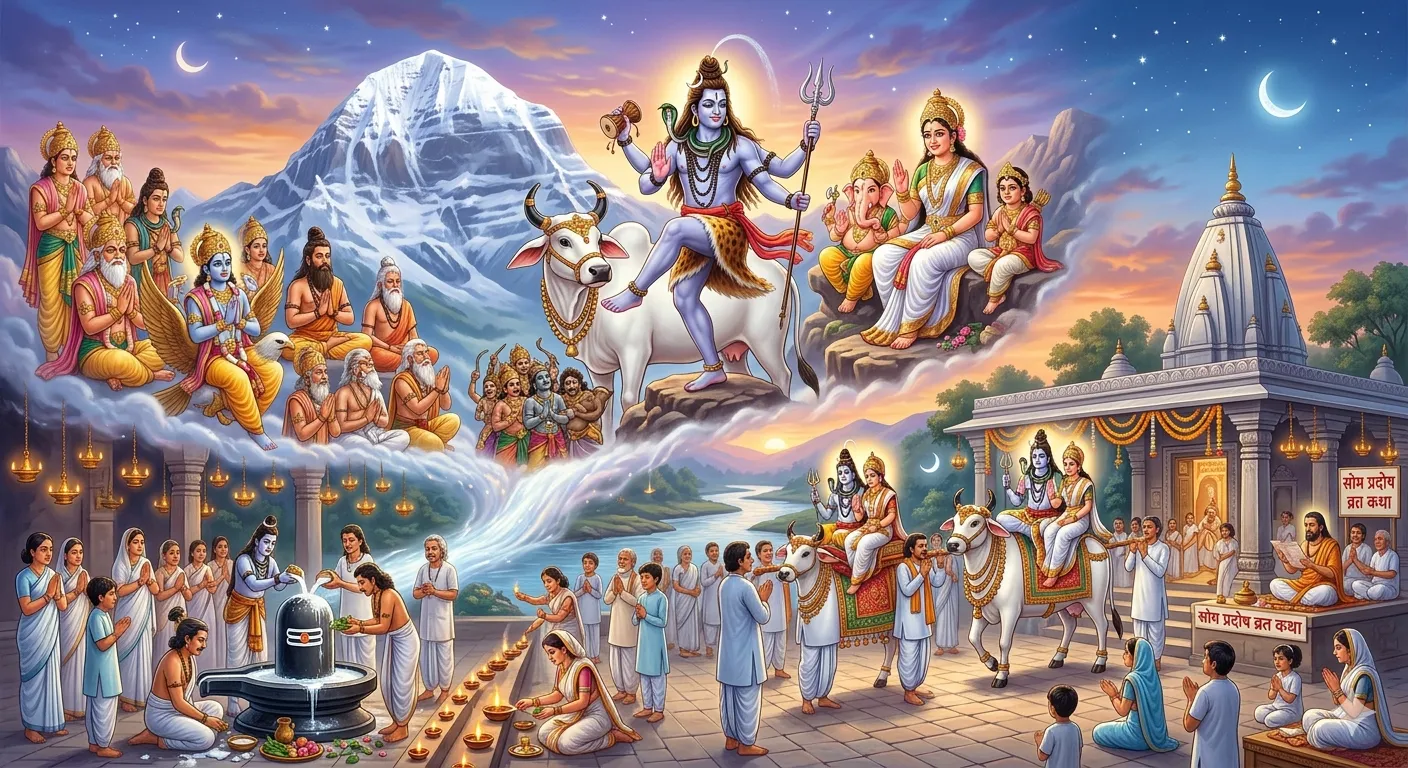
Som Pradosh Vrata is one of the most sacred fasting observances in the Hindu tradition, devoted entirely to Lord Shiva and Goddess Parvati. Observed during the twilight period (Pradosh Kaal) on the 13th lunar day (Trayodashi) that falls on a Monday, this vrat holds extraordinary spiritual significance. The convergence of Monday, the day of the Moon and Lord Shiva, with Trayodashi Tithi creates an unparalleled opportunity for devotees to seek divine blessings, health, and moksha.
Som Pradosh Vrat is observed on Mondays (Soma = Moon) falling on Trayodashi Tithi (13th lunar day) during twilight. According to Hindu mythology, the Devtas and Asuras approached Lord Shiva to save the universe from a lethal poison called Halahala that emerged during the churning of the cosmic ocean (Samudra Manthan). Lord Shiva consumed the poison to protect creation, and Goddess Parvati held his throat to prevent it from entering his body, turning his neck blue, earning him the name Neelakantha. Moved by this selfless sacrifice, the celestial beings praised Lord Shiva during twilight, establishing the sacred Pradosh tradition. Som Pradosh specifically falls on Mondays, making it the most auspicious among all Pradosh observances since Monday is already dedicated to Lord Shiva.
This vrata is mainly observed to:
Grant health, mental peace, and emotional stability to devoted observers.
Fulfill personal wishes and heartfelt desires through Lord Shiva's divine grace.
Provide relief from diseases and long-standing physical ailments.
Ensure a prosperous and peaceful life blessed by Lord Shiva and Goddess Parvati.
Devotees observe this vrat through a structured set of spiritual practices:
Devotees observe full fast (Nirjala), fruit-based fast (Phalahar), or partial fast based on personal capacity.
Permitted foods include fruits, milk, Sabudana, and Singhara flour; onion, garlic, rice, wheat, and non-vegetarian items are strictly avoided.
Evening puja is performed during Pradosh Kaal, the sacred twilight window between sunset and nightfall.
Devotees chant Shiva mantras and recite the Pradosh Vrat Katha (sacred narrative) with family.
Meditation and heartfelt worship of Lord Shiva and Goddess Parvati are performed at home or at Shiva temples.
Som Pradosh Vrata holds deep importance for Hindu devotees:
It is the most powerful among all Pradosh observances because of its Monday association with Lord Shiva's own sacred day.
During the holy Shravan month, this vrat attracts special celestial blessings and divine energy.
It removes negative karmic influences and surrounds devotees with divine protection.
It is believed to grant moksha (liberation from the cycle of rebirth) and spiritual advancement to sincere practitioners.
Observed for millennia across Hindu civilization, it represents an unbroken spiritual tradition connecting generations.
Som Pradosh Vrata is a luminous thread woven into the fabric of Hindu spiritual life. When Monday's sacred lunar energy merges with the power of the Trayodashi Tithi and Pradosh Kaal, devotees are enveloped in Lord Shiva's grace. By observing this vrat with sincerity and devotion, one can attain physical health, mental clarity, fulfillment of desires, and ultimately, liberation itself.