
| Date | Shrawan Krishna Chaturdashi (approximately July 28) |
| Duration | One-day festival |
| Observance | Regional (Kathmandu Valley) |
| Celebrated in | Kathmandu Valley, especially Newari communities in Kathmandu and Bhaktapur |
| Observing Communities | Newari ethnic communities of the Kathmandu Valley |
| Type of Event | Folk/Cultural (Demon-warding festival) |
| Purpose of Event | To ward off evil spirits, demons, and negative supernatural forces through ritual purification, protecting communities and families from malevolent influences. |
| Holiday Status | Not an official public holiday in Nepal |
| First Observed in | Ancient times (pre-Vedic Newari folk tradition) |
Quick Fact: During Gathamug Chahre, effigies made of straw and cloth representing the demon Ghantakarna are placed at crossroads and burned, symbolically eliminating evil from the community. Children and youth carry torches and shout ritual proclamations to scare away evil spirits, making this one of the most dramatic and participatory festivals in the Newari calendar.
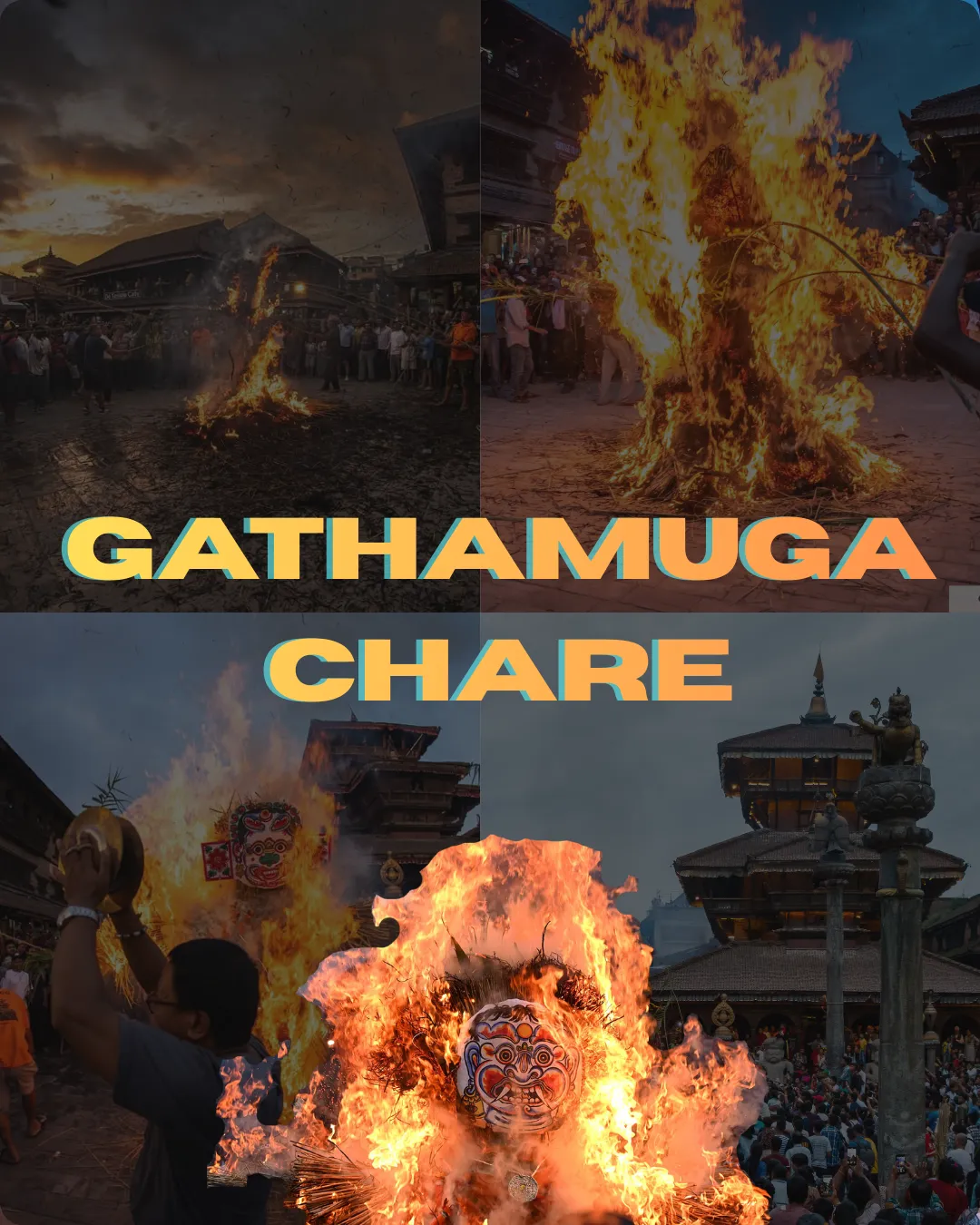
Gathamug Chahre (also known as Gathemangal or Ghantakarna festival) is a traditional Newari festival of the Kathmandu Valley, celebrated primarily to ward off demons, evil spirits, and malevolent supernatural forces from the community. This vibrant and ancient festival represents one of the oldest protective ritual traditions in the Nepal Valley, combining folk religious beliefs with dramatic community ceremonies that engage people of all ages in the collective act of purification.
Gathamug Chahre has deep roots in ancient Newari religious tradition, blending elements of pre-Buddhist folk religion, Tantric practices, and Newari cosmology. The festival centers on the mythological demon Ghantakarna ("bell-eared"), a fearsome being who terrorized communities by wearing bells on his ears to drown out the name of Vishnu. According to legend, the frogs and local people outwitted the demon and caused his downfall. The effigy burning of Ghantakarna at crossroads symbolizes the collective community's power to overcome evil. Historically, this festival served as a powerful social ritual for community identity, collective protection, and the psychological reassurance that evil forces can be overcome through united action and ritual practice. The Newari tradition has preserved this ancient festival with remarkable continuity across many centuries.
This festival is observed to:
Ward off evil spirits, demons, and negative supernatural forces from the community.
Perform ritual purification of communities, crossroads, and households from malevolent influences.
Protect families, especially children, from harm caused by evil spiritual forces.
Cleanse negative influences through ceremonial fire, effigy burning, and collective ritual action.
This festival is celebrated through:
Creating and publicly displaying effigy figures of the demon Ghantakarna at crossroads and public spaces.
Burning effigies and symbolic objects at crossroads to symbolically eliminate evil from the community.
Placing ritual food offerings in paper bowls at roadsides as symbolic offerings to appease or distract spirits.
Community processions, torch-lighting, and ritual gatherings with active youth participation.
Traditional chants, ceremonial proclamations, and practices specific to the Newari cultural tradition.
This festival is significant because:
It preserves ancient Newari protective rituals and cultural identity across generations in the Valley.
It reinforces community solidarity and shared cultural values through participatory ritual action.
It provides psychological reassurance and community resilience through collective ritual practices.
It represents a living synthesis of folk religion with Hindu-Buddhist Newari traditions.
It maintains a vibrant connection to the Valley's ancient pre-modern spiritual worldview and cultural heritage.
Gathamug Chahre is a compelling testament to the power of community ritual as a force for protection, solidarity, and cultural continuity. In the ancient lanes of the Kathmandu Valley, the burning of Ghantakarna's effigy unites generations in a shared act of courage—a reminder that evil is always ultimately overcome when communities stand together with conviction and collective spiritual power.