
| Date | Bhadra Shukla Dwadashi (August 24) |
| Duration | One-day celebration |
| Observance | National and Regional |
| Celebrated in | Nepal, India, and Vaishnava communities worldwide |
| Observing Communities | Vishnu devotees, Vaishnavas, and general Hindu devotees |
| Type of Event | Religious |
| Purpose of Event | To celebrate the divine appearance of Lord Varaha (Baraah), the boar avatar of Lord Vishnu, who rescued the earth goddess Bhudevi from the cosmic ocean and restored dharmic order. |
| Holiday Status | Not an official public holiday in Nepal |
| First Observed in | Ancient period (Vedic era, referenced in Vishnu Purana and Bhagavata Purana) |
Quick Fact: Lord Varaha (the Boar) is the third avatar of Lord Vishnu in the Dashavatara (ten principal avatars). According to the Bhagavata Purana, the demon Hiranyaksha had submerged the earth (Bhudevi) into the cosmic primordial ocean. Lord Vishnu incarnated as a mighty cosmic boar, dove into the ocean, defeated Hiranyaksha in a fierce battle, and lifted the earth out of the waters on his tusks, restoring cosmic order.
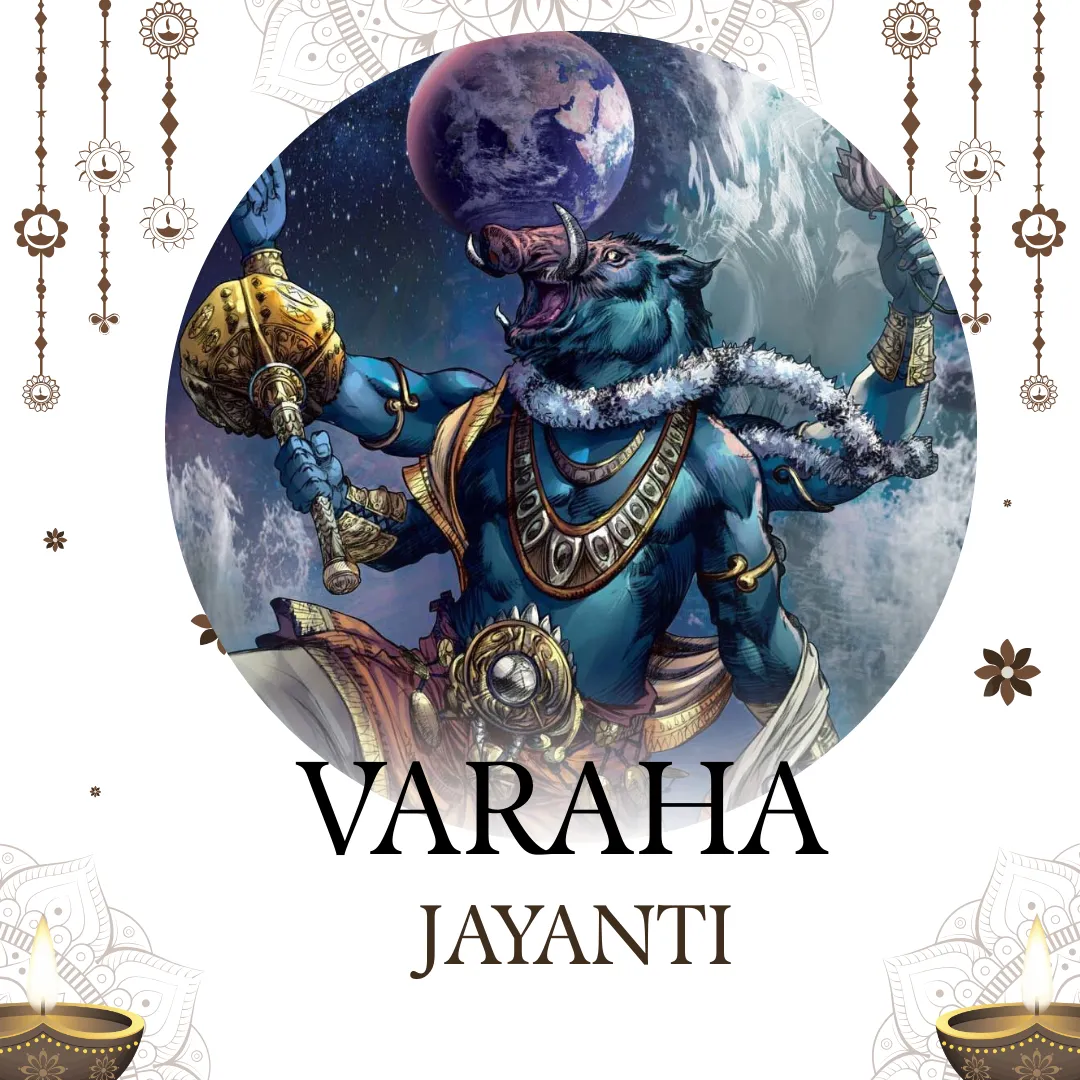
Baraah Jayanti (also known as Varaha Jayanti) is the sacred celebration of Lord Varaha, the third avatar of Lord Vishnu in the Dashavatara tradition. Observed on the twelfth day (Dwadashi) of the waxing moon (Shukla Paksha) in the month of Bhadra, this auspicious day commemorates Lord Vishnu's divine incarnation as a cosmic boar who rescued the earth goddess from the depths of the primordial ocean, symbolizing the divine commitment to upholding cosmic order and protecting all of creation.
The story of Lord Varaha is one of the most dramatic and cosmically significant narratives in Hindu Puranic literature. According to the Bhagavata Purana, Vishnu Purana, and Matsya Purana, the powerful demon Hiranyaksha (brother of Hiranyakashipu) in his arrogance seized the earth goddess Bhudevi and dragged her into the depths of the cosmic ocean (Garbhodaka). Seeing all creation threatened, Lord Vishnu incarnated as the mighty boar Varaha—immense in size, cosmic in power—dove into the boundless primordial waters, and engaged Hiranyaksha in a fierce battle lasting one thousand years. Upon defeating the demon, Lord Varaha carefully lifted the entire earth on his curved tusks and restored her to her rightful place in the cosmos. The earth goddess Bhudevi is often depicted seated on the tusk of Varaha as a symbol of divine protection. This avatar represents Vishnu's role as the great sustainer and protector of the universe.
This celebration is observed to:
Celebrate the divine incarnation of Lord Varaha and his cosmic rescue of the earth goddess Bhudevi.
Reinforce faith in Lord Vishnu as the eternal sustainer and protector of dharmic order in creation.
Honor the symbolic message that divine power will always arise to protect the earth and its inhabitants.
Deepen devotion to Lord Vishnu through reflection on the Dashavatara and its cosmic significance.
This occasion is marked through:
Puja and prayers to Lord Varaha at Vishnu temples and household shrines.
Recitation of Varaha-related Puranic narratives and sacred hymns from the Bhagavata Purana.
Fasting and contemplative spiritual practices in honor of Lord Vishnu's divine protection.
Devotional singing of bhajans and religious discourses on Varaha's cosmic significance.
Community gatherings for spiritual celebration and reflection on Vishnu's avatar tradition.
This celebration is significant because:
It commemorates one of Lord Vishnu's most powerful and cosmically significant avatars in the Dashavatara.
It reinforces the core Vaishnava belief in Vishnu's active role as protector and sustainer of all creation.
It celebrates the triumph of divine power over demonic arrogance and the restoration of cosmic balance.
It connects devotees to the rich mythological heritage of Puranic literature and Vaishnava devotion.
It reinforces ecological reverence for the earth as a divine goddess worthy of divine protection.
Baraah Jayanti reminds devotees that no darkness is too deep and no challenge too great for divine love and power to overcome. Just as Lord Varaha plunged into the cosmic ocean to rescue the earth, the festival inspires devotees to trust in the sustaining grace of Lord Vishnu—a grace that upholds all creation even in its darkest hour.