
| Date | Shrawan Shukla Panchami (August 17, 2026) |
| Duration | One-day fasting and worship |
| Observance | National (Nepal) and Regional (India) |
| Celebrated in | Nepal, India, and Hindu communities worldwide |
| Observing Communities | Hindu devotees, farmers, and the general population across South Asia |
| Type of Event | Religious |
| Purpose of Event | To worship serpent deities (Nagas) for divine protection, fertility, and blessings, while honoring snakes as sacred beings in Hindu tradition. |
| Holiday Status | Public holiday in Nepal |
| First Observed in | Vedic period (pre-Aryan serpent worship traditions) |
Quick Fact: In Nepal, Nag Panchami holds a distinctive tradition where images of serpents are painted on the door frames of homes and worshipped with milk, flowers, and incense. The serpent deity Vasuki (who coils around Lord Shiva's neck) and Ananta Shesha (who forms the cosmic bed of Lord Vishnu) are among the most revered Nagas in this festival.
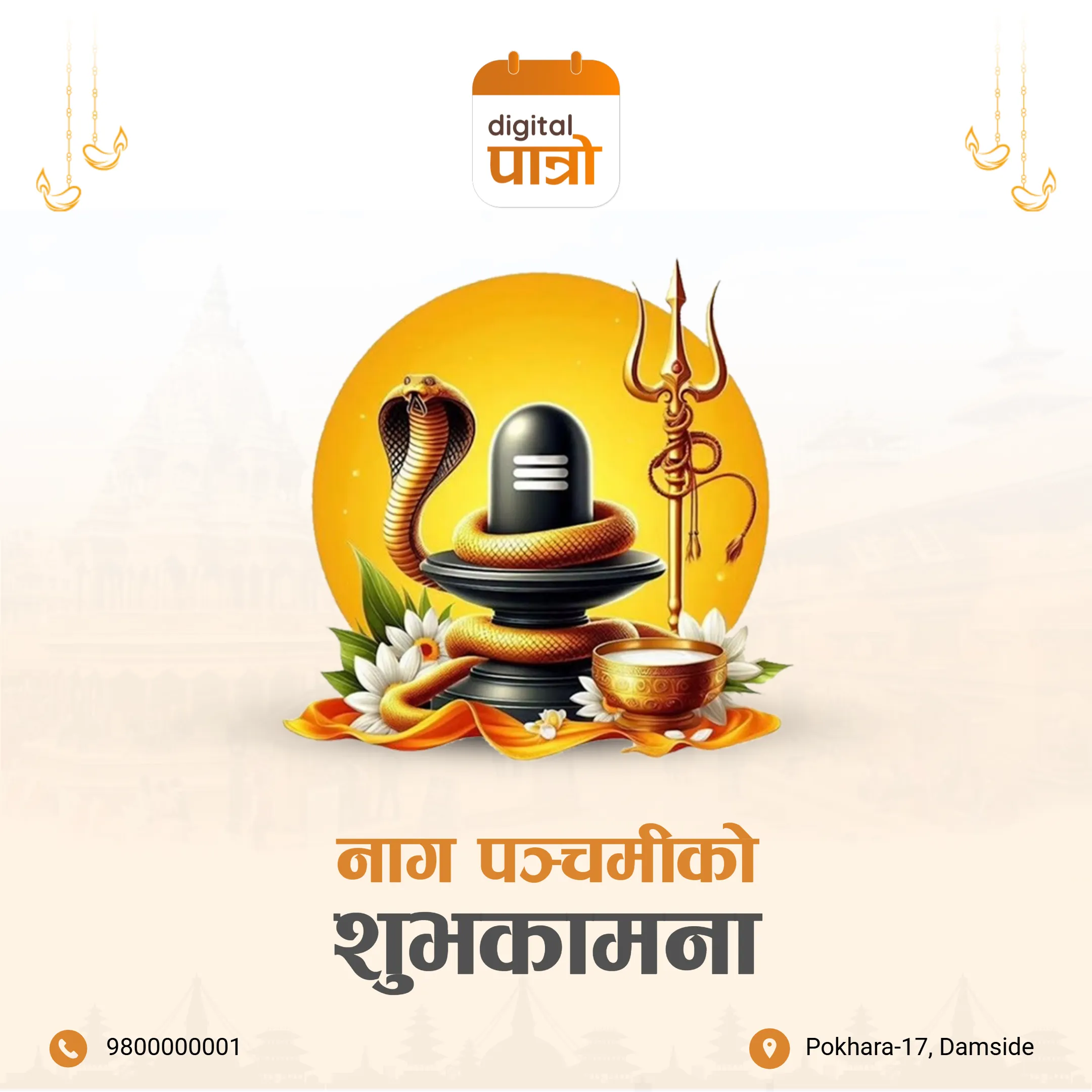
Want to share wishes with your friends, family, or on social media using a post like the one above? Create a personalized post for free in seconds using our post generator. Your text, your Style.
Nag Panchami Vrata is an ancient Hindu festival dedicated to the worship of serpent deities (Nagas), observed on the fifth day (Panchami) of the waxing moon (Shukla Paksha) in the auspicious month of Shrawan. One of the most widely celebrated festivals across Nepal and India, Nag Panchami combines ecological reverence for serpents with deep spiritual significance rooted in Vedic and Puranic traditions.
Nag Panchami has roots in both Vedic and pre-Vedic Hindu traditions where snakes were revered as divine beings associated with fertility, cosmic energy, and creation. The festival's mythology is richly woven through Hindu scriptures, from Lord Shiva wearing a serpent as an ornament, to Lord Vishnu resting on the cosmic serpent Ananta Shesha, to Lord Krishna's dance upon the Kaliya serpent in the Yamuna River. In Nepal, the Kathmandu Valley has a particularly strong Nag worship tradition, with numerous ancient Nag temples and sacred ponds associated with serpent deities. The festival falls in the monsoon season when snakes emerge from their underground retreats, making the timing of worship symbolically and ecologically significant.
This vrata is observed to:
Worship serpent deities (Nagas) and seek their divine protection for households and families.
Honor snakes as sacred beings intrinsically connected to divine power in Hindu tradition.
Seek blessings for fertility, prosperity, and protection from snake-related dangers during monsoon.
Appease Nagas for household protection and the well-being of family members.
This vrata is observed through:
Creating images of serpents from clay or drawing Naga figures on door frames of homes.
Offering milk, rice, flowers, and incense to serpent deities at homes and temples.
Fasting or consuming specific permitted foods as a mark of devotion and self-discipline.
Visiting Nag temples, sacred ponds, and serpent shrines for puja rituals and prayers.
Processions and devotional gatherings in communities with significant Naga worship traditions.
This festival is important because:
It integrates ecological consciousness and reverence for nature with living spiritual practice.
It honors ancient serpent worship traditions central to Hindu and Buddhist cosmology.
It provides a cultural framework for peaceful coexistence with snakes in the natural world.
It reinforces reverence for natural forces and divine creation through ritual worship.
It is widely and enthusiastically observed across both Hindu and Buddhist communities in Nepal.
Nag Panchami Vrata is a testament to the profound ecological wisdom embedded in Hindu spiritual tradition. By honoring serpents as sacred beings and divine instruments of cosmic power, this festival reminds devotees of the intricate connection between the natural world and the divine order. It is a celebration of reverence, protection, and the timeless wisdom of living in harmony with all of creation.