
| Date | Bhadra 10 (August 28) |
| Duration | One day (celebrated on Janai Purnima) |
| Observance | Culinary and food tradition celebration |
| Celebrated in | Nepal (particularly Newar and Brahmin-Chhetri communities) |
| Observing Communities | Newari community, Brahmin-Chhetri community, and Hindu families |
| Type of Event | Traditional food celebration |
| Purpose of Event | To honor the tradition of consuming Kwati, a nourishing soup of nine sprouted beans, as a sacred food preparation reflecting indigenous nutritional wisdom and the principle of food as sacred offering. |
| Holiday Status | Not an official holiday (cultural and culinary tradition) |
| First Observed in | Pre-modern traditional practice |
Quick Fact: Kwati Khane Din celebrates the ancient Nepali culinary tradition of preparing and sharing Kwati, a nourishing soup made from nine different sprouted beans (black gram, chickpea, green gram, soybean, field bean, garden pea, field pea, cowpea, and rice bean). This nine-bean combination embodies extraordinary nutritional wisdom, providing a complete protein profile that ancient Nepali food culture understood as essential for post-monsoon physical nourishment and health restoration.
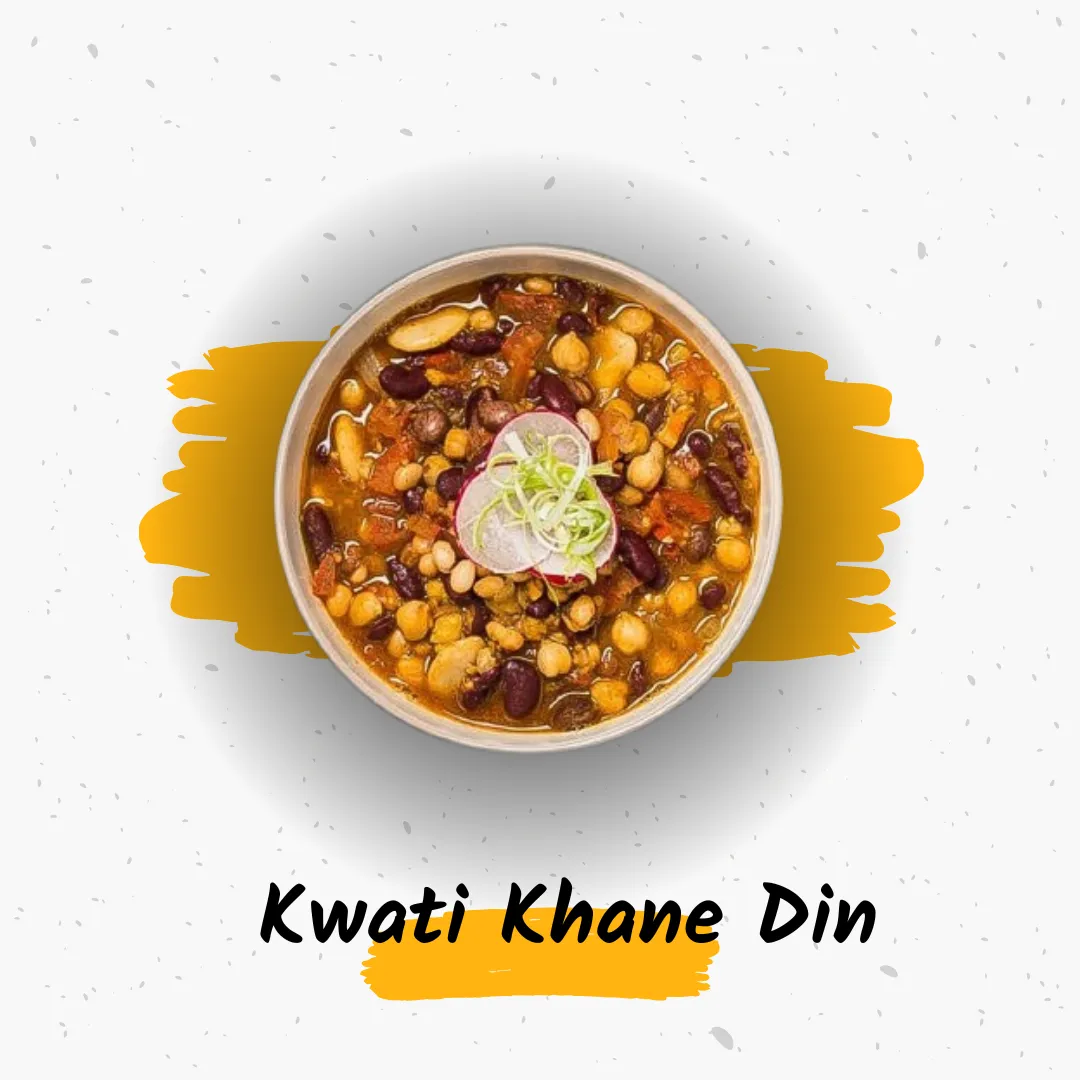
Kwati Khane Din (literally "the day of eating Kwati") is a cherished Nepali culinary tradition observed on Janai Purnima, the full moon of Shravan month. On this day, families across Nepal prepare and share Kwati, a wholesome, slow-cooked soup made from nine different varieties of sprouted beans. This ancient food tradition represents the remarkable nutritional intelligence of Nepali-Indian food culture, recognizing the superior health benefits of sprouted legumes during the physically demanding monsoon period. Kwati Khane Din transforms food preparation into a sacred act of community nourishment and cultural preservation.
The tradition of Kwati preparation on Janai Purnima has ancient roots in Newari and broader Nepali food culture, reflecting the practice of consuming seasonal, nutritionally rich foods at astronomically significant moments. The nine-bean combination in Kwati was not chosen arbitrarily, it reflects sophisticated indigenous understanding of complementary proteins, amino acid profiles, and the digestive benefits of sprouted legumes. The practice of sprouting beans for 3–4 days before cooking makes the nutrients more bioavailable and reduces anti-nutritional factors, demonstrating ancient food science wisdom. The tradition of offering Kwati to temple deities before consuming it embodies the Hindu principle of food as sacred Prasad—transforming everyday nutrition into an act of devotion and spiritual gratitude.
This culinary tradition is observed to:
Consume a nutritionally superior sprouted bean preparation for physical nourishment and health.
Honor traditional food preparation wisdom and the culinary heritage of Nepali culture.
Celebrate agricultural abundance and the diversity of legume crops grown in Nepal.
Strengthen community bonds through the sharing of festive, traditionally prepared meals.
Kwati preparation and sharing follows a careful traditional process:
Bean Sprouting: Nine different bean varieties are soaked and sprouted for 3–4 days before the festival.
Slow Cooking: Sprouted beans are slow-cooked together into a thick, nourishing soup.
Traditional Seasoning: Kwati is seasoned with ginger, garlic, cumin, turmeric, and other traditional spices.
Temple Offering: Kwati is first offered to temple deities as sacred Prasad before family consumption.
Community Sharing: Kwati is shared generously among family members, neighbors, and community members.
Traditional Accompaniments: Kwati is enjoyed with Puri (fried bread), fresh pickles, and traditional side dishes.
Knowledge Transmission: Elders teach the next generation the traditional preparation techniques and significance.
Kwati Khane Din holds nutritional, cultural, and spiritual significance:
It preserves extraordinary traditional food preparation knowledge and indigenous nutritional wisdom.
It demonstrates sustainable agricultural practice by celebrating the diversity of seasonal legume harvests.
It embodies the Hindu principle that food is a sacred offering (Prasad) rather than mere physical fuel.
It strengthens community bonds through the practice of preparing and sharing traditional foods together.
It affirms cultural continuity through the active transmission of culinary traditions from elders to youth.
Kwati Khane Din is a beautiful celebration of the intersection between food culture, ancestral wisdom, and community life. By preparing the ancient nine-bean soup according to time-honored methods and sharing it as a sacred community meal, Nepali families simultaneously nourish their bodies, honor their ancestors, and transmit their cultural heritage to the next generation. This delicious tradition is a reminder that our food traditions carry the nutritional wisdom of generations and deserve to be celebrated, honored, and passed on.