
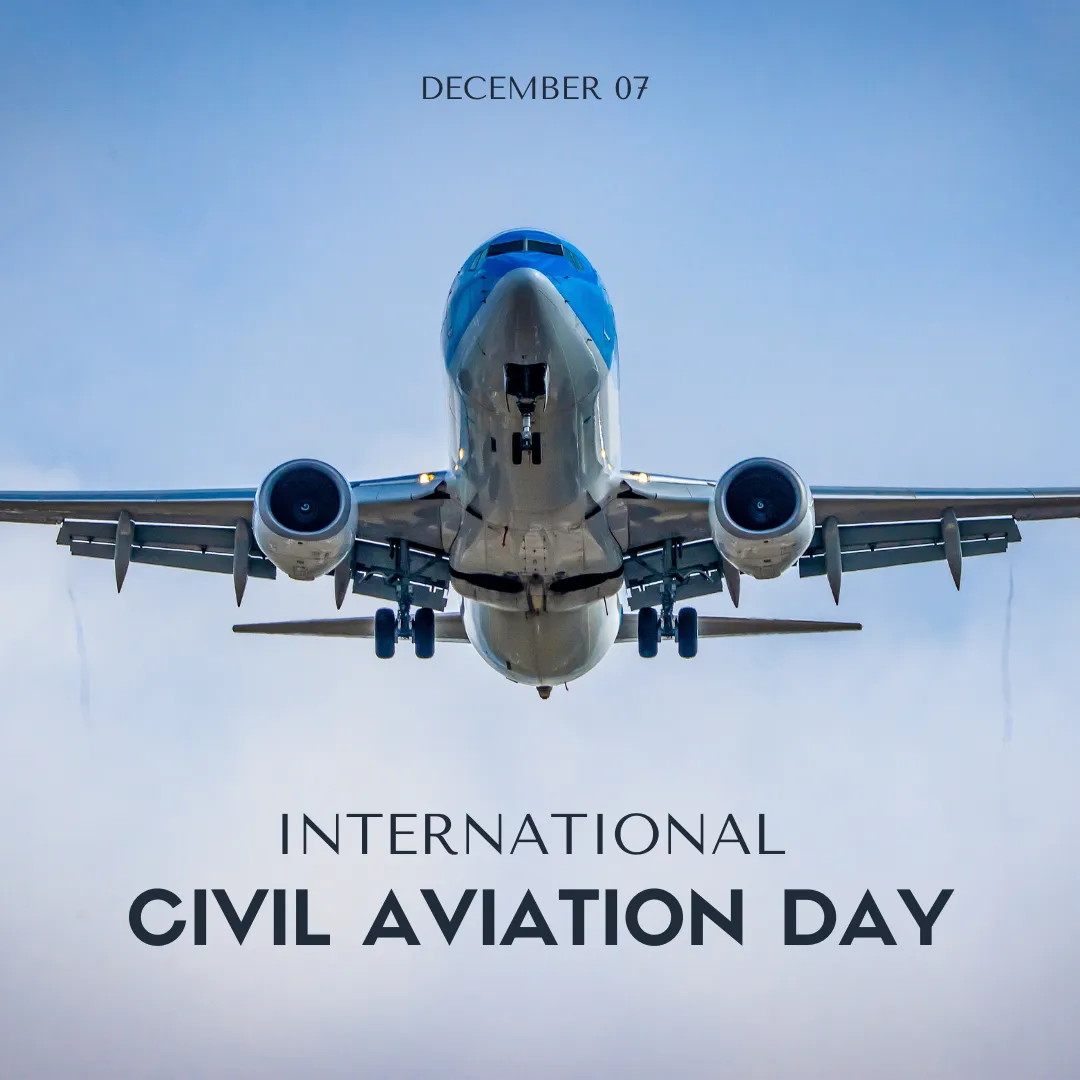
Every time an airplane takes off, it carries more than passengers and cargo. It carries dreams, opportunities, cultures, and connections across borders. To recognize the importance of this global system, the world observes International Civil Aviation Day every year on 7 December. This day highlights how civil aviation plays a crucial role in modern life by connecting nations, supporting economies, and promoting peace and cooperation.
International Civil Aviation Day is not just about airplanes or airports. It is about people, progress, safety, and the shared responsibility of keeping the skies safe, efficient, and sustainable for future generations.
|
Detail |
Information |
|
Event name |
International Civil Aviation Day |
|
Date |
7 December (every year) |
|
Type of event |
International observance / Awareness day |
|
Observed by |
United Nations Member States, ICAO, global aviation community |
|
First observed |
1994 |
|
Official UN recognition |
1996 |
|
Organized by |
International Civil Aviation Organization (ICAO) |
|
Origin |
Chicago Convention on International Civil Aviation (1944) |
|
Purpose |
Promote safe, secure, efficient, and sustainable civil aviation |
|
Holiday status |
Not a Public Holiday |
International Civil Aviation Day is a global observance that recognizes the importance of civil aviation in connecting the world. Civil aviation refers to all non-military air transport, including passenger flights, cargo services, and humanitarian aviation.
The day focuses on how air transport supports international cooperation, global trade, tourism, disaster relief, and cultural exchange. It also highlights the work done by aviation professionals such as pilots, engineers, air traffic controllers, regulators, and airport staff who ensure safe and efficient air travel every day.
International Civil Aviation Day is celebrated to raise awareness about the vital role aviation plays in global development and daily life. Its main purposes include:
Promoting global connectivity: Aviation links countries, cities, and people faster than any other mode of transport.
Supporting economic growth: Air transport helps businesses, trade, tourism, and job creation worldwide.
Ensuring safety and security: The day emphasizes the need for global standards and cooperation to keep air travel safe.
Encouraging sustainability: It highlights efforts to reduce aviation’s environmental impact and promote greener technologies.
Strengthening international cooperation: Aviation depends on shared rules and trust between nations.
The observance also reminds governments and organizations that aviation is a key enabler of the United Nations Sustainable Development Goals, especially those related to infrastructure, innovation, and global partnership.
The foundation of International Civil Aviation Day goes back to 7 December 1944, when representatives from 52 countries met in Chicago, USA. This historic meeting resulted in the Convention on International Civil Aviation, commonly known as the Chicago Convention.
The convention established the basic principles and rules for international air travel and created a framework for cooperation among countries. It marked the beginning of a unified global aviation system.
As a result of the Chicago Convention, the International Civil Aviation Organization (ICAO) was formed to oversee and regulate international civil aviation.
In 1994, ICAO marked the 50th anniversary of the Chicago Convention and first observed International Civil Aviation Day.
In 1996, the United Nations General Assembly officially recognized the day and added it to the UN observance calendar.
Since then, 7 December has been celebrated worldwide to reflect on aviation’s achievements and future challenges.
The International Civil Aviation Organization (ICAO) is a specialized agency of the United Nations. It plays a central role in organizing and promoting International Civil Aviation Day.
ICAO works with its member states to:
Set global aviation safety and security standards
Improve air navigation and airport infrastructure
Promote environmentally responsible aviation
Support innovation and capacity building
Through International Civil Aviation Day, ICAO communicates its long-term vision of safe, secure, efficient, and sustainable air transport for all.
International Civil Aviation Day often follows themes that reflect ICAO’s priorities and global aviation goals. These themes may run annually or across multiple years.
|
Year |
Theme |
|
1994 |
50th Anniversary of the Chicago Convention |
|
1996 |
Using Satellites to Make Civil Aviation Safer |
|
2005 |
The Greening of Flight |
|
2010 |
Safe, Secure, and Sustainable Aviation |
|
2014 |
70 Years of the Chicago Convention |
|
2019 |
75 Years of Connecting the World |
|
2020–2023 |
Advancing Innovation for Aviation Development |
These themes show how aviation has evolved from basic connectivity to a focus on innovation, sustainability, and global responsibility.
In today’s fast-moving world, civil aviation is more important than ever. Its impact can be seen in many areas:
Globalization: Aviation allows businesses and people to operate internationally with ease.
Humanitarian aid: Aircraft deliver emergency supplies during natural disasters and crises.
Technology and innovation: Modern aviation relies on digital systems, satellites, and automation.
Climate responsibility: The aviation sector is working toward lower emissions and cleaner fuels.
Post-pandemic recovery: Aviation has been key to reconnecting countries and rebuilding economies.
Without civil aviation, global cooperation and mobility would slow down significantly.
Countries and aviation organizations mark the day in various ways, including:
Seminars and conferences on aviation safety and sustainability
Awareness campaigns and educational programs
Aviation exhibitions and airport events
Media discussions and social media outreach
Recognition of aviation professionals
These activities help inform the public and inspire future generations to explore careers in aviation.
International Civil Aviation Day matters because it reminds the world that aviation is a shared global responsibility. Safe skies require cooperation, trust, and continuous improvement.
As the industry faces challenges such as climate change, growing air traffic, and new technologies, this day encourages innovation and collaboration. It also promotes equal access to air transport, ensuring that aviation benefits all regions and communities.
International Civil Aviation Day is more than a date on the calendar. It is a celebration of human progress, global cooperation, and the power of connection. From its roots in the Chicago Convention to its modern focus on sustainability and innovation, the day highlights how civil aviation continues to shape our world.
As we look to the future, International Civil Aviation Day reminds us that safe, secure, and sustainable aviation is essential for building a more connected and peaceful global society.