
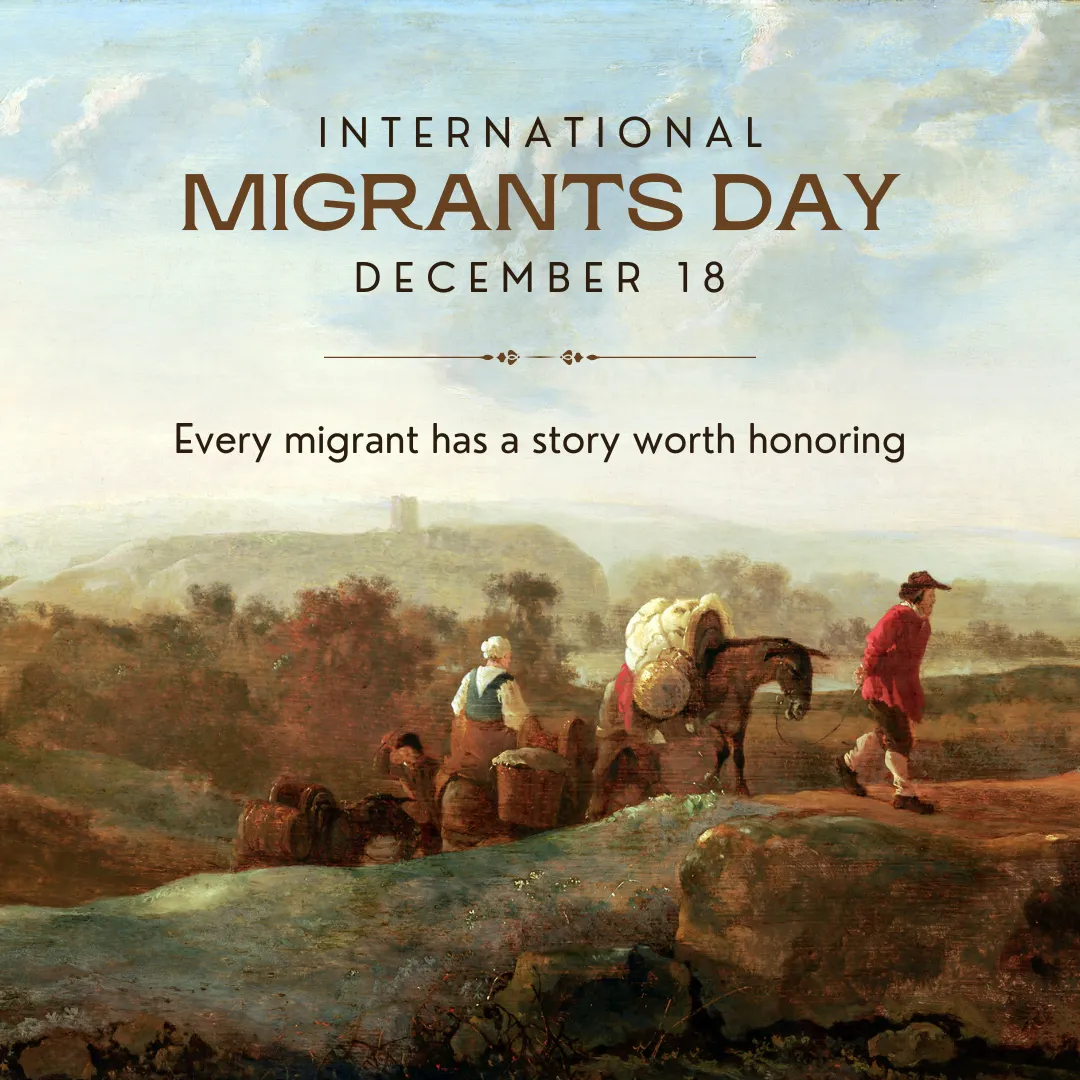
Every year, on 18 December, the world observes International Migrants Day. This day is dedicated to recognizing the millions of people who move from one country to another for work, education, family, or safety. It celebrates the positive contributions migrants make to societies and economies and raises awareness about the challenges they face.
Migration is a natural part of human history. People have always moved in search of better opportunities or safety. Today, migration is a global phenomenon, shaping economies, cultures, and communities worldwide.
|
Date |
18 December |
|
First Observed |
1990 |
|
Officially Recognized By |
United Nations (2000) |
|
Type |
International Awareness Day |
|
Key UN Agencies |
International Organization for Migration (IOM), UNESCO |
|
Purpose |
Highlight migrant contributions and promote rights |
|
Holiday Status |
Not a Public Holiday |
International Migrants Day is an annual observance that focuses on the people behind global migration. It emphasizes the value migrants bring to societies and the challenges they face, such as discrimination, unsafe travel, or limited access to services.
Migrants include anyone moving for work, study, family reunification, or protection, whether temporarily or permanently. The broader term “migrant” captures more types of human movement than “immigrant,” which usually refers to people moving permanently into a new country.
The day encourages governments, organizations, and communities to support safe, orderly, and dignified migration policies while appreciating migrants’ contributions to social, cultural, and economic development.
The observance began in 1990, when the United Nations General Assembly adopted the International Convention on the Protection of the Rights of All Migrant Workers and Members of Their Families. The convention established a global framework to protect migrant workers and their families, ensuring fair treatment and rights worldwide.
On 4 December 2000, the UN officially designated 18 December as International Migrants Day. The date was chosen to highlight both the growing global migrant population and the importance of respecting and protecting their rights. This recognition solidified the day as a global reminder of migration’s significance.
The United Nations plays a leading role in promoting International Migrants Day. Agencies like the International Organization for Migration (IOM) and UNESCO advocate for policies that:
Protect migrants’ safety and human rights
Promote their social and economic contributions
Encourage countries to implement the Global Compact for Safe, Orderly, and Regular Migration
The UN emphasizes that migration is not just a challenge—it is an opportunity. Well-managed migration policies can enhance cultural exchange, economic development, and social growth.
|
Year |
Theme |
|
2015 |
“Integration Matters: Towards Inclusive Societies” |
|
2016 |
“Safe Migration: Bringing Sustainable Solutions” |
|
2017 |
“Migrants and Cities: New Partnerships for Sustainable Solutions” |
|
2018 |
“Diversity Makes a Difference” |
|
2019 |
“Spotlight on Women and Children in Migration” |
|
2020 |
“Harnessing the Potential of Human Mobility” |
|
2021 |
“Promoting Human Rights of Migrants” |
|
2022 |
“Building Bridges, Not Walls” |
|
2023 |
“Migration, Climate, and Resilience” |
|
2024 |
“Fostering Inclusion and Understanding” |
|
2025 |
“My Great Story: Cultures and Development” |
Including past themes shows how the focus of migration awareness has evolved, highlighting cultural diversity, safety, human rights, and sustainable development over the years.
International Migrants Day is important because it:
Migrants play a vital role in economies around the world. They fill labor gaps, contribute skills and innovation, and often support their home countries through remittances. For example, migrant workers in the Philippines send billions of dollars annually to support families and communities back home, fueling local development.
The day highlights challenges migrants face, including:
Discrimination or social exclusion
Unsafe or irregular migration routes
Limited access to education, healthcare, and legal protections
By understanding these issues, societies can become more empathetic and inclusive.
International Migrants Day emphasizes that all migrants, whether documented or not, deserve fair treatment, safety, and opportunity. Protecting migrant rights is crucial for creating equitable and thriving communities.
The day is observed worldwide through:
Public campaigns showcasing migrants’ contributions
Cultural events celebrating diversity and shared experiences
Webinars and discussions organized by UN agencies, NGOs, and local communities
Policy dialogues to strengthen migration governance and rights protection
These activities foster understanding, break stereotypes, and promote inclusion.
Migration is influenced by factors such as:
Climate change: floods, storms, and droughts force relocation
Conflict and persecution: creating refugee populations
Economic opportunity: driving people to seek better jobs or education
Challenges exist if migration is unmanaged, including human trafficking or exploitation. However, opportunities include:
Boosting economic growth in both sending and receiving countries
Cultural enrichment and innovation
Knowledge and skill transfer between communities
Migrants are vital to global economies. Specific examples include:
Philippines: Migrants sent $34.3 billion in remittances in 2022, making up roughly 9% of GDP.
United States: Immigrants contributed $2 trillion to GDP in 2021.
Healthcare in the UK: 13% of NHS staff are foreign-born, playing critical roles in patient care.
Germany: 16.2% of the population is foreign-born (2020), enriching society with skills, culture, and labor.
Some examples we can include (all factual and verifiable):
Remittances: Nepal is one of the top remittance-receiving countries. In 2022–23, Nepal received $10.5 billion in remittances, which is roughly 24% of the country’s GDP. This shows how migrant workers are crucial to Nepal’s economy.
Labor Migration: Millions of Nepali citizens work abroad, mainly in India, the Gulf countries, and Malaysia, contributing to both local and host economies.
Women Migrants: Around 30–35% of Nepali migrant workers abroad are women, often working in domestic or healthcare sectors.
Skills & Knowledge Transfer: Migrants bring back skills, knowledge, and exposure that benefit local communities and industries in Nepal.
International Migrants Day is a reminder that migration is a human story of courage, resilience, and contribution. Migrants enrich societies culturally, socially, and economically. They bridge communities, bring diversity, and drive innovation.
As the world becomes increasingly interconnected, recognizing and protecting migrant rights is more important than ever. By celebrating their journeys and contributions, we not only honor the migrants themselves but also strengthen the communities they touch.
International Migrants Day encourages us all to value diversity, respect human rights, and acknowledge the essential role of migrants in shaping a better world.
“Migration is more than movement—it’s the heartbeat of human connection and progress.”