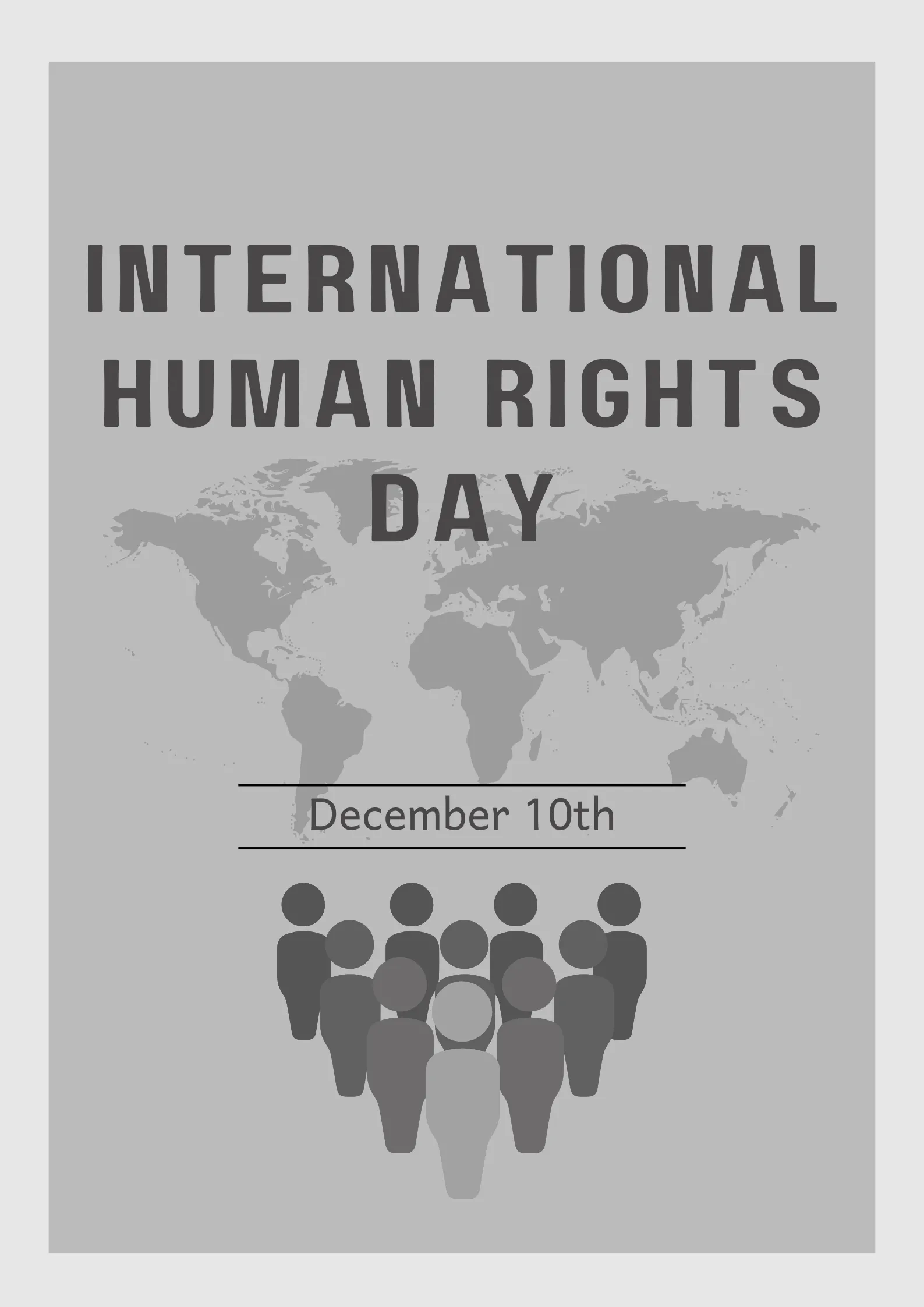
Every year on December 10, the world comes together to celebrate International Human Rights Day, a reminder that freedom, dignity, and justice belong to everyone. This day marks the anniversary of the Universal Declaration of Human Rights (UDHR), adopted by the United Nations General Assembly in 1948. Human Rights Day is not just a historical observance—it’s a call to action, encouraging individuals, communities, and governments to protect and promote the rights of every person.
In a world where millions still face discrimination, violence, or inequality, this day reminds us that human rights are not privileges—they are essential and universal.
|
Fact |
Details |
|---|---|
|
Name |
International Human Rights Day |
|
Date |
December 10 (annually) |
|
First Observed |
1950 (by UN General Assembly Resolution 423[V]) |
|
Origin |
Commemorates the adoption of the UDHR in 1948 |
|
Adopted By |
United Nations General Assembly |
|
Purpose |
Promote awareness and respect for human rights worldwide |
|
Holiday Status |
Not a public holiday |
The idea of International Human Rights Day came after the devastation of World War II, when global leaders realized that every person needed protection from atrocities, oppression, and discrimination. In response, the United Nations created the UDHR, establishing a common standard of rights that belong to every human being, regardless of nationality, gender, race, or religion.
On December 10, 1948, the UDHR was adopted in Paris by the UN General Assembly, listing 30 essential rights that cover civil, political, economic, social, and cultural aspects of life. Just two years later, in 1950, the UN officially designated December 10 as Human Rights Day.
Since then, countries, schools, NGOs, and communities worldwide have celebrated this day through seminars, campaigns, exhibitions, and educational programs that remind people of the importance of human dignity and justice.
The Universal Declaration of Human Rights is a cornerstone of modern human rights law. While not legally binding, it has influenced constitutions, international treaties, and national laws, providing a foundation for protecting freedoms across the globe.
The UDHR’s articles cover everything from the right to life and liberty to the right to education, work, and fair wages. These rights are interconnected—ensuring one right often supports another. For example, access to education empowers people to exercise their political rights, like voting or participating in decision-making.
Right to life, liberty, and personal security
Freedom from torture and slavery
Freedom of thought, conscience, and religion
Freedom of expression and peaceful assembly
Right to a fair trial and equality before the law
Right to work with fair wages
Right to education and lifelong learning
Right to health and an adequate standard of living
Right to participate in cultural life
All rights are:
Universal: Belong to everyone.
Inalienable: Cannot be taken away arbitrarily.
Indivisible: Civil, political, economic, and social rights are equally important.
Equal and Non-discriminatory: Everyone has the same rights, no matter their identity.
Supported by Governments: States must respect, protect, and fulfill these rights.
The UN Office of the High Commissioner for Human Rights (OHCHR) leads global campaigns for Human Rights Day. The UN sets an annual theme to highlight priority issues. For example:
2025 Theme: Human Rights, Our Everyday Essentials – emphasizes that rights are part of everyday life, from education and work to safety and freedom of speech.
2024 Theme: Our Rights, Our Future, Right Now – focuses on the importance of protecting rights for future generations.
2021 Theme: Equality – Reducing Inequalities, Advancing Human Rights – highlights challenges related to discrimination and social justice.
Activities led or supported by the UN include:
Public discussions, forums, and workshops
Art exhibitions and cultural events
Social media campaigns raising awareness
Educational programs in schools and communities
These initiatives make human rights tangible, not abstract, and encourage active participation by citizens worldwide.
Human Dignity is the Foundation – Every person deserves respect and recognition.
Equality and Non-Discrimination – Rights apply to all, regardless of race, gender, religion, or background.
Rights Are Interconnected – The protection of one right supports others.
Governments Have Obligations – States must respect, protect, and fulfill rights through laws and policies.
Everyone has a Role – Citizens can advocate, educate, and defend the rights of others.
While progress has been made, millions still face inequality, oppression, or violence. Human Rights Day reminds us that:
Rights are not guaranteed without effort.
Education and awareness empower action.
Every individual can contribute—from volunteering with NGOs to raising awareness in communities.
By learning about and respecting human rights, societies can build peace, justice, and equality for all citizens.
Human Rights Day celebrations vary but often include:
Workshops and seminars on rights topics
School programs educating children about freedom and equality
Art exhibitions and cultural performances highlighting human dignity
Social media campaigns with hashtags to spread awareness
International Human Rights Day is more than a date—it’s a global reminder that everyone deserves freedom, dignity, and justice. It connects history, law, and daily life, inspiring action and advocacy for a fairer world.
This day asks us to reflect:
How can we protect the rights of others?
Are we upholding justice in our communities?
What can we do to create equality for future generations?
By answering these questions, each person becomes a guardian of human rights, ensuring that the ideals of the UDHR continue to shape a world built on fairness, freedom, and respect.