
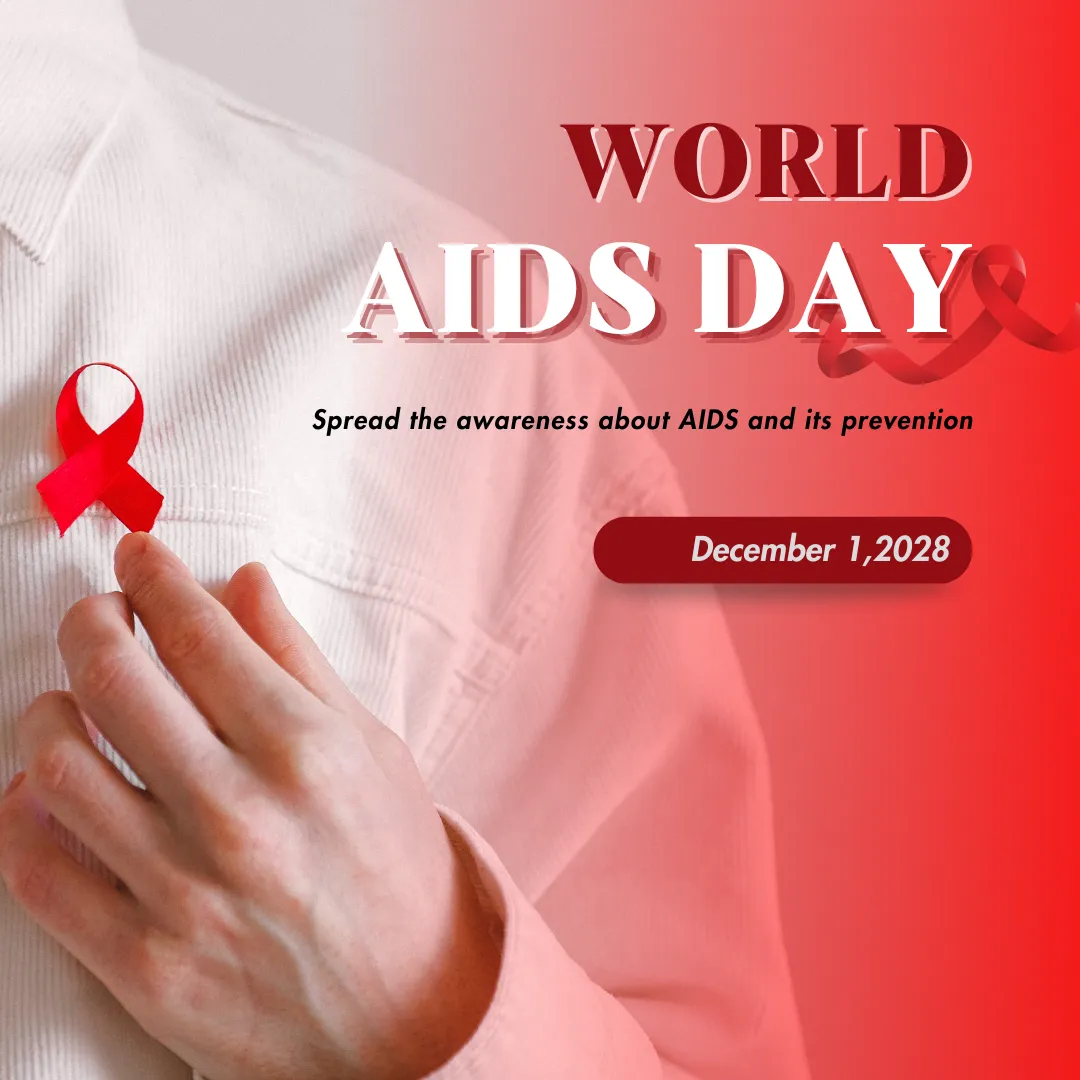
World AIDS Day, observed annually on December 1, is one of the most significant global health awareness days. It brings the world together to remember those affected by HIV/AIDS, raise awareness about the epidemic, and reflect on the progress still needed to end it as a public health threat.
The day also emphasises solidarity with people living with HIV, honouring lives lost, and highlighting education and prevention efforts. World AIDS Day reminds us that despite medical advancements, millions of people still face the challenges of HIV, and awareness, care, and compassion remain critical.
|
Quick Fact |
Details |
|
Day |
1 December annually |
|
First Observed |
1988 |
|
Created By |
World Health Organization (WHO) |
|
Symbol |
Red Ribbon |
|
Observed By |
United Nations member states and global communities |
|
Purpose |
Raise awareness of HIV/AIDS and show support for people living with it |
|
Significance |
The first Global Health Day focused on a specific disease |
|
Holiday Status |
Not a Public Holiday |
World AIDS Day was first observed on 1 December 1988, making it the first international health day dedicated to a specific disease. The day grew from the global urgency to confront HIV/AIDS, which was spreading rapidly throughout much of the 1980s and early 1990s.
Initially led by the World Health Organization (WHO) to increase awareness and encourage discussion about HIV and AIDS, responsibility for organising themes and campaigns was later assumed by UNAIDS, the Joint United Nations Programme on HIV/AIDS.
World AIDS Day serves several key purposes:
Raise Awareness: Educating people about HIV transmission, prevention, and treatment.
Support People Living with HIV: Showing solidarity and compassion for those affected.
Remember Loved Ones: Honouring millions who have died of AIDS‑related illnesses.
Highlight Progress and Gaps: Acknowledging the progress made, and the work still needed to end AIDS as a public health threat.
Over the years, the focus has shifted from simply raising awareness to a more comprehensive global response that includes human rights, equity, and community leadership.
Each World AIDS Day has a theme that guides global messaging and advocacy. Themes help highlight priority issues in the global HIV response:
|
Year |
Theme |
|
1988 |
Communication |
|
2005–2010 |
Stop AIDS. Keep the Promise |
|
2011–2015 |
Getting to Zero |
|
2018 |
Know Your Status |
|
2020 |
Global solidarity, shared responsibility |
|
2021 |
End inequalities. End AIDS. |
|
2022 |
Equalize |
|
2023 |
Let Communities Lead |
|
2024 |
Take the right path |
|
2025 |
Overcoming disruption, transforming the AIDS response |
These themes reflect the evolving challenges and priorities—from testing and treatment access to human rights and inequality.
One of the most recognised symbols of World AIDS Day is the Red Ribbon. It was first created in 1991 by a group of artists as a visual expression of compassion and support for people living with HIV/AIDS.
The colour red was selected for its boldness, blood connection, and symbolic associations with love and passion, making it a powerful visual reminder of the shared struggle against HIV.
Today, the red ribbon is worn at events, shared on social media, and displayed in communities around the world as a symbol of awareness, strength, and solidarity.
World AIDS Day is observed in many ways, from small community events to national and international programs. Common activities include:
Public education campaigns that share accurate information about HIV prevention and care.
Ceremonies and memorials to honour those who died from AIDS‑related illnesses.
Community and group rallies that promote solidarity and inclusion.
Memorial quilts and art installations that reflect loss and hope.
Media coverage and special programming to spread the message more widely.
These collective efforts help maintain public attention and encourage communities to continue working toward ending HIV stigma and improving access to care.
The global HIV/AIDS epidemic has had a huge impact on millions of lives and continues to challenge health systems worldwide:
Around 37.7 million people were living with HIV globally as of recent estimates.
Millions of lives have been lost to AIDS‑related illnesses since the epidemic began.
With better access to antiretroviral therapy (ART), many people with HIV now lead long and healthy lives.
Despite progress in treatment and prevention, inequalities in access to healthcare and persistent stigma remain barriers in many regions.
World AIDS Day is more than just a date on the calendar. It is a global moment of reflection, remembrance, and renewed commitment to confronting HIV/AIDS. From its beginnings in 1988 to today, people everywhere have joined in solidarity—educating others, honouring lives lost, and advocating for a future free from fear and discrimination.
The fight against HIV is not over, but with shared knowledge, compassion, and collective action, progress continues.