
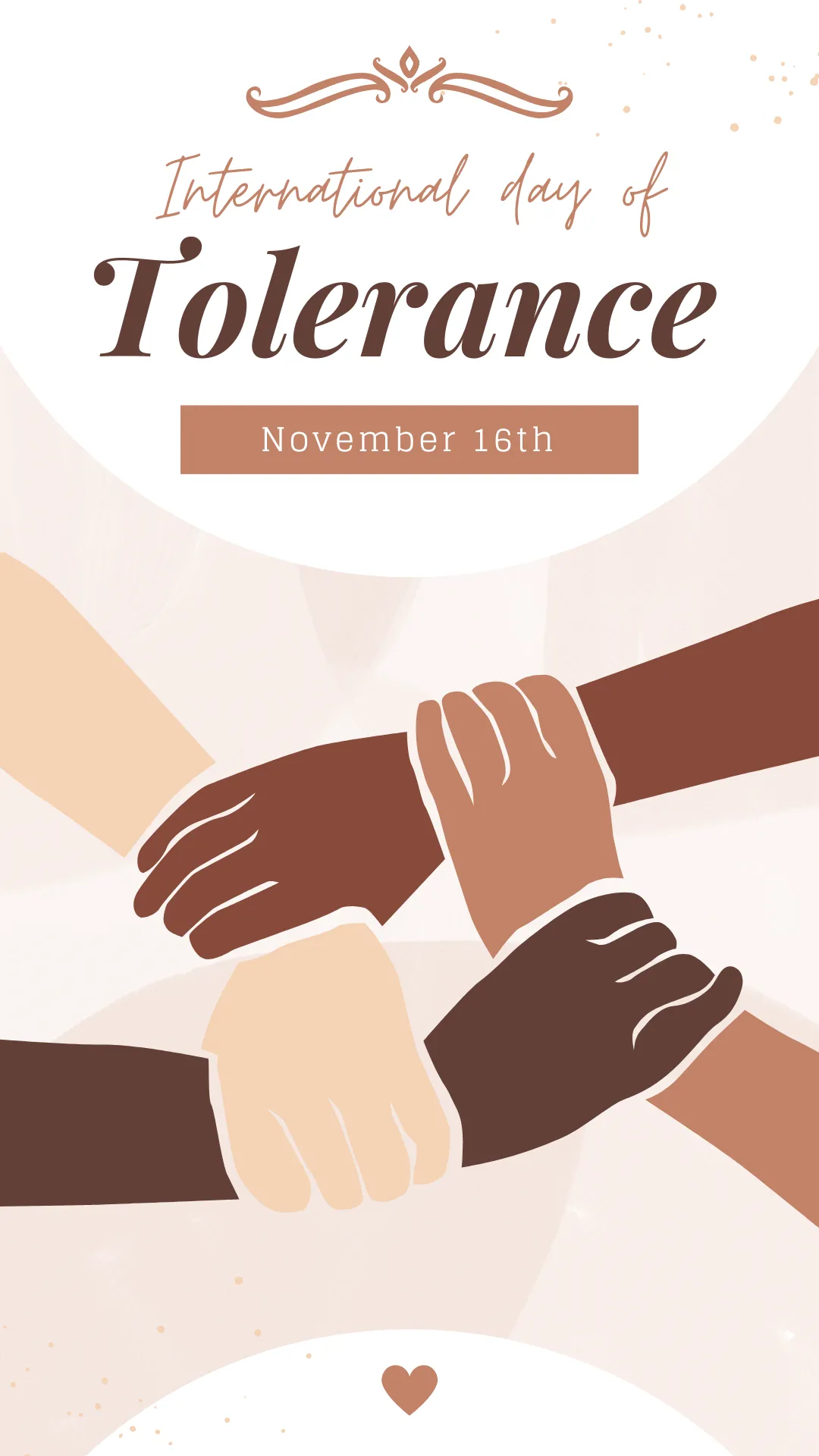
In a world more connected than ever, differences can either divide or enrich us. The International Day for Tolerance, observed every year on 16 November, is a global reminder that respect, understanding, and empathy are stronger than prejudice and hate.
This day encourages individuals, communities, and nations to recognize the value of diversity, challenge intolerance, and build societies where everyone can coexist peacefully. It was established to highlight the dangers of discrimination and promote mutual respect among different cultures, religions, and ways of life.
The date was chosen to honor the Declaration of Principles on Tolerance, adopted by UNESCO on 16 November 1995, and formally recognized by the UN General Assembly in 1996. Since then, it has been observed worldwide as a moment to reflect on how tolerance can prevent conflict, promote human rights, and strengthen communities.
|
Fact |
Details |
|
Name |
International Day for Tolerance |
|
Date |
16 November (annually) |
|
First Observed |
1996 |
|
Declared By |
United Nations General Assembly |
|
Initiated By |
UNESCO (United Nations Educational, Scientific, and Cultural Organization) |
|
UN Resolution |
A/RES/51/95 |
|
Purpose |
Promote tolerance, respect for diversity, and peaceful coexistence |
|
Type |
UN Observance Day |
|
Core Message |
Respect, acceptance, and appreciation of cultural and human diversity |
|
Related Prize |
UNESCO‑Madanjeet Singh Prize for the Promotion of Tolerance and Non‑Violence |
|
Holiday Status |
Not a Public Holiday |
The early 1990s were marked by ethnic conflicts, cultural tensions, and political upheaval in various parts of the world. These events highlighted how intolerance and discrimination can lead to serious human suffering.
In response, the United Nations Year for Tolerance (1995) was proclaimed, with UNESCO leading efforts to promote education, dialogue, and cultural understanding. The Declaration of Principles on Tolerance defines tolerance not as indifference but as active respect, acceptance, and appreciation of diversity, including culture, beliefs, and ways of life.
Following this, the UN General Assembly adopted Resolution 51/95 in 1996, officially naming 16 November as the International Day for Tolerance. Since then, it has become a global occasion to reflect on the importance of living harmoniously in diverse societies.
Tolerance is more than just a concept; it is a practical tool for building peaceful and inclusive communities. Its relevance today is stronger than ever due to globalization, migration, and digital connectivity, which sometimes amplify misunderstandings and conflicts.
Key reasons the day is important:
Encourages Respect for Diversity: Teaches people to value cultural, religious, and personal differences rather than fear them.
Challenges Prejudice and Discrimination: Highlights the dangers of hate speech, stereotypes, and societal exclusion.
Supports Peaceful Societies: Promotes dialogue, cooperation, and nonviolent conflict resolution.
Strengthens Human Rights: Aligns with the principle that all people deserve dignity, equality, and freedom.
Fosters Education and Awareness: Inspires schools, organizations, and communities to engage in lessons about empathy and inclusion.
UNESCO has played a central role in the creation and observance of the International Day for Tolerance because its mission includes promoting peace through education, science, and culture. UNESCO’s Declaration of Principles on Tolerance remains the foundation of this day’s meaning.
The UN General Assembly officially recognized the observance through Resolution 51/95 in 1996, encouraging all member states to teach and promote tolerance in schools, communities, and governments.
While there isn’t an official theme every year, initiatives and campaigns usually focus on:
|
Year |
Focus / Theme |
|
2020 |
Combating racial discrimination and promoting equality |
|
2021 |
Education as a tool to foster tolerance |
|
2022 |
Social cohesion and sustainable development |
|
2023 |
Respect, acceptance, and appreciation |
|
2024 |
Building inclusive societies and combating extremism |
To celebrate the spirit of the day, UNESCO awards the Madanjeet Singh Prize every two years. It honors individuals or organizations that have exceptionally promoted tolerance and non-violence. The prize:
Includes US$100,000;
Encourages global efforts to build peaceful communities.
Highlights innovative initiatives in education, dialogue, and conflict resolution.
The day is not a public holiday, but is observed globally through:
Educational programs in schools and universities;
Community workshops, seminars, and debates;
Public campaigns on social media to raise awareness;
Storytelling, art, and cultural events celebrating diversity;
Initiatives that challenge stereotypes and foster empathy.
These activities reinforce the message that tolerance is a daily practice, not just a one-day event.
The International Day for Tolerance is a reminder that every individual has a role in creating understanding, respect, and peaceful communities. By embracing differences, challenging prejudice, and promoting empathy, societies can thrive even in challenging times.
Tolerance begins with listening, grows with understanding, and becomes powerful when practiced daily. On 16 November, and every day, we are reminded that respect and kindness are the foundations of a better world.