
Martyrs’ Day
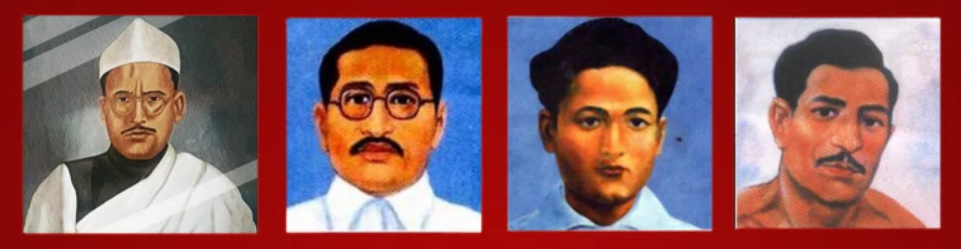
Quick Reference Card
| Date | Magh 16 every year. |
| Duration | One-day event. |
| Observance | National Scale. |
| Celebrated In | Whole Nepal. |
| Observing Communities | Nepal Government Bodies, Nepalese, Patriotic Clubs etc. |
| Type of Event | National Event that honors the martyrs' for their sacrifice for the nation. |
| Purpose of Event | -Pay tribute to the martyrs' of Nepal. -To know the history and honor the contribution to overthrow the Rana Regime. |
| Holiday Status | Yes ( Nepal Government gives a public holiday in Nepal). |
| First Observed In | 2012 Magh 16. |
Quick Fact: Martyrs’ Day honors the brave martyrs who sacrificed their lives for democracy, freedom and national sovereignty of Nepal.
Introduction
Martyrs’ Day is a historic national day celebrated on Magh 16 every year in Nepal. This day is primarily observed to pay tribute to and honor the national heroes and brave individuals of Nepal who have sacrificed their lives for the country’s freedom, democracy, and justice. On this day, the nation remembers the martyrs whose courage and dedication against the autocratic Ranas laid the foundation for a free and democratic Nepal. The entire country comes together to remember these heroes and sacrifices.
Historical Background
Martyrs’ Day is closely connected with Nepal’s struggle against the autocratic Rana Regime. During this time, People were denied basic rights, freedom of expression and participation in governance. The behaviour of the Rana rulers towards the citizens of Nepal led the people to start the anti-Rana movement. Different people came against the Rana in the anti-Rana campaign.
The campaign started with the publishing anti Rana article in the Indian Press. This created worldwide pressure for their cruel behaviour inside the country. In support of King Tribhuwan Bir Bikram Shah, the anti-Rana movement was started with a party named “Nepal Praja Parishad”. The impact of this movement was increasing. Different 4 martyrs of Nepal Shukraraj Shastri, Dharmabhakta Mathema, Dashrath Chand and Gangalal Shrestha were given a chance to either stop the movement or be killed. They choose to sacrifice their life but not to stop the campaign. Their sacrifice awakened the masses and the public, which strengthened the movement against the Ranas.
Martyrs’ of Nepal
Shukraraj Shastri was a scholar and social reformer who believed in education and social equality. He was kept in detention by the Rana. Shukraraj Joshi became Shastri for his knowledge and education. The Rana’s fear of his giving education to the public. He was deprived of the basic rights, medicines and food. He was hanged from a tree in Pachali, Teku, Kathmandu on Magh 10,1997 BS.
DharmaBhakta Mathema was a freedom fighter. He worked inside the King's Palace. He worked hard to awaken the people about their rights. He was also killed at Sifal on Magh 13, 1997 BS for his anti-rana movement.
Dashrath Chand was a brave activist who fought for justice and democracy. He was shot dead at Shoba Bhagwati on Magh 15, 1997 BS.
Gangalal Shrestha was a young revolutionary who worked hard against the Ranas. He was also shot dead at Shoba Bhagwati on Magh 15, 1997 BS
Lakhan Thapa is the first martyr of Nepal. He was hanged in 1933 BS near the Manakamana temple in Gorkha for spreading anti-Rana Propaganda while serving in the Military.
Why is Martyrs' day observed?
Martyr’s Day is observed to
Pay respect to the ones who sacrificed their lives for the nation.
Remember the struggle for democracy, freedom and human rights.
Inspire citizens, especially the youths to uphold democratic values
Strengthen national unity and patriotism among the citizens of the country.
Martyrs' Day is observed across Nepal with dignity and respect.
Floral tributes ceremonies at martyrs’ memorials and statues.
Official programs are organized by the Government of Nepal to remember and pay tribute to the Martyrs' and their contribution.
A moment of silence to pay tribute to the Martyrs'.
Media broadcasts highlight the lives and contributions of Martyrs'.
The main national ceremony is held at Shahid Gate, Kathmandu, where high officials of the government pay tribute to the Martyrs.
Martyrs' Day is important because it:
Reminds citizens of the cost paid for freedom and democracy
Preserves national history and collective memory
Encourages responsibility toward protecting constitutional values
Honors selfless service above personal interest
Martyrs' Day on Magh 16 is not just a day of remembrance but a day of reflection and responsibility for Nepalese history. By honoring the Martyrs', Nepal assures its commitment to democracy, freedom, achievements and the values. The sacrifices of Martyrs' remain a lasting source of inspiration for present and future generations.