
| Date | Bhadra 1 (August 28) |
| Duration | One-day cultural and educational observance |
| Observance | Language celebration and educational observance |
| Celebrated in | Nepal (educational institutions, temples, cultural centers) |
| Observing Communities | Sanskrit scholars, students, cultural enthusiasts, religious practitioners |
| Type of Event | Language and cultural heritage celebration |
| Purpose of Event | To celebrate Sanskrit language's profound contributions to Hindu civilization, knowledge, and spirituality, and to promote the preservation and learning of this ancient language of wisdom. |
| Holiday Status | Not an official public holiday (educational observance) |
| First Observed in | Modern period (formal observance dates to 20th century) |
Quick Fact: Sanskrit Diwas celebrates what linguists consider one of the world's most sophisticated and systematically structured languages, Sanskrit. Known as Devavani (language of the gods) in Hindu tradition, Sanskrit served as the linguistic vehicle through which Vedic wisdom, philosophical treatises (Upanishads), mathematical discoveries, astronomical knowledge, and literary masterpieces were preserved and transmitted across thousands of years of human civilization.
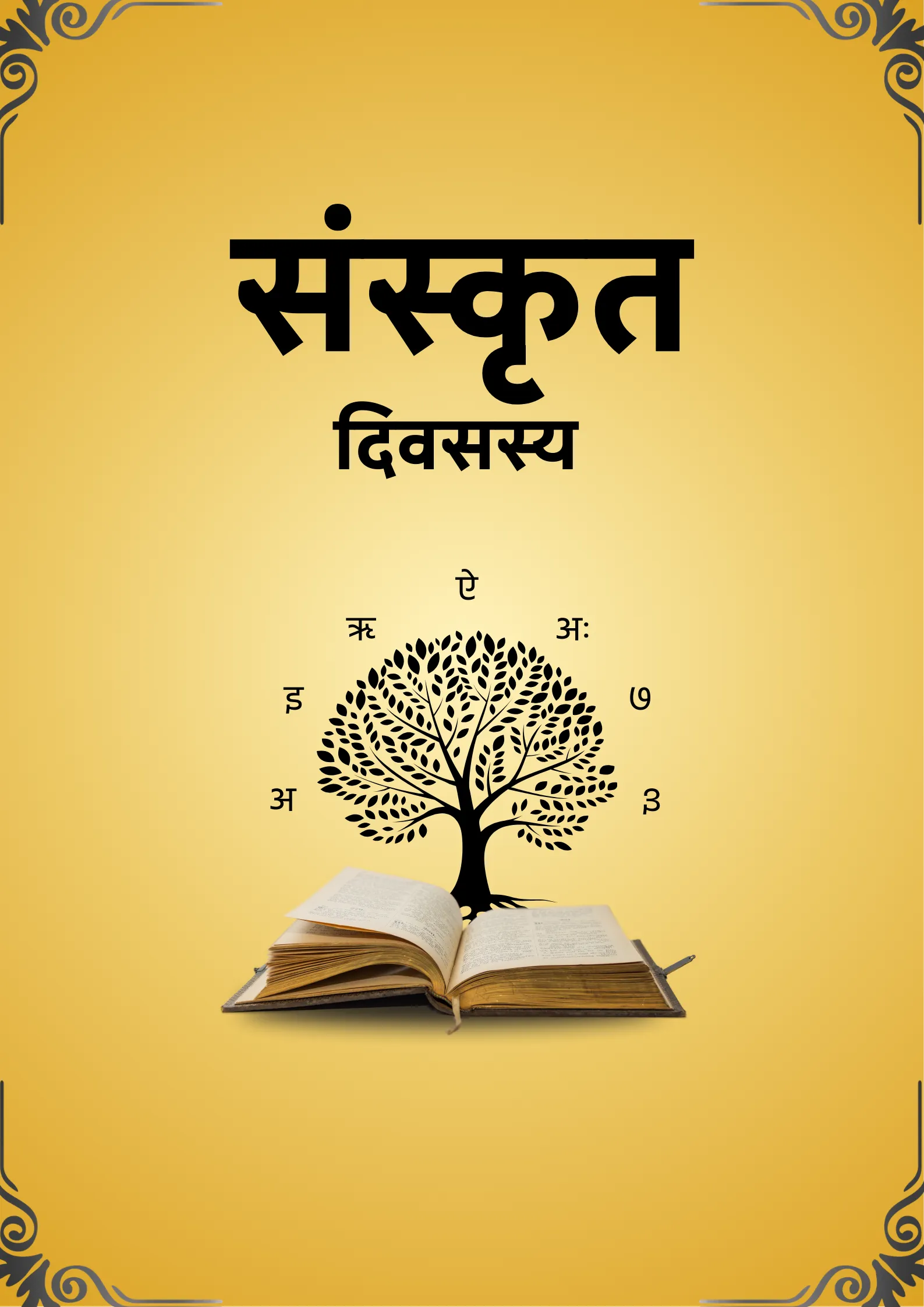
Sanskrit Diwas is a cultural and educational observance celebrating Sanskrit language and its extraordinary contributions to Hindu civilization, human knowledge, and spiritual wisdom. Observed near the beginning of Bhadra month, this day honors the linguistic heritage through which the Vedas, Upanishads, Puranas, philosophical treatises, mathematical texts, and literary classics have been preserved and transmitted across millennia. Sanskrit, revered in Hindu tradition as Devavani (the language of the gods), remains one of humanity's greatest linguistic and intellectual achievements.
Sanskrit is one of the world's oldest continuously documented languages, with the Rigveda being among its earliest known texts, composed approximately 3,500 years ago. The language was codified into a remarkably sophisticated grammatical system by the grammarian Panini around 500 BCE. A systematic achievement so comprehensive that modern computational linguists have recognized it as anticipating principles of formal language theory. In Nepal, Sanskrit has deep historical roots through the Vedic and Hindu scholarly traditions maintained in the Kathmandu Valley's temples and monasteries. Sanskrit Diwas, formally observed on Shravan Purnima in some traditions, draws attention to the urgent need to preserve and promote this living linguistic treasure whose mastery enables direct access to millennia of accumulated human wisdom.
This observance is celebrated to:
Celebrate Sanskrit language's unparalleled contributions to human knowledge and civilization.
Preserve and actively promote Sanskrit learning, scholarship, and contemporary usage.
Honor the linguistic and literary heritage that forms the intellectual foundation of Hindu civilization.
Encourage new generations to engage with classical Sanskrit texts and their timeless wisdom.
Sanskrit Diwas is marked through educational and cultural activities:
Educational Seminars: Lectures and academic programs on Sanskrit language, literature, and grammar.
Shloka Recitation: Public recitation of Sanskrit verses and passages from classical philosophical and literary texts.
Competitions: Sanskrit language competitions, recitation contests, and learning programs in schools and colleges.
Text Readings: Public readings from Sanskrit philosophical texts including the Upanishads and Bhagavad Gita.
Cultural Performances: Theatrical and musical performances incorporating classical Sanskrit language.
Publications: Distribution of Sanskrit learning materials, translations, and scholarly publications.
Sanskrit Diwas carries significant cultural and intellectual importance:
It celebrates one of humanity's greatest linguistic achievements, a language of extraordinary systematic sophistication.
It honors the knowledge transmission system through which Hindu civilization's deepest wisdom has been preserved.
It demonstrates Sanskrit's continuing relevance to contemporary intellectual, philosophical, and spiritual pursuits.
It affirms Nepal's responsibility to preserve and promote this ancient language as part of its cultural heritage.
It connects living practitioners with the deepest sources of Hindu philosophical and spiritual wisdom.
Sanskrit Diwas is a timely reminder that language is not merely a communication tool but a vessel carrying the entire intellectual, spiritual, and philosophical heritage of a civilization. As Sanskrit faces the challenges of declining fluency in modern times, this annual celebration serves as both a tribute to a magnificent linguistic achievement and a call to renewed commitment to its preservation. By honoring Sanskrit, Nepal affirms its connection to one of humanity's most profound intellectual traditions.