Janai Purnima is the most layered day in the Nepali calendar. On one full moon, five different traditions run at the same time, in the same country, often in the same street.
A Brahmin man changes the sacred thread he wears across his chest. A priest ties a yellow doro on the wrist of anyone who walks past, regardless of caste or religion. A sister ties a rakhi on her brother. A Newar family sits down to a bowl of kwati made from nine beans, and someone in the household walks out to the field to feed rice to the frogs. And thirty thousand people, including hundreds of jhankris with drums, climb to a lake at 4,380 metres to bathe in it at dawn.
None of these are the same ritual. All of them are Janai Purnima.
It falls on the full moon of Shrawan, and it is a public holiday in Nepal.
|
Detail |
Information |
|
Nepali Name |
जनै पूर्णिमा |
|
Also Called |
Rakshya Bandhan, Shrawani Purnima, Kwati Punhi, Gunhu Punhi (Newar tradition), Rishi Tarpani |
|
Date |
Purnima (full moon) of Shrawan |
|
Usual Gregorian Window |
Early to late August |
|
Public Holiday |
Yes, it is on the Government of Nepal public holiday list |
|
Duration |
One main day, with Gai Jatra following immediately after |
|
Main Communities |
Brahmin and Chhetri for the Janai ritual, Newar for Kwati and Gunhu Punhi, and widely observed by Hindus for the Doro |
|
Main Pilgrimage Sites |
Gosaikunda in Rasuwa, Kumbheshwar in Patan, Pashupatinath in Kathmandu, Dansanghu in Dolakha, and Trishuli and Bagmati river ghats |
|
Signature Food |
Kwati, a thick soup made from nine sprouted beans |
|
Signature Object |
The Doro, a protective thread tied around the wrist |
|
Followed By |
Gai Jatra, held the very next day in the Kathmandu Valley |
Janai Purnima 2083 BS falls on Bhadra 12, which is Friday, 28 August 2026.
The festival is fixed to Shrawan Shukla Purnima in the lunar reckoning. Because the lunar full moon does not line up with the solar Nepali months, Janai Purnima sometimes lands in Shrawan and sometimes, as in 2083, lands in early Bhadra on the solar calendar. This is normal, and it is not an error in the calendar. Check the panchang for the current year rather than assuming it always falls in Shrawan by the Nepali date.
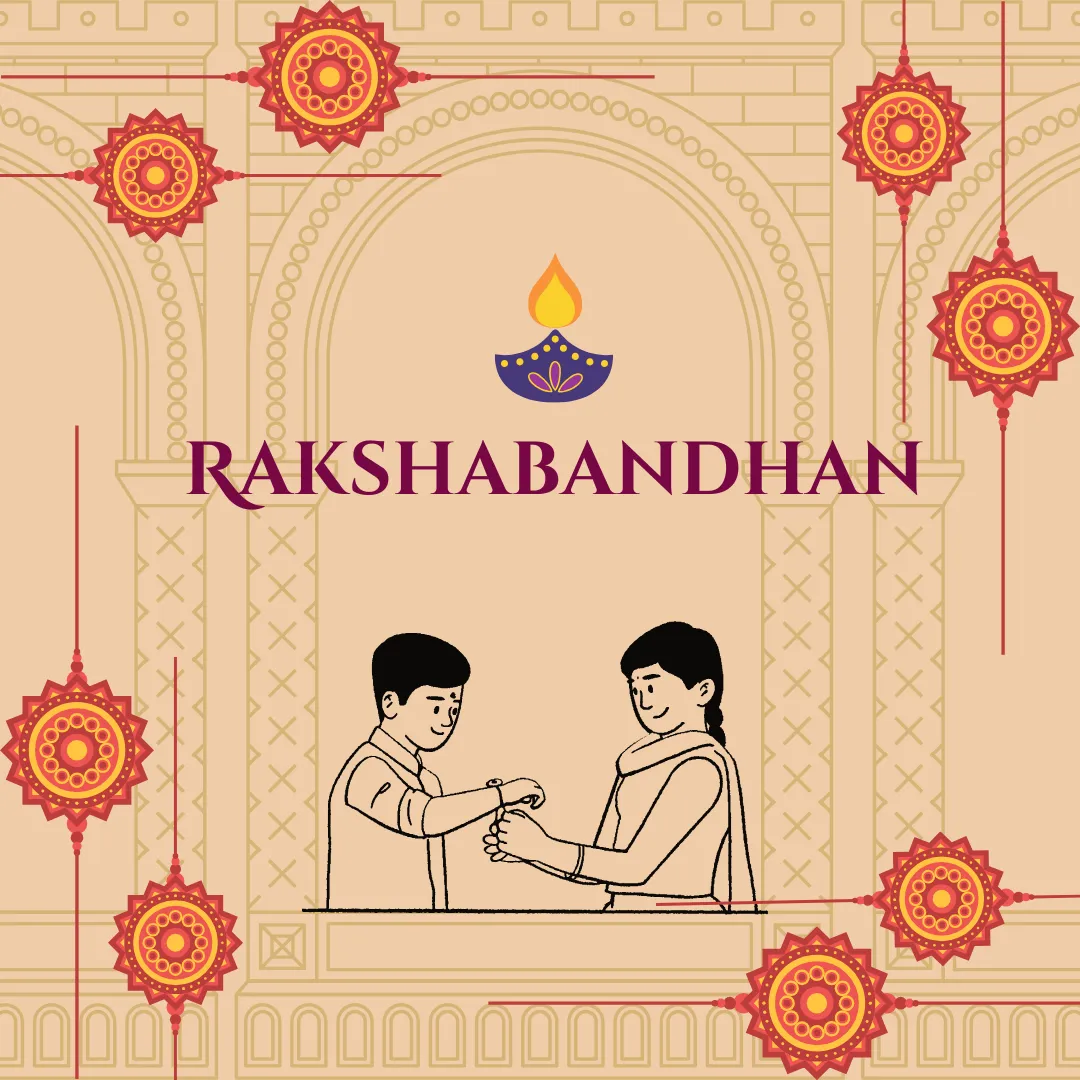
Want to share wishes with your friends, family, or on social media using a post like the one above? Create a personalized post for free in seconds using our post generator. Your text, your Style.
The janai is a thin cotton cord worn over the left shoulder and under the right arm, sitting diagonally across the chest and back. It is worn by initiated men of the Brahmin, Chhetri, and some other communities in Nepal.
It is not one strand. A janai is made of three thinner cords twisted together, and men in certain stages of life wear six or nine. The three strands are explained in several ways, most commonly as the three debts owed to the sages, the ancestors and the gods, or as body, speech and mind, or as the three gunas.
A boy receives his first janai at the Bratabandha ceremony, the initiation that marks the point at which he takes on adult religious responsibility. From that day he is expected to wear it continuously.
The janai is not jewellery and carries real day-to-day obligations. It must be kept clean; it is looped over the right ear during use of the toilet; it is repositioned during rituals for the dead, and it is replaced when it becomes worn, damaged, or ritually impure. A man who has been through a family death observes a period during which the janai is changed as part of the return to normal practice.
This is the day of the annual renewal. The old janai is taken off, and a new one is worn. Before that:
The wearer bathes, ideally in a river, at a confluence, or at a temple tank, in the ritual called Shrawani Snan
A priest performs Rishi Tarpani, the offering of water to the ancient sages, which is why the day is also called Rishi Tarpani
The Shrawani or Upakarma ritual is performed, which formally renews the wearer's commitment to study and to the obligations that came with initiation
Mantras are recited, and the new janai is put on
The old janai is not thrown in the rubbish. It is placed in flowing water, at the base of a tree, or otherwise disposed of respectfully
Janai Purnima is not the day men start wearing a janai. That is Bratabandha, which happens once. Janai Purnima is the day the existing one is replaced.
The doro is the coloured thread, usually yellow or yellow and red, that priests tie around the wrist on this day. Men wear it on the right wrist and women on the left.
This is the part of Janai Purnima that belongs to everybody. You do not need to be a Brahmin, you do not need to have had a Bratabandha, and in practice you do not even need to be Hindu. Priests set up at temples, at river ghats and on street corners across the country, and queues form. Offices, schools and shops all fill up with people wearing the same yellow thread by mid-morning.
The doro is called raksha bandhan in the literal sense, a bond of protection. The priest recites a mantra while tying it, and the thread is understood to protect the wearer through the year.
This is the detail that makes the Nepali version distinct. The doro is not thrown away when it falls off. It is kept, and on Laxmi Puja during Tihar, it is tied to the tail of a cow. The belief attached to it is that the cow will help the wearer cross the Baitarani, the river of the dead, after death. Three months of the calendar are linked together by one piece of string, which is a very Nepali piece of ritual engineering.
Rakshya Bandhan in the sibling sense is the tradition in which a sister ties a decorated thread, the rakhi, on her brother's wrist, applies tika, and prays for his long life. The brother gives a gift and takes on a stated responsibility to protect her.
For families who celebrate the sibling tradition of Raksha Bandhan, exchanging gifts is also part of the occasion. If you are looking for a thoughtful gift for your brother or sister, you can explore Gifty Point for gift ideas or Yes Helping Hand for handmade products that can make the occasion more meaningful.
Several accounts circulate, and none of them cancel the others out.
Krishna cut his finger, and Draupadi tore a strip from her sari to bind the wound. Krishna promised to repay the act. He is understood to have done so during the attempted disrobing of Draupadi in the Kaurava court.
In the Bhavishya Purana account, Indra was losing a war against the asuras. His wife Sachi, on the advice of Brihaspati, tied a sanctified thread on his wrist, and he won.
Vishnu, in the form of Vamana, had promised to stay in the realm of King Bali. Lakshmi tied a thread on Bali's wrist and made him her brother, then asked for her husband's release as her gift.
The account from Mewar in which the widowed queen sent a rakhi to the Mughal emperor Humayun asking for military help. It is a popular story, though historians treat the details as uncertain.
The sibling rakhi tradition is far more central in India than it historically was in Nepal. In most Nepali households, the older and stronger tradition on this day is the janai and the doro, and Bhai Tika during Tihar is the festival that celebrates the brother-sister relationship. The rakhi has grown quickly in Nepal over the last two or three decades, pushed by Indian television, by shops stocking rakhi sets in August, and by cross-border family ties.
That is not a criticism. Traditions travel and then settle. But a page that presents Janai Purnima primarily as a sibling festival has the emphasis backwards for a Nepali audience.
For the Newar community, this same full moon is Gunhu Punhi, and it is a major day in its own right.
Kwati is a thick soup made from a mixture of sprouted beans. Kwa means hot, and ti means soup in Nepali Bhasa. The standard is nine varieties, though households go up to twelve.
The beans commonly used are black gram, chickpea, field bean, soybean, green gram, field pea, garden pea, cowpea, and rice bean.
The beans are soaked for three to four days, usually wrapped in cloth and kept warm, until they sprout. They are then cooked slowly with jimbu, garlic, ginger, cumin, ajwain, turmeric, and chilli, often with meat or bones added, into a heavy soup.
The timing is not arbitrary. Janai Purnima falls at the wettest, coldest, most disease-prone point of the monsoon. Households have been eating a limited diet for weeks, and stored pulses are what is available. Sprouting increases the protein availability and the vitamin content of the beans and makes them easier to digest. The spices used, particularly jimbu, ajwain, and garlic, are the ones traditionally given for stomach and joint complaints.
A bowl of kwati at the end of the monsoon is a piece of practical nutrition that acquired a festival around it, and every Newar household will tell you it is eaten to fight the aches the rains bring.
On this day Newar farming households take cooked rice and kwati out to the fields and offer it to frogs. Byan means frog, ja means cooked rice, nakegu means to feed.
The logic is direct. Frogs call before and during the rains, and in the farming imagination, they bring the monsoon that the paddy depends on. Feeding them is a thank you to the animal that made the rice possible.
The tradition is old. Records kept at Malati Chowk in Bhaktapur dating to Nepal Sambat 818, which is 1689, describe people offering panchamrit, flowers, kwati and beans to frogs on this day.
The frogs, it should be said, do not eat the rice. Everyone involved knows this. That is not the point.
Gunhu Punhi falls inside Gunla, the tenth month of the Nepal Sambat calendar and the holiest month of the year for Newar Buddhists. During Gunla, devotees visit stupas and bahals at dawn, fast, read scripture, and display sacred images. Gunla Bajan, the devotional music played throughout the month by traditional Newar Buddhist ensembles, is one of the defining sounds of the Kathmandu Valley in August.
The largest and most demanding. Gosaikunda is an alpine lake at 4,380 metres in Rasuwa district, inside Langtang National Park.
The legend comes from the Samudra Manthan, the churning of the ocean. When the halahala poison rose from the churning and threatened creation, Shiva drank it. It burned his throat, and to cool himself, he struck his trishul into the mountains, opening a spring that became Gosaikunda.
Over 30,000 pilgrims make the climb for the full moon. They include ordinary devotees, families with children, elderly people who have made the walk every year for decades, and several hundred jhankris, the traditional shamans of Nepal.
The jhankris are the part outsiders remember. They come in white, with headdresses of feathers, with brass bells strapped across the chest, and with the dhyangro, the double-sided drum. They drum and dance through the night by the lake. Gosaikunda is understood in that tradition as a source of spiritual power, and the pilgrimage is where a jhankri renews it and where the dead of the lineage are remembered.
At dawn, the pilgrims bathe in the lake. It is freezing, it is at altitude, and it is the point of the entire journey.
The five-storey Kumbheshwar temple in Patan holds a pond that local belief connects underground to Gosaikunda. On Janai Purnima, a lingam is installed in the middle of the pond, and pilgrims who cannot make the climb to Rasuwa bathe and worship here instead. The crowds are enormous, and this is the largest urban Janai Purnima site in the country.
Priests line the Bagmati at Pashupatinath, performing Shrawani Snan and tying doro. The queue for the doro on this day is one of the longest of the year.
Dansanghu in Dolakha, Trishuli river ghats, Devghat at the confluence in Chitwan, Barahakshetra in Sunsari, Ridi on the Kaligandaki, and river confluences across the hills all hold Janai Purnima gatherings.
Janai Purnima is immediately followed by Gai Jatra, on the first day of the dark fortnight. In the Kathmandu Valley, families who have lost a member in the past year lead a cow, or a child dressed as a cow, through the streets. The two festivals run back to back, and in Kathmandu, Bhaktapur and Patan, the crowds of one flow directly into the crowds of the other.
If you are planning to be in the Valley for Janai Purnima, stay one more day.
Janai Purnima is a gazetted public holiday in Nepal. Government offices, banks, schools, and most private offices close. In the Kathmandu Valley, Gai Jatra the following day is also observed as a holiday in the Valley districts.
Note that the current live page states this is not an official holiday. That is incorrect and needs to be fixed.
Go to a temple or a ghat in the morning. Priests set up early, and the queues build fast. Many workplaces also arrange a priest to visit, and in most Nepali offices someone will simply hand you one.
Start four days early. The beans have to be soaked and sprouted, and there is no shortcut. Soak them, drain them, wrap them in a damp cloth, and keep them somewhere warm, rinsing daily. Cook slowly with jimbu and ajwain.
This is a serious walk, not a day out.
The lake sits at 4,380 metres, and altitude sickness is a real risk on a fast ascent
The standard approach is from Dhunche or Syabrubesi in Rasuwa, going through Chandanbari and Cholangpati
Most trekkers take three days up. Pilgrims often do it faster, which is exactly why rescue cases spike around the festival every year
It is the monsoon. Trails are wet, leeches are active, landslides close roads in Rasuwa most years, and visibility is poor
Permits are required for Langtang National Park along with a TIMS card
Facilities at the lake during the mela are basic and extremely crowded
Carry warm layers. It is August in the plains, and it is near freezing at the lake at night
| Term | Meaning |
|---|---|
| Janai | The sacred cotton thread worn across the chest by initiated men |
| Bratabandha | The initiation ceremony at which a boy first receives the Janai |
| Doro | The yellow protective thread tied around the wrist on this day |
| Rakhi | A decorated thread tied by a sister around her brother's wrist |
| Rishi Tarpani | The offering of water to the sages, performed on this day |
| Shrawani Snan | The ritual bath taken before changing the Janai |
| Upakarma | The annual renewal of study and ritual obligations performed on this day |
| Kwati | A traditional soup made from nine types of sprouted beans |
| Gunhu Punhi | The Newar name for this full moon |
| Gunla | The holiest month of the Newar Buddhist calendar, in which this day falls |
| Byanja Nakegu | The tradition of offering rice to frogs in the fields |
| Jhankri | A traditional shaman |
| Dhyangro | The double-sided drum traditionally used by Jhankris |
When is Janai Purnima?
→ On the full moon of Shrawan. In 2083 BS, it falls on Bhadra 12, which is Friday, 28 August 2026. The date is set by the lunar calendar, so it can fall in either Shrawan or early Bhadra by the solar Nepali date.
Is Janai Purnima a public holiday in Nepal?
→ Yes. It is on the Government of Nepal public holiday list. Offices, banks, and schools close.
What is the janai and who wears it?
→ The janai is a cotton cord of three, six, or nine strands worn over the left shoulder and across the chest by initiated men of the Brahmin, Chhetri, and some other communities. It is first received at the Bratabandha ceremony.
Is Janai Purnima the day boys first wear the janai?
→ No. The first janai is given at Bratabandha, which happens once in a lifetime. Janai Purnima is the day the existing janai is replaced with a new one.
What is the difference between the janai and the doro?
→ The janai is the sacred thread worn across the chest, and only initiated men wear it. The doro is the yellow thread tied on the wrist, and it is given to everyone regardless of caste, gender, or community.
Which wrist does the doro go on?
→ Men wear it on the right wrist and women on the left.
What should I do with the doro after the festival?
→ Keep it. The tradition in Nepal is to tie it to the tail of a cow on Laxmi Puja during Tihar, in the belief that the cow will help the wearer cross the Baitarani river after death.
What is kwati and why is it eaten on this day?
→ Kwati is a thick soup of nine sprouted beans eaten on Janai Purnima, particularly by Newar households. It falls at the wettest point of the monsoon, when stored pulses are the available food. Sprouting improves protein and vitamin content and makes the beans easier to digest, and the spices used are traditionally given for stomach and joint problems.
Which nine beans go into kwati?
→ Black gram, chickpea, field bean, soybean, green gram, field pea, garden pea, cowpea, and rice bean are the standard set. Some households use up to twelve varieties.
What is Byanja Nakegu?
→The Newar tradition of taking cooked rice and kwati out to the fields on this day and offering it to frogs, in gratitude for the monsoon that the rice crop depends on. It is documented in Bhaktapur records dating to Nepal Sambat 818, which is 1689.
Why do people go to Gosaikunda on Janai Purnima?
→ Because the lake is believed to have been created when Shiva struck his trishul into the mountains to cool the burning halahala poison he had drunk during the churning of the ocean. Over 30,000 pilgrims, including hundreds of jhankris, climb to the lake at 4,380 metres in Rasuwa to bathe there on the full moon.
Is Janai Purnima the same as Raksha Bandhan?
→ They fall on the same day, and the doro tying is literally a raksha bandhan, a bond of protection. The sibling rakhi tradition is a separate practice that shares the date. In Nepal, the janai and the doro are the older and more central observances, and Bhai Tika during Tihar is the festival most associated with the brother and sister relationship.
What happens the day after Janai Purnima?
→ Gai Jatra, in which families who have lost a member during the past year lead a cow or a child dressed as a cow through the streets. It is a major Kathmandu Valley festival and a holiday in the Valley districts.
Can non-Hindus receive the doro?
→ In practice, yes. Priests tie it for anyone who comes, and in Nepal it is worn across communities on this day without anyone treating it as an issue.
What is Gunla?
→ The tenth month of the Nepal Sambat calendar and the holiest month for Newar Buddhists. Gunhu Punhi falls within it. Throughout the month, devotees visit stupas at dawn, and Gunla Bajan music is played, which is one of the defining sounds of August in the Kathmandu Valley.