
Quick Reference Card
| Date | Bhadra 13, 2083 BS (August 29, 2026) |
| Duration | 2–3 days (extended celebration) |
| Observance | Regional public holiday and commemorative festival |
| Celebrated in | Kathmandu Valley (primarily Newar communities), expanding to other regions |
| Observing Communities | Bereaved families, Newari community, and general public |
| Type of Event | Memorial and cultural festival |
| Purpose of Event | To honor families who have experienced deaths during the past year by parading sacred cows, provide spiritual assistance to departed souls, and transform grief into community celebration and healing. |
| Holiday Status | Yes (Regional public holiday in Kathmandu Valley) |
| First Observed in | Medieval Kathmandu Valley (Newar tradition) |
Quick Fact: Gaijatra (literally "Cow Procession") is one of Nepal's most philosophically unique festivals, combining mourning with merriment through the practice of parading sacred cows through the streets of Kathmandu Valley to assist the souls of those who died in the past year. The cow is considered sacred in Hindu tradition and is believed to guide deceased souls toward heaven, making Gaijatra a beautiful and profound expression of Hindu beliefs about death, the afterlife, and community support for the bereaved.
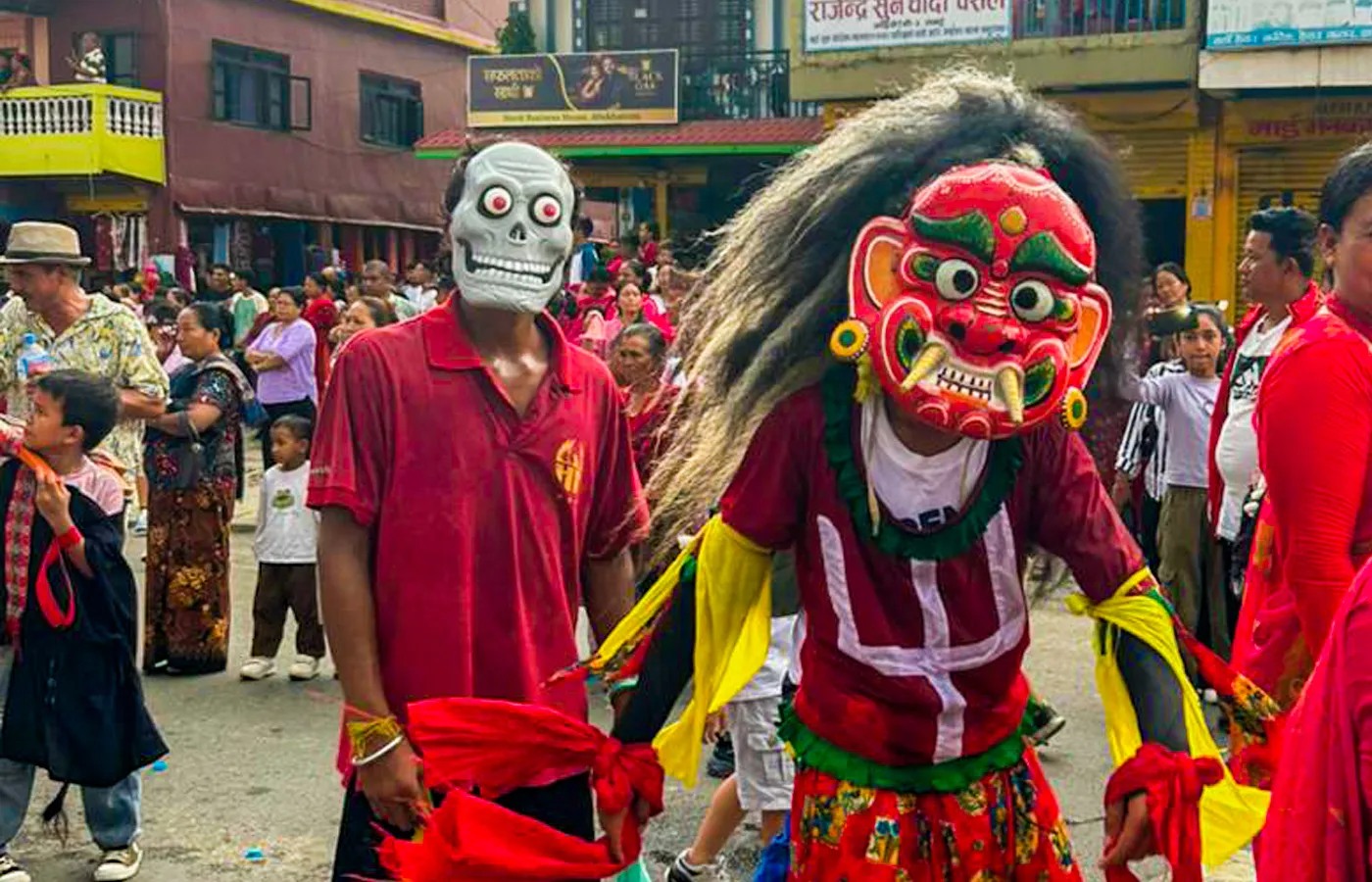
Gaijatra is one of Nepal's most distinctive and philosophically profound festivals, a celebration that uniquely combines grief and laughter, remembrance and merriment, spiritual purpose and artistic expression. Observed on the first day of Krishna Paksha in Bhadra month, this festival of the Kathmandu Valley's Newar community honors all families who have experienced the loss of a loved one during the past year. Sacred cows (or their symbolic representations) are paraded through the streets to help guide the departed souls toward heaven, while satirical performances, creative costumes, and community celebration bring comfort to the bereaved.
History and Background
The origins of Gaijatra are traced to a Malla-era legend in which King Pratap Malla instituted the festival to console his grief-stricken queen after the death of their son Prince Chakravartendra. When the queen could not be consoled, the king proclaimed that any family who had experienced a death that year should parade a cow through the city, demonstrating to the queen that her family was not alone in their grief. The parade of bereaved families combined with performers, satirists, and comedians commissioned to make the queen laugh, became the template for Gaijatra. The cow's spiritual role in Hindu and Buddhist traditions as a guide for departed souls gave the procession its sacred dimension. Over centuries, the satirical and comedic elements of the festival became a vehicle for social commentary, political satire, and artistic expression, making Gaijatra a uniquely democratic and creative cultural institution.
Purpose of Gaijatra
This festival is observed to:
Honor and remember all those who died during the past year with public acknowledgment and community support.
Provide spiritual assistance to deceased souls through the sacred cow ritual and guide them toward heaven.
Transform individual grief into communal healing by demonstrating that all families share the experience of loss.
Celebrate life, humor, and human creativity as antidotes to sorrow and sources of healing.
How is Gaijatra Observed?
Gaijatra is celebrated through a unique combination of solemn and festive activities:
Cow Processions: Bereaved families lead decorated cows through the streets; those without cows are represented by children dressed as cows.
Satirical Performances: Comic skits, political satire, and humorous performances are staged throughout the city.
Creative Costumes: Participants wear masks, creative outfits, and elaborate costumes for the procession.
Street Processions: Community marches through the major streets of Kathmandu, Bhaktapur, and Lalitpur.
Cultural Performances: Music, dance, and theatrical performances on temporary stages throughout the city.
Community Feasting: Shared meals and celebrations alongside the solemn remembrance activities.
Importance of Gaijatra
Gaijatra holds unique cultural and spiritual importance:
It represents one of the world's most mature and philosophically sophisticated approaches to communal grief processing.
It acknowledges the community's collective responsibility to support bereaved families through public recognition.
It celebrates Hindu and Buddhist beliefs about the soul's journey after death and the role of sacred animals as spiritual guides.
It has historically served as a vehicle for social criticism and democratic expression through the freedom of satirical performance.
It demonstrates the healing power of art, humor, and community togetherness in the face of inevitable loss.
Conclusion
Gaijatra is a festival unlike any other a profound meditation on life, death, and community rendered through the medium of joyful procession and creative celebration. By honoring the dead with laughter alongside tears, Nepal's Newar community offers a model of grief processing that is simultaneously ancient and remarkably wise. This unique festival stands as one of Nepal's greatest contributions to the world's treasury of cultural wisdom about how human beings can face loss together.