
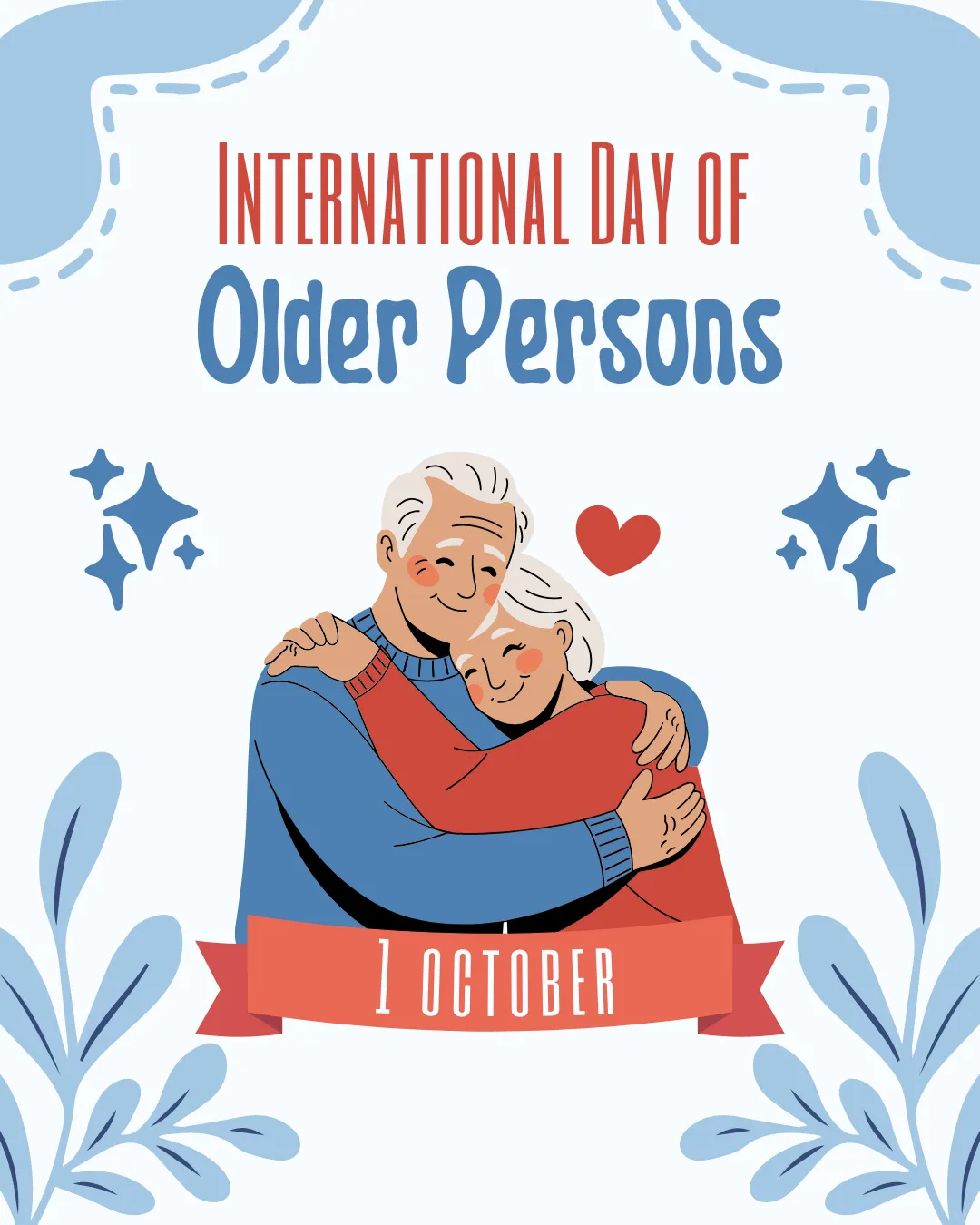
The International Day of Older Persons is an annual observance on October 1 that honors the value, wisdom, and contributions of older adults around the world. It also highlights issues that affect their lives, including health, inclusion, dignity, rights, and quality care. Established by the United Nations, the day is a global reminder of how societies are changing and why older persons must be respected, supported and included in development efforts.
|
Aspect |
Details |
|
Date |
October 1 (every year) |
|
First Observed |
October 1, 1991 |
|
Type of Events |
International Awareness Day |
|
UN Resolution |
45/106 (1990) |
|
Main Focus |
Recognizing contributions + raising awareness of ageing issues |
|
2025 Theme |
Older Persons Driving Local and Global Action: Our Aspirations, Our Well‑Being and Our Rights |
|
Related Observance |
Part of the Decade of Healthy Ageing (2021‑2030) |
|
Global Trend |
Older population projected to reach 2.1 billion by 2050 |
|
Purpose |
Promote rights, dignity, health, inclusion, and age‑friendly societies |
|
Holiday Status |
Not a Public Holiday |
The International Day of Older Persons is a United Nations‑designated day to celebrate and recognize the contributions of older people while shedding light on the challenges they face in rapidly ageing societies. It encourages governments, communities, and institutions to make policies that support older individuals’ well‑being, rights, and inclusion.
The idea of a special day for older adults came from growing global concern about population ageing and the need for greater inclusion:
On 14 December 1990, the United Nations General Assembly adopted Resolution 45/106, officially designating October 1 as the International Day of Older Persons.
The first celebration took place on October 1, 1991, marking the beginning of a decades‑long tradition.
Shortly after, in 1991, the UN adopted the Principles for Older Persons to guide policies supporting independence, participation, care, self‑fulfillment, and dignity.
At the Second World Assembly on Ageing in 2002, the Madrid International Plan of Action on Ageing (MIPAA) was adopted to respond to the opportunities and challenges of global ageing.
Today, the day also connects with the Decade of Healthy Ageing (2021–2030), focusing on improving lives as people age.
These milestones reflect how ageing has become central to international discussions about development, human rights, health, social protection, and sustainable communities.
Population ageing is one of the most significant demographic trends of the 21st century. As people live longer and birth rates fall, the proportion of older adults in every region is growing:
The number of people aged 60 or older is more than double what it was in the 1990s and is expected to reach around 2.1 billion by 2050.
Longer life means societies must rethink healthcare, social systems, and opportunities for older adults.
The day isn’t just about numbers; it’s about acknowledging that older persons:
Drive families, communities, and economies through unpaid caregiving, mentorship, and intergenerational bonds.
Hold valuable cultural knowledge and history that enrich societies.
Face challenges such as ageism, inadequate access to services, social isolation, and health issues that require policy attention.
Each year, the International Day of Older Persons has a theme chosen by the United Nations to focus global attention on specific priorities related to ageing:
|
Year |
Theme |
Focus |
|
2019 |
The Journey to Age Equality |
Promoting equal opportunities and reducing age discrimination. |
|
2020 |
Pandemics: Do They Change How We Address Age and Ageing? |
COVID‑19 impact and inclusive health policies. |
|
2021 |
Digital Equity for All Ages |
Reducing digital divides for older people. |
|
2022 |
Resilience of Older Persons in a Changing World |
Strength and contributions despite global challenges. |
|
2023 |
Fulfilling UDHR Promises for Older Persons |
Human rights emphasis across generations. |
|
2024 |
Ageing with Dignity |
Importance of care and support systems. |
|
2025 |
Older Persons Driving Local and Global Action |
Leadership, aspirations, and rights. |
Themes help guide discussions, events, and advocacy efforts, aligning the day with global development goals and changing social needs.
Although not a public holiday, the day is marked with events and activities in many countries. These include:
As societies age, both challenges and opportunities arise:
Ageism and discrimination can limit opportunities and affect mental health.
Healthcare systems may not always meet the needs of older adults, especially in rural or low‑resource settings.
Social protection gaps, such as limited pensions or care services, affect security in old age.
Longer life expectancy allows people to contribute longer to family, work, and communities.
Skill sharing and mentoring benefit younger generations and strengthen social cohesion.
Redesigning cities and services for all ages can improve the quality of life broadly.
The International Day of Older Persons is a meaningful observance that brings attention to the realities of ageing in today’s world. It celebrates the contributions of older adults, highlights the challenges they face, and encourages global efforts toward inclusive, age‑friendly, and rights‑based societies. With an ageing global population, understanding and supporting older people isn’t just compassionate, it’s essential for sustainable progress.