
| Date | Chaitra Shukla Ashtami-Navami (April 9-10, 2026) |
| Duration | Two-day event |
| Observance | National (Nepal) |
| Celebrated in | Nepal, especially Kathmandu Valley and hilly regions |
| Observing Communities | Hindus across all communities, Newars, hill community residents and families |
| Type of Event | Religious and Cultural |
| Purpose of Event | To honor Goddess Durga's victory over the demon Mahishasura, celebrate the triumph of good over evil and welcome the spring season. |
| Holiday Status | Yes (Regional holiday) |
| First Observed in | Ancient period (Puranic era, pre-1000 BCE) |
Quick Fact: Chaite Dashain is the spring counterpart of the grand Dashain festival observed in autumn. While the autumn Dashain lasts 15 days, Chaite Dashain is a compact two-day celebration of Goddess Durga's victory, celebrated with tika, feasting and family gatherings.
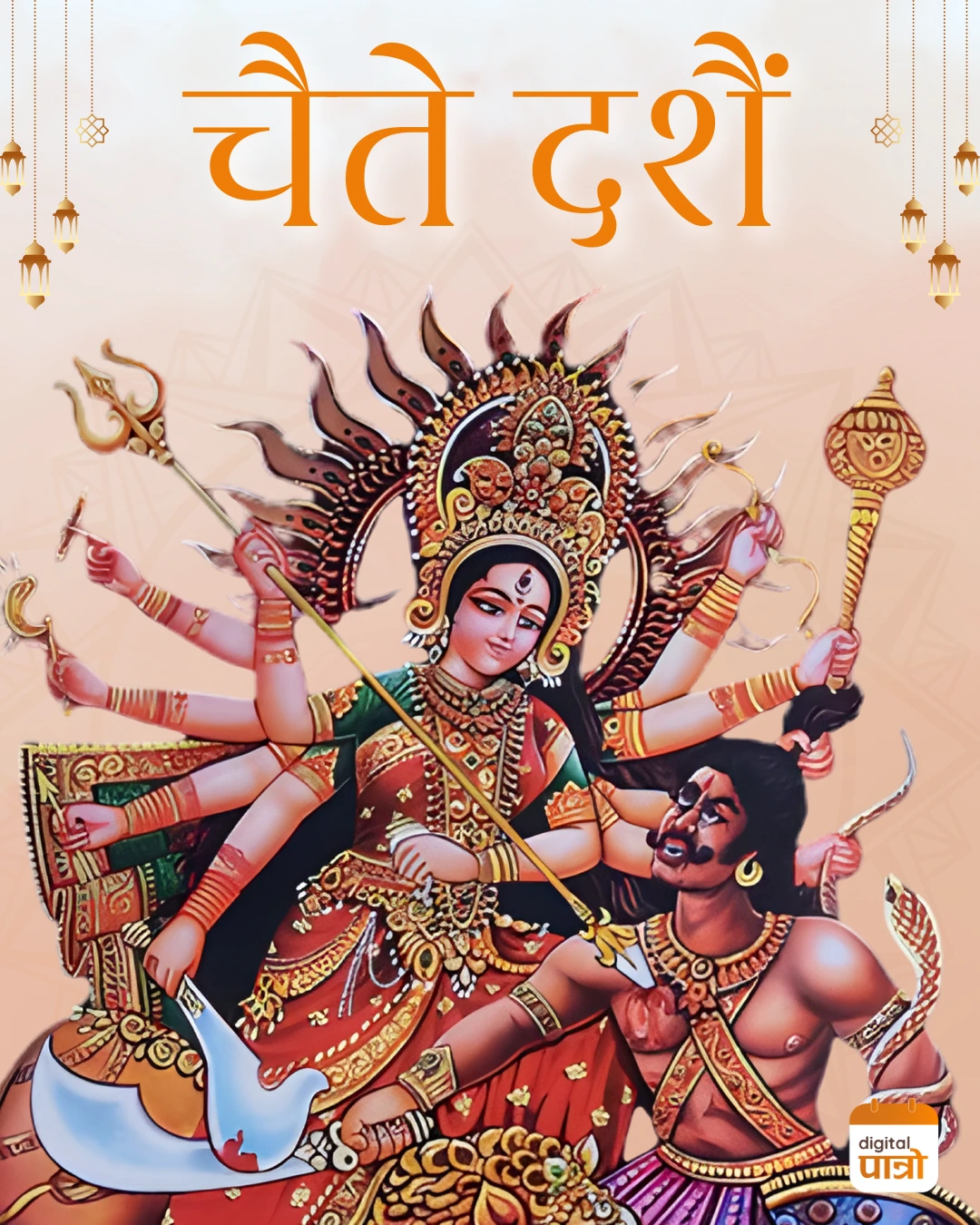
Chaite Dashain, also known as the Small Dashain, is celebrated on the 8th and 9th days (Ashtami and Navami) of the bright fortnight in the month of Chaitra. Unlike the grand 15-day Dashain in autumn, Chaite Dashain is a two-day spring festival honoring Goddess Durga's victory over the buffalo demon Mahishasura and celebrating the arrival of spring.
According to Hindu mythology, when the buffalo demon Mahishasura terrorized the universe, the combined energy of all the gods manifested as Goddess Durga. Through her nine divine forms, she battled and vanquished the demon. Chaite Dashain also coincides with the period when Lord Rama defeated Ravana and returned to Ayodhya, intertwining Rama's victory narrative with Durga's triumph. This festival has been observed since the Puranic era and holds deep significance in Nepali Hindu culture.
This festival is mainly observed to:
Honor Goddess Durga's nine divine forms and her victory over demonic forces.
Celebrate the eternal principle of good overcoming evil and chaos.
Commemorate Lord Rama's victory over Ravana and the restoration of dharma.
Invoke divine blessings for community prosperity, peace and protection.
Chaite Dashain is observed through various traditions:
Homes are thoroughly cleaned and decorated with sacred symbols and marigolds.
Family worship of Goddess Durga with flowers, incense and oil lamps (diyas).
Preparation of traditional foods including sel roti (rice donuts), fried soybeans and curried meat.
Males receive tika (vermilion mark) on their forehead from elder females as a blessing.
Family gatherings, feasting and community celebrations over both days.
Chaite Dashain is important for several reasons:
It marks the arrival of spring and symbolizes new growth, fertility and agricultural abundance.
It invokes Goddess Durga's protective grace for family and community safety.
It strengthens faith in dharma's eternal victory over adharma (unrighteousness).
It perpetuates centuries-old Nepali traditions and Hindu cultural practices.
It brings extended families and communities together, reinforcing bonds and shared identity.
Chaite Dashain is a joyful spring celebration that reminds us of the eternal triumph of good over evil. Through worship of Goddess Durga, family gatherings and traditional feasting, this festival connects Nepali families to their ancient heritage while welcoming the new season with hope and divine blessings.