
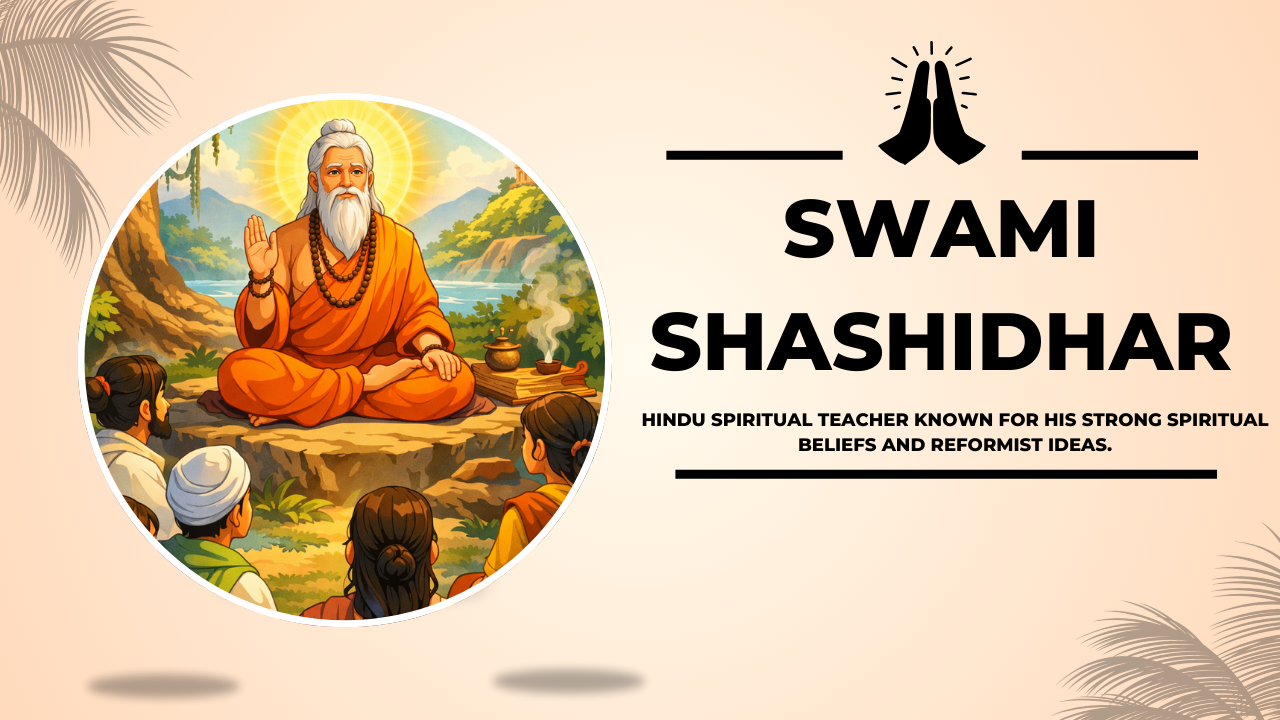
Swami Shashidhar Jayanti is observed to mark the birth anniversary of Swami Shashidhar, a respected Hindu spiritual teacher known for his strong spiritual beliefs and reformist ideas. He encouraged people to focus on inner knowledge, discipline, and moral living rather than outward rituals. The day honors the guru–shishya tradition and reminds followers to live a simple and meaningful life.
|
Date: |
Observed on the birth tithi of Swami Sashidhar as per the Hindu lunar calendar in Baishak |
|
Duration: |
Singal-day observance |
|
Type of Event: |
Religious and spiritual observance |
|
Observance: |
National |
|
Observed By: |
Devotees, disciples, and spiritual communities of Swami Shashidhar |
|
Celebrated in: |
|
|
Purpose: |
|
|
Public Holiday Status: |
Not a public holiday |
|
Travel Tips: |
|
Swami Shashidhar was a spiritual leader from Nepal, born in Bamruk village of Arghakhanchi district. He was born into the family of Dishai Sharma Marasini. From an early age, he showed a deep interest in spiritual learning and religious studies.
He later chose a spiritual path and was initiated into the Vishnu Swami Sampradaya, a traditional Hindu spiritual lineage. Through dedication and deep practice, he established Kyon Kaleshwar Math and lived the life of a Muni (sage), focusing on spiritual knowledge and teaching others.
Swami Shashidhar was known for his reformist thinking. He spoke against practices such as idol worship and animal sacrifice, encouraging people instead to seek truth through knowledge, self-discipline, and understanding of scriptures. He authored several works in Sanskrit, sharing his spiritual ideas and teachings.
His influence reached far beyond common people. He guided and educated important historical figures, including rulers and administrators of his time. Because of this, his teachings spread to different regions, including parts of India and neighboring areas, where his ideas continued to inspire spiritual seekers.
Swami Shashidhar Jayanti is observed once every year based on the Nepali lunar calendar. The date usually falls in early Chaitra, which is around March–April in the Gregorian calendar. Since it follows the lunar system, the exact date changes each year.
The Jayanti is mainly celebrated in Nepal and India, especially in places connected with Swami Shashidhar’s life and spiritual journey. It is a religious and community observance, not a government-declared public holiday.
Devotees observe Swami Shashidhar Jayanti with respect and devotion. The focus of the day is on remembering his life, teachings, and spiritual message.
Common ways of observing the day include:
Prayer and meditation
Spiritual discussions and satsangs
Reading or listening to his teachings
Devotional singing and reflection
Some followers visit important spiritual places linked to Swami Shashidhar’s life and spiritual achievements. Certain locations are considered special because of his deep meditation and spiritual practice there.
Swami Shashidhar Jayanti holds deep meaning for his followers. It encourages people to:
Respect spiritual teachers and knowledge
Focus on inner growth rather than outer rituals
Live with honesty, discipline, and simplicity
The day also strengthens community bonds and helps pass spiritual values to younger generations.
Today, along with traditional gatherings, the Jayanti is also observed through online programs, digital talks, and message sharing. This allows people living far away, including younger generations and diaspora communities, to stay connected with his teachings.
Swami Shashidhar Jayanti is a day of remembrance, reflection, and learning. It reminds people to follow a path of knowledge, humility, self-discipline, and service, and to seek truth beyond rituals and outward practices.
"Swami Shashidhar taught that true devotion is found in knowledge, self-discipline, and a pure heart, not in outward rituals"