
| Dates | April 14-22 (8 nights, 9 days) |
| Duration | 8 nights, 9 days |
| Observance | Community jatra (festival procession) |
| Celebrated in | Bhaktapur, Kathmandu Valley, Nepal |
| Observing Communities | Bhaktapur Newars, tourists, pilgrims |
| Type of Event | Cultural and seasonal festival |
| Purpose of Event | To welcome spring and the Nepali New Year through chariot processions and ancient Newar cultural rituals |
| Holiday Status | Regional festival (not national holiday) |
| First Observed in | Medieval period (exact date unknown) |
Quick Fact: Biska Jatra is Bhaktapur's most spectacular festival, also known as "Chyacha Gunhuya Jatra" meaning the eight-night, nine-day festival. It coincides with the Nepali New Year and features the dramatic tug-of-war between the eastern and western communities of Bhaktapur to move the massive ceremonial chariot, the winning side is believed to have good fortune in the coming year.
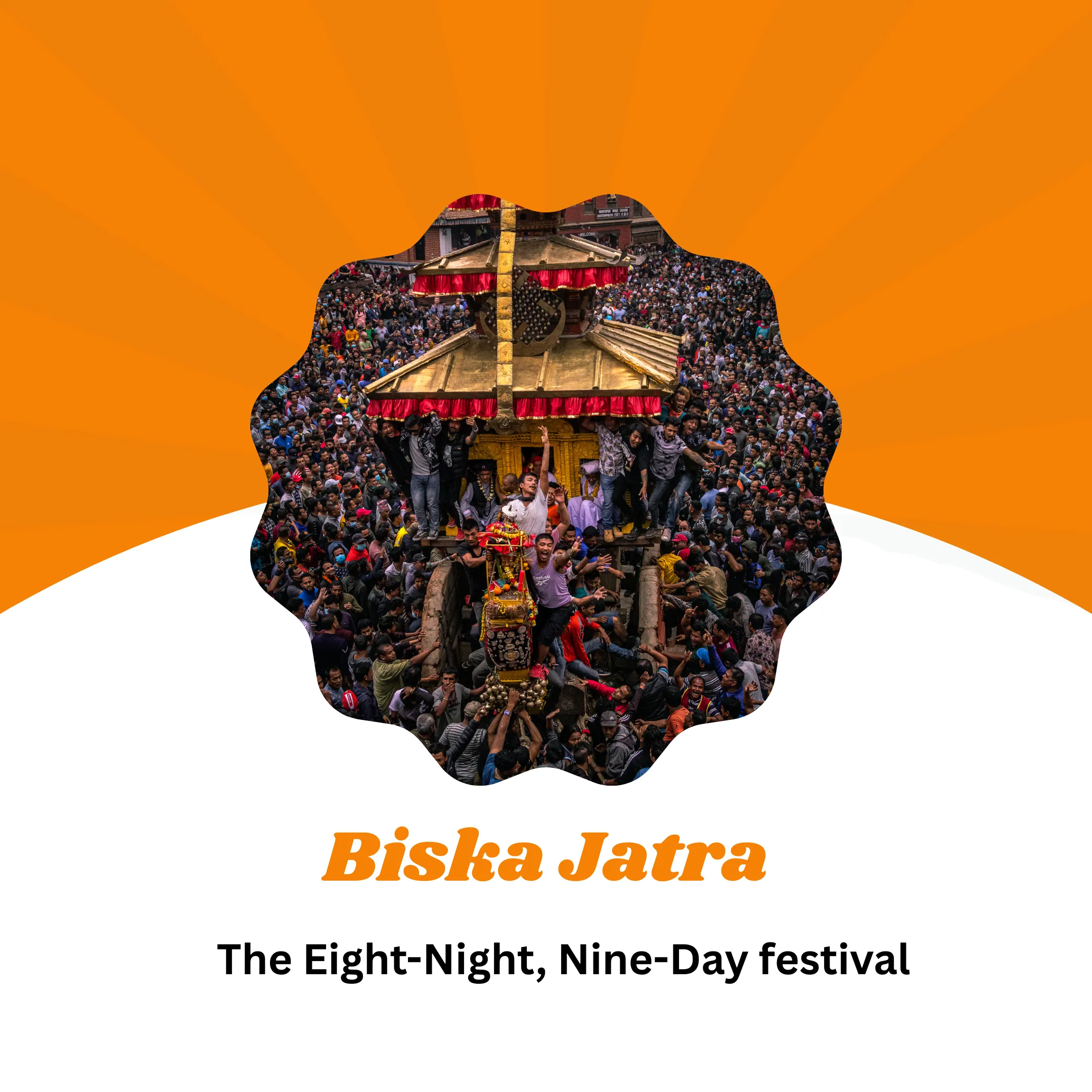
Biska Jatra is the most magnificent and celebrated festival of Bhaktapur, an ancient city in the Kathmandu Valley renowned for its extraordinary Newar cultural heritage. This eight-night, nine-day extravaganza coincides with the Nepali New Year (Baisakh 1) and fills the streets of Bhaktapur with the grandeur of massive chariot processions, traditional music, competitive rituals, and the vibrant celebration of spring renewal and the beginning of a new year.
Biska Jatra has been celebrated in Bhaktapur for centuries, with roots in the medieval period of Newar civilization in the Kathmandu Valley. The festival's name is believed to derive from "Bisket", a corruption of "Bish" (snake) and "Keta" (man), relating to a mythological legend about a princess, snakes, and a brave hero. The jatra centers on the grand chariots of Bhairav (the fierce protector deity) and Bhadrakali (the goddess), whose wooden vehicles are pulled through Bhaktapur's narrow streets with thousands of devotees participating in the famous tug-of-war between the town's eastern and western halves. This communal contest determines which side will have divine fortune in the coming year.
This grand festival serves multiple important purposes:
To welcome the spring season and agricultural renewal that comes with the New Year.
To celebrate Bhaktapur's unique cultural identity and its extraordinary Newar heritage.
To honor local deities (especially Bhairav and Bhadrakali) and invoke their blessings for the new year.
To promote community unity, cooperation, and the spirit of joyful celebration.
The nine-day festival unfolds with elaborate events:
Massive ceremonial chariots of Bhairav and Bhadrakali are constructed and consecrated.
A dramatic tug-of-war between eastern and western Bhaktapur communities moves the chariots.
Traditional music, drumming, and dance performances accompany the processions.
A towering Lingo (decorated pole) is erected symbolizing the new year's energy, then later pulled down.
Temple rituals, deity worship, community feasts, and cultural activities fill all nine days.
This festival holds profound importance:
It is Bhaktapur's most significant cultural festival, the defining event of the city's cultural calendar.
It preserves ancient Newar traditions, rituals, music, and cultural practices that date back centuries.
It is a major tourist attraction drawing international visitors to witness this living cultural heritage.
It celebrates the transition to the new year and the arrival of spring with unmatched community energy.
It is absolutely central to Bhaktapur's cultural identity and the pride of its Newar inhabitants.
Biska Jatra is one of Nepal's most extraordinary living cultural spectacles, nine days of ancient ritual, community celebration, and divine devotion that transform Bhaktapur into a stage for the most vibrant expressions of Newar civilization. As the massive chariots move through the city's ancient streets and the competing communities test their strength in the tug-of-war, Biska Jatra renews the bonds between people, deities, and the eternal cycles of nature that have sustained Bhaktapur's culture for untold generations.