
| Date | Chaitra Shukla Trayodashi (March 31, 2026) |
| Duration | One-day event |
| Observance | National and International |
| Celebrated in | Nepal, India and Jain communities worldwide |
| Observing Communities | Jain community (Shvetambara and Digambara sects), spiritual seekers and peace advocates |
| Type of Event | Religious |
| Purpose of Event | To celebrate the birth anniversary of Lord Mahavira, the 24th Tirthankara of Jainism, and to promote his teachings of non-violence, truth and spiritual discipline. |
| Holiday Status | No (Observed by Jain community, not an official state holiday in Nepal) |
| First Observed in | Approximately 599 BCE (Birth of Lord Mahavira) |
Quick Fact: Lord Mahavira renounced his royal throne at age 30 and after 12 years of extreme penance and meditation, attained Kevala Jnana (omniscience) at age 42. His Five Great Vows — non-violence, truth, non-stealing, celibacy and non-attachment — form the foundation of Jain philosophy.
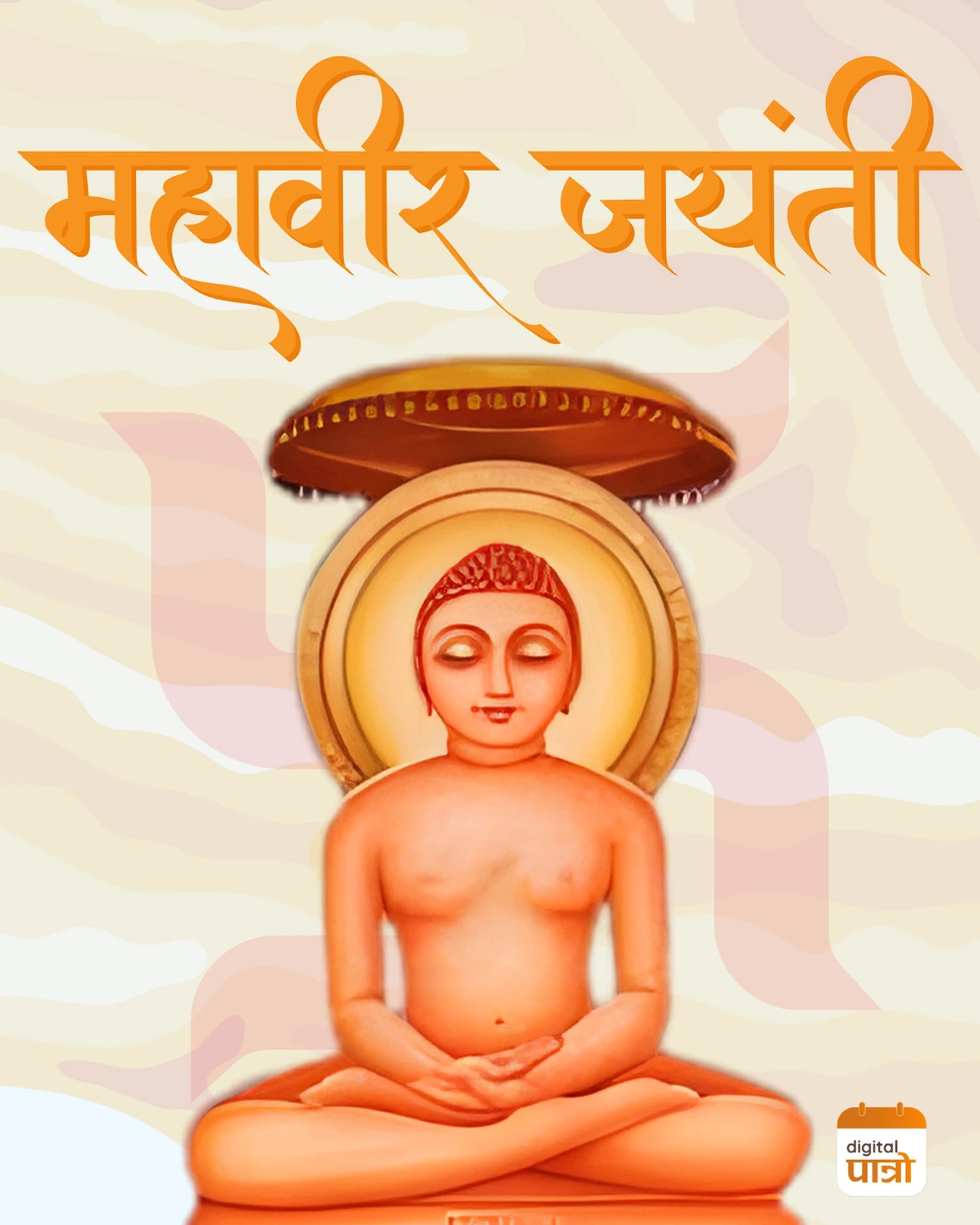
Mahavir Jayanti is celebrated to mark the birth anniversary of Vardhaman Mahavira (599 BCE), the 24th and last Tirthankara (enlightened teacher) of Jainism. Lord Mahavira is revered as the founder of modern Jainism and his teachings on non-violence (Ahimsa), truth and spiritual discipline continue to inspire millions around the world.
Lord Mahavira was born to King Siddhartha and Queen Trishala in Kundalpur, Bihar, India around 599 BCE. Despite his royal upbringing, Mahavira renounced his throne and family at age 30 to pursue spiritual enlightenment through monastic asceticism. For 12 years, he endured extreme penance and meditation before attaining Kevala Jnana (omniscience) at age 42. He spent the remaining 30 years of his life teaching the principles of non-violence, truth, non-stealing, celibacy and non-attachment. He established monastic orders (Sangha) that continue to practice his teachings today.
This festival is mainly observed to:
Honor Lord Mahavira's path of extreme asceticism and perfect non-violence.
Celebrate and reinforce the Jain principle of Ahimsa (harm to no living being).
Commemorate the attainment of Kevala Jnana and spiritual perfection.
Promote adherence to the Five Mahavratas and righteous living.
Mahavir Jayanti is observed through various religious activities:
Jains visit temples for elaborate worship and ritual bathing (Abhisheka) of Mahavira idols.
Sacred chariot processions (Rath Yatra) carry Mahavira's idol through streets with music and chanting.
Devotees observe fasting and practice Mauna Vrat (silence and speech restraint).
Charity and service activities including distribution of food and aid to the needy.
Monks and scholars deliver sermons on Jain philosophy and Mahavira's teachings.
Mahavir Jayanti is important for several reasons:
It is the central festival in Jainism celebrating the religion's philosophical founder.
It embodies and reinforces Jainism's core commitment to absolute non-violence.
It demonstrates transcendence of worldly attachments through renunciation and discipline.
Mahavira's teachings on ethics, non-violence and truth are universally applicable across religions and cultures.
It inspires millions to pursue compassion, self-discipline and spiritual growth.
Mahavir Jayanti celebrates the extraordinary life of Lord Mahavira, whose teachings on non-violence, truth and spiritual discipline have transcended time and geography. This festival serves as a powerful reminder that true strength lies in compassion and that the path to spiritual perfection begins with causing no harm to any living being.