
| Date | Chaitra (March 18, 2026) |
| Duration | One-day event |
| Observance | Regional (Kathmandu Valley) |
| Celebrated in | Kathmandu Valley, primarily Tundikhel and Durbar Square |
| Observing Communities | Newar community, Nepal Army, Nepal Police, general public and tourists |
| Type of Event | Military and Cultural |
| Purpose of Event | To trample demonic forces buried beneath Tundikhel through horse racing, showcase military cavalry prowess and celebrate the arrival of spring. |
| Holiday Status | Yes (Regional holiday in Kathmandu Valley) |
| First Observed in | 15th century (King Gunakamadeva); formalized by 17th century Malla dynasty |
Quick Fact: Ghode Jaatra (Horse Racing Festival) has a dual purpose — spiritual exorcism and military display. According to legend, a demon named Gurumapa was defeated and buried beneath Tundikhel, and the annual horse racing prevents the demon's spirit from resurrecting.
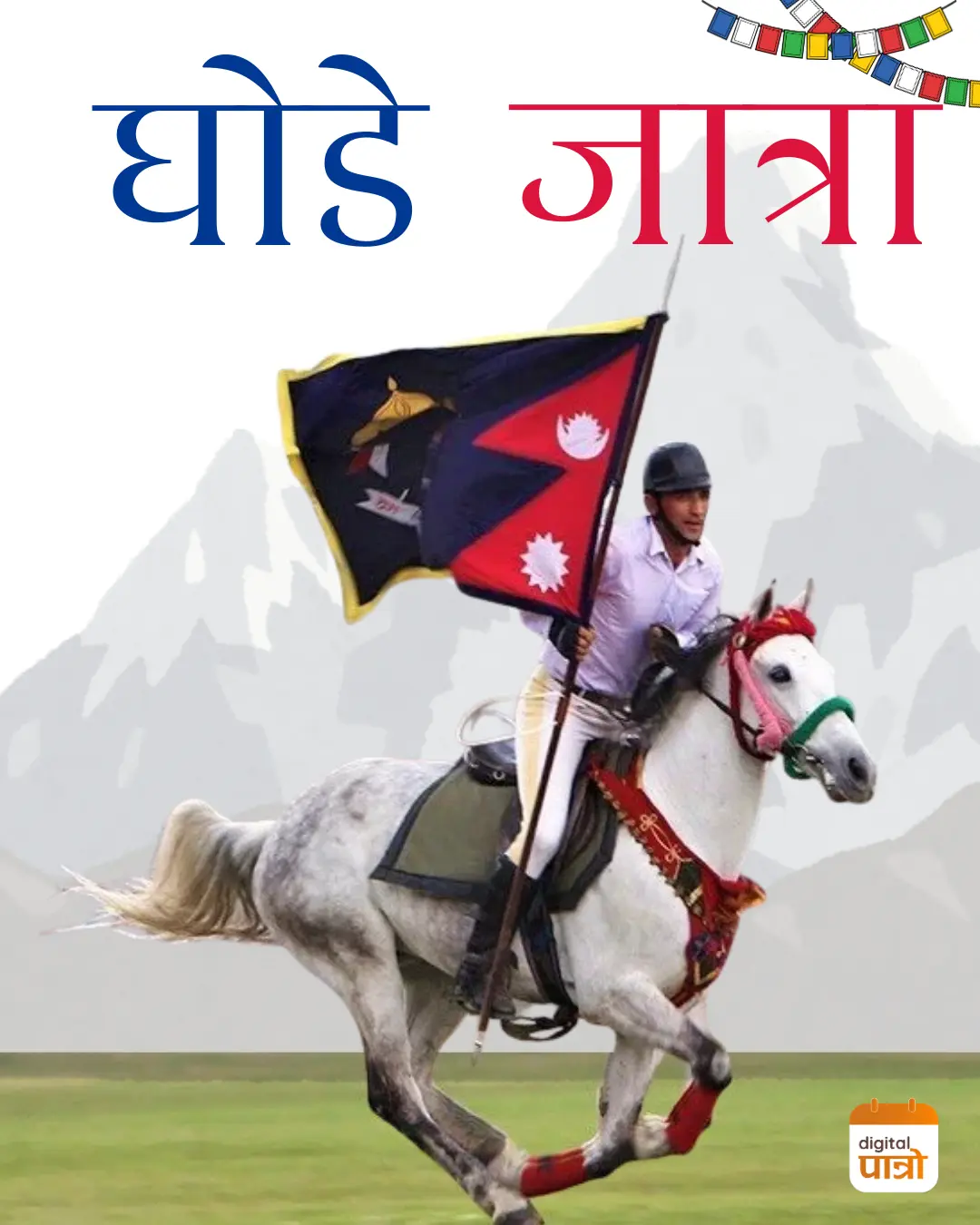
Ghode Jaatra, meaning the "Festival of Horses," is a unique equestrian festival celebrated in Kathmandu Valley. This event combines spiritual exorcism with military cavalry display and is one of the most spectacular festivals in Nepal. Horses race across Tundikhel, the historic open ground in the heart of Kathmandu, while the Nepal Army and Police showcase their equestrian skills.
According to legend, a demon named Gurumapa (also called Tundi) terrorized the Kathmandu Valley. The demon was finally defeated and trampled to death by horses, then buried beneath the ground at Tundikhel. To prevent the demon's spirit from resurrecting, the king initiated annual cavalry galloping across the field. The festival can be traced to King Gunakamadeva's horse parade in the 15th century and was formalized by the Malla dynasty in the 17th century as a blend of spiritual purification and military demonstration. The Shah dynasty later institutionalized it as a national cavalry event.
This festival is mainly observed to:
Trample demonic forces and evil spirits to prevent their resurrection in the valley.
Showcase cavalry prowess, combat skills and equestrian excellence of Nepal's forces.
Celebrate the arrival of spring and promote prosperity for the coming harvest season.
Preserve Newar cultural traditions and Nepal's ancient military heritage.
Ghode Jaatra is observed through grand celebrations at Tundikhel:
A spectacular parade through Kathmandu featuring beautifully decorated horses and riders.
Tent pegging by Nepal Army and Police — a daring stunt of spearing targets at full gallop.
Synchronized cavalry maneuvers, formation changes and acrobatic displays on horseback.
Public celebrations at Kathmandu Durbar Square with crowds, music and festivities.
Government officials, military leaders and thousands of spectators gather to witness the events.
Ghode Jaatra is important for several reasons:
It is an annual spiritual ritual ensuring demonic forces remain subdued and dormant.
It perpetuates Nepal's historical cavalry culture and equestrian excellence.
It brings Kathmandu residents and visitors together in a shared cultural celebration.
It marks the spring arrival and transition to a new agricultural cycle.
It represents Nepal's unique cultural identity through a festival found nowhere else in the world.
Ghode Jaatra is a one-of-a-kind festival that blends ancient demon-suppression rituals with thrilling military horse racing. As horses thunder across Tundikhel, they carry forward a centuries-old tradition that protects the Kathmandu Valley while celebrating Nepal's rich cultural and military heritage.