
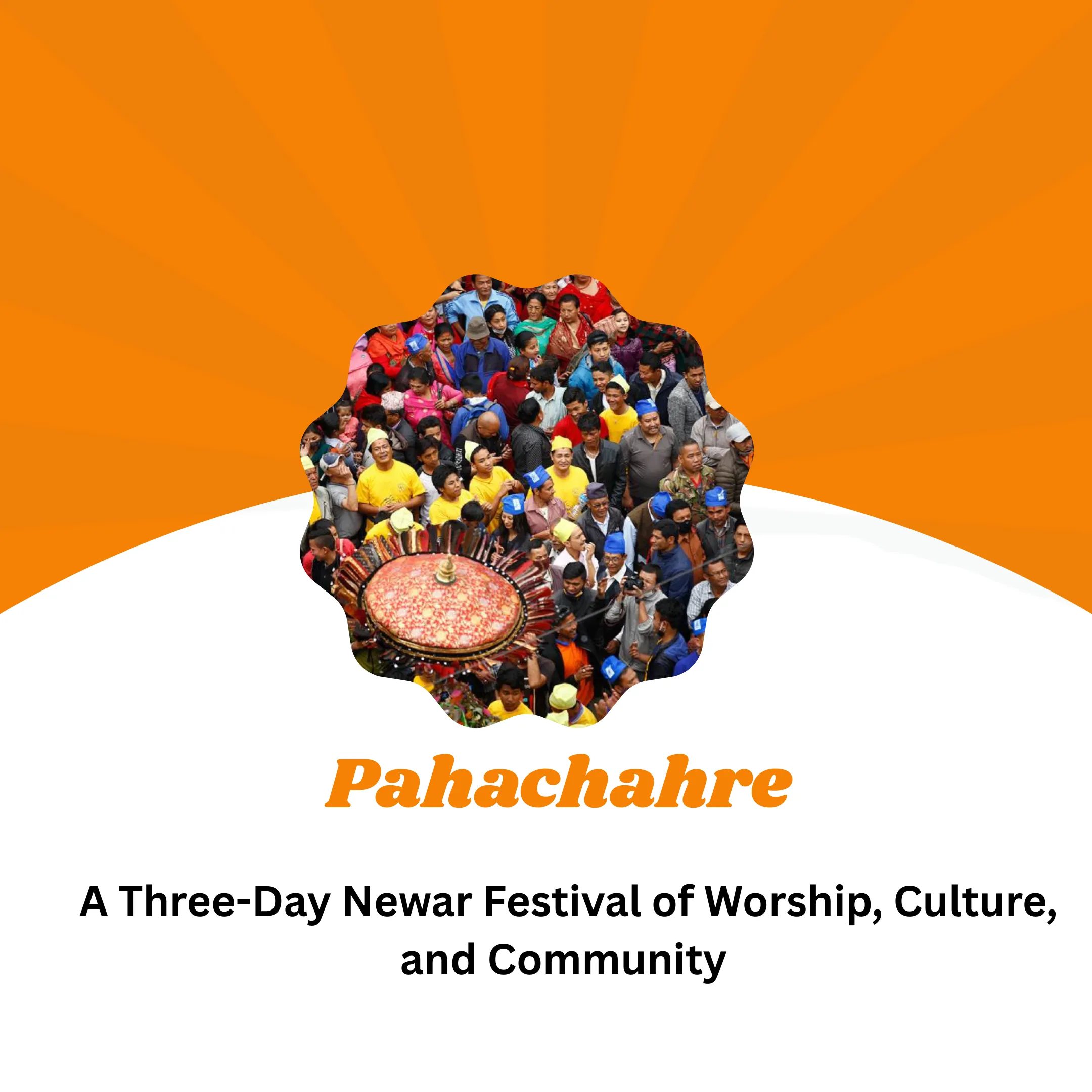
When spring slowly replaces winter, something powerful begins to stir. Drums echo through old city lanes. Oil lamps glow in courtyards. Deities are carried through crowded streets. Families gather, feast, and reconnect.
Pahachahre is one of the most important Newar festivals in Nepal. Also known as Pahan Charhe or Pishach Chaturdashi, it is a three-day religious and cultural celebration that blends mythology, protection rituals, community unity, and deep-rooted tradition.
Celebrated on Chaitra Krishna Paksha Chaturdashi according to the lunar calendar, Pahachahre remains one of the most meaningful festivals in the Kathmandu Valley.
|
Attribute |
Details |
|
Festival Name |
Pahachahre (Pahan Charhe) |
|
Also Called |
Pishach Chaturdashi, Pasachahre |
|
Meaning |
Festival of guests on the fourteenth lunar day |
|
Lunar Date |
Chaitra Krishna Paksha Chaturdashi |
|
Duration |
3 Days |
|
Main Community |
Newar community |
|
Main Region |
Kathmandu Valley, Nepal |
|
Key Deity |
Luku Mahadyah (a form of Lord Shiva) |
|
Other Deities |
Ajima, Bhairav, Ganesh |
|
Major Public Event |
Ghode Jatra at Tundikhel |
|
Key Ritual |
Dyah Lwakegu torch ceremony |
|
Type of Event |
Religious and cultural festival |
|
Holiday Status |
Not a Public Holiday |
The word Pahachahre comes from Nepal Bhasa, the language of the Newar people.
Paha or Pasa means guest or friend
Charhe refers to the fourteenth day of the lunar fortnight
So the name literally means “the celebration of inviting guests on the fourteenth lunar day.”
The meaning reflects hospitality and connection. During this festival, families invite relatives, especially married daughters and close friends, to their homes. Sharing food and blessings is central to the celebration.
The festival is also called Pishach Chaturdashi in Nepali. In traditional belief, this night is associated with restless spirits known as pishach. Rituals are performed to protect families from negative forces and illness. This shows how spiritual belief and seasonal awareness are connected in Newar culture.
Pahachahre has been celebrated for centuries in the Kathmandu Valley. It developed within the rich cultural system of the Newars, where Hindu and local traditions blend naturally.
The festival likely began as a seasonal protection ritual. In earlier times, the transition from winter to spring was linked with disease outbreaks. Communities believed that spiritual imbalance could bring illness. So rituals were performed to cleanse homes and seek divine protection.
Over time, these rituals became formalized into a structured three-day festival. During the Malla period, public processions of deities, especially the Ajima mother goddesses, became more organized and widespread.
Today, Pahachahre is both a spiritual observance and a strong expression of Newar cultural identity.
One of the most important figures in Pahachahre is Luku Mahadyah, a unique form of Lord Shiva.
The word Luku means hidden. According to local legend, Shiva once hid underground to escape danger. In this hidden form, he remained close to the earth and the people. Unlike grand temple idols, Luku Mahadyah is worshipped in a small hole or simple courtyard space.
This form represents unseen protection. Even when invisible, divine power guards the household.
During Pahachahre, families offer:
Garlic
Radish flowers
Local foods
Oil lamps and incense
Garlic in particular is believed to repel negative forces. The worship of Luku Mahadyah symbolizes asking for protection from illness and misfortune during seasonal change.
The name Pishach Chaturdashi comes from the belief that on this specific lunar night, harmful spirits may become active.
In ancient times, sudden sickness or unexplained events were often linked to spiritual disturbance. Communities responded through:
Cleaning homes
Making offerings
Playing music
Organizing public rituals
Even the horse racing during Ghode Jatra is believed to symbolically drive away negative spirits through speed and movement.
These myths are not just stories. They explain why rituals are performed and why certain customs continue today.
Another major element of Pahachahre is the worship of Ajimas, powerful mother goddesses who protect specific neighborhoods.
Each locality in Kathmandu has its own Ajima. During Pahachahre, their palanquins are carried through the streets. This represents the goddess moving through her territory, blessing and inspecting the community.
The Ajimas symbolize maternal protection, strength, and unity.
Pahachahre is best understood by looking at how each day is celebrated and why it matters.
The festival begins on the 14th day of the dark lunar fortnight (Chaitra Krishna Paksha Chaturdashi).
Morning and Daytime Rituals:
Families start the day by cleaning their homes and surroundings as a form of purification.
The worship of Luku Mahadyah (Lord Shiva’s hidden form) takes center stage.
Offerings include seasonal flowers, garlic, radish, meat, and special foods.
Evening and Night Traditions:
Masked dances and community prayers take place in many parts of Kathmandu.
People gather in small groups and continue rituals through the night, combining devotion with music and conversation.
This first day focuses on spiritual cleansing, protection, and inviting positive energy into homes and lives.
The second day of Pahachahre often overlaps with Ghode Jatra, a traditional horse festival in Kathmandu’s Tundikhel organized by the Nepal Army.
What Happens on Day 2:
Ghode Jatra: Horses are raced and paraded at Tundikhel. The event is rooted in old beliefs that the power of horses running fast can drive away negative spirits.
Ajima Processions: Palanquins bearing the images of mother goddesses are carried through city streets, accompanied by music and crowds.
Families also host gatherings and special meals. Some communities feed young children a special ritual dish believed to ensure health and protection.
This day is energetic and public, mixing military spectacle with local devotion and celebration.
The final day brings the festival to its emotional peak in Asan, a historic market square in Kathmandu.
Key Highlights:
Palanquins of three important Ajima goddesses (like Lumadhi Ajima and Kanga Ajima) are brought together.
Devotees and community members gather to exchange flaming torches in the Dyah Lwakegu ceremony, symbolizing unity and divine connection.
The event is filled with music, crowd participation, and a sense of shared joy and blessing.
This last day celebrates union, community strength, and gratitude.
Food is a big part of Pahachahre. Families prepare and share traditional Newari dishes such as:
Samay Baji (a mixed platter with rice, beans, eggs, greens, and pickles)
Maska roti and seasonal meats
Sweet and savory snacks are served during gatherings
Sharing food reflects the festival’s deeper meaning: hospitality, family bonding, and celebration of togetherness.
In modern times, Pahachahre continues to:
Preserve Newar identity
Strengthen family relationships
Connect generations
Keep ancient rituals alive
Even as Kathmandu changes, this festival reminds people of their roots. It shows how mythology, seasonal awareness, and community spirit can exist together.
Pahachahre is a festival of faith, family, and friendship. Over three meaningful days, the Newari festival combines myth, protection rituals, public celebration, and deep family connection. From the quiet worship of Luku Mahadyah to the loud energy of Ghode Jatra and the symbolic torch ceremony in Asan, every part of the festival reflects unity and renewal.