
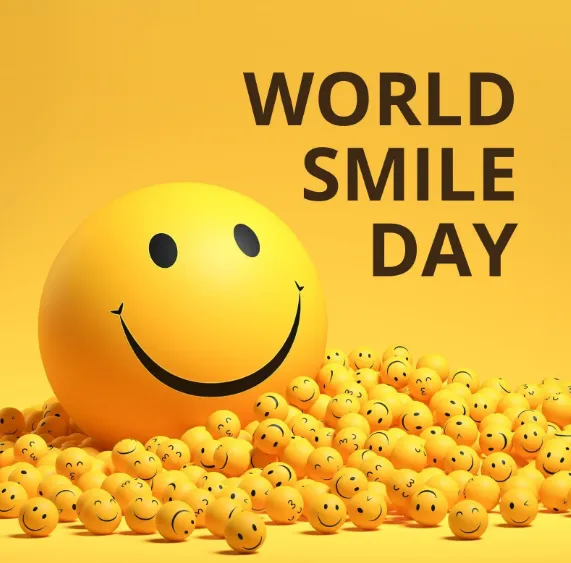
World Smile Day is an international observance celebrated on the first Friday of October each year. It is a day dedicated to kindness, goodwill, and the positive impact of a simple smile. The purpose of World Smile Day is clear and practical: encourage people to perform acts of kindness and help at least one person smile.
The idea was created by Harvey Ball, the American artist who designed the original yellow smiley face in 1963. While the smiley face became one of the most recognized symbols in the world, its meaning slowly shifted toward commercial use. To restore its true purpose of spreading happiness and human connection, Ball founded World Smile Day in 1999.
Today, World Smile Day is recognized across many countries. It is not a public holiday, but it is widely observed in schools, offices, communities, and online platforms. The message remains simple and relevant: kindness begins with a smile.
| Aspect | Details |
| Official Name | World Smile Day |
| Observed On | First Friday of October |
| Founded By | Harvey Ball |
| First Celebration | 1999 |
| Smiley Face Created | 1963 |
| Main Theme | Do an act of kindness. Help one person smile |
| Type of Day | International awareness day |
| Supporting Organization | Harvey Ball World Smile Foundation |
| Holiday Status | Not a public holiday |
Understanding the history of World Smile Day helps explain its deeper purpose. In 1963, Harvey Ball was asked to create a simple design to improve employee morale at an insurance company. He drew a yellow circle with two black dots for eyes and a curved smile. The design was friendly, easy to understand, and emotionally uplifting.
Over time, the smiley face became extremely popular. It appeared on:
Badges and stickers
Clothing and merchandise
Advertising campaigns
Posters and greeting cards
As the image spread globally, it became widely commercialized. Harvey Ball believed that the original intention behind the smiley face was being overshadowed. He wanted to bring the focus back to kindness and genuine goodwill.
To achieve this, he established World Smile Day in 1999. He selected the first Friday of October as a dedicated day to encourage simple acts of kindness. After his passing in 2001, the Harvey Ball World Smile Foundation was formed to continue promoting the day and supporting charitable initiatives aligned with its message.
World Smile Day may seem simple, but its importance is meaningful on both personal and social levels. A smile is a universal expression. It does not depend on language, culture, or background. People across the world understand what a smile represents.
The importance of World Smile Day includes:
Encouraging positive human interaction
Promoting small acts of kindness
Supporting emotional well-being
Strengthening community bonds
Psychological research suggests that smiling can influence mood and reduce stress levels. When someone smiles, it often encourages others to respond in a similar way. This creates a ripple effect of positivity.
In daily life, people often focus on tasks, responsibilities, and pressures. World Smile Day offers a reminder to slow down and act with kindness. Even a small gesture can create a meaningful moment for someone else.
The official message of World Smile Day is: “Do an act of kindness. Help one person smile.”
This theme is powerful because it is simple and actionable. It does not require money, special training, or large commitments. The message highlights that:
Kindness can be intentional.
Small actions have value.
Everyone can participate.
Positive change begins at the individual level.
By focusing on one person at a time, the observance keeps its purpose realistic and achievable.
World Smile Day can be observed in many practical ways. Participation does not require formal events or official programs.
Individuals may celebrate by:
Smiling more intentionally throughout the day
Offering genuine compliments
Helping someone with a small task
Checking in on a friend or family member
Expressing gratitude
Schools may organize activities such as:
Writing positive notes to classmates
Discussions about kindness and empathy
Classroom projects focused on goodwill
Workplaces may encourage:
Employee appreciation messages
Recognition of teamwork
Acts of gratitude among colleagues
Online participation is also common. Many people share positive messages, photos, or reflections about kindness through social media platforms. The focus remains consistent across all settings. The goal is to spread goodwill through simple, thoughtful actions.
Although World Smile Day began in the United States, it has grown into a globally recognized observance. Its message is inclusive and universal.
Key reasons for its international relevance include:
Smiling is understood across cultures.
Kindness is a shared human value.
The observance is not linked to politics or religion.
Participation is accessible to all age groups.
Because it falls on a Friday, the day often blends into weekend activities, making it easier for communities and families to participate together.
World Smile Day continues to maintain its relevance because its message remains timeless. In every society, kindness and positive interaction are essential.
World Smile Day is more than a symbolic celebration. It is a reminder that small acts of kindness can create meaningful change. Founded by Harvey Ball in 1999, the day was designed to protect the original spirit of the smiley face and encourage goodwill.
By asking people to help at least one person smile, World Smile Day keeps its message focused and practical. A simple smile, kind word, or thoughtful gesture can brighten someone’s day and strengthen human connection.
In a busy and often stressful world, World Smile Day highlights a basic truth. Kindness matters. Smiles matter. And even the smallest positive action can leave a lasting impression.