
| Aspect | Details |
| Observed on | 23 June every year |
| Official Name | International Widows Day |
| First Initiated | 2005 |
| UN Recognition | 2010 by the United Nations General Assembly |
| Key Resolution | A/RES/65/189 |
| Founder of Initiative | The Loomba Foundation |
| Estimated Widows Worldwide | Around 258 million |
| Main Focus | Rights, dignity, economic empowerment, and legal protection |
| Related Global Goal | Gender Equality under the Sustainable Development Goals |
| Holiday status | Not a public holiday |
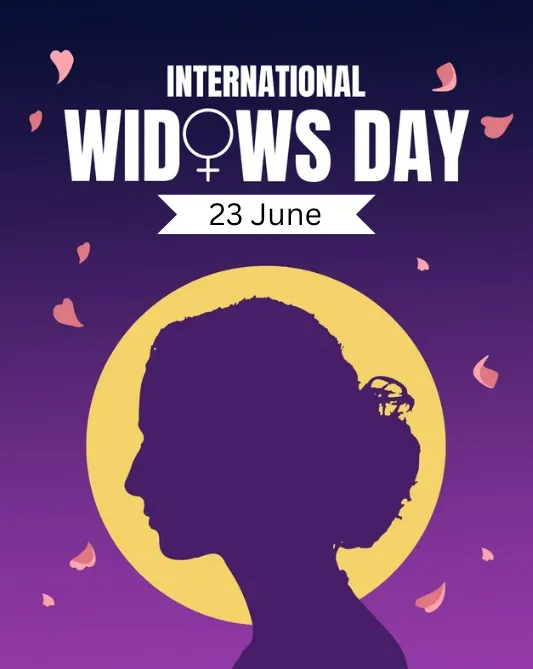
International Widows' Day is observed every year on 23 June to raise awareness about the challenges faced by widows across the world. The day highlights issues such as poverty, discrimination, lack of inheritance rights, social exclusion, and limited access to education and employment.
The observance was officially recognized by the United Nations in 2010. It calls on governments, civil society, and communities to take action so that widows can live with dignity, equality, and economic security.
Across many societies, widowhood is not just a personal loss. It often becomes a social and economic crisis. International Widows Day brings this hidden reality into public discussion and policy reform.
International Widows Day began as a grassroots advocacy effort before becoming a global observance. The initiative was launched in 2005 by The Loomba Foundation, a charitable organization dedicated to supporting widows and their children.
The foundation was established by Raj Loomba, who was inspired by his mother’s experience after she became a widow at a young age. He witnessed firsthand the economic hardship and social challenges widows can face. This personal story later evolved into a broader campaign aimed at drawing global attention to the often-overlooked struggles of widows.
Initially, the day focused on awareness campaigns, policy discussions, and advocacy events to highlight the discrimination, poverty, and lack of legal protection that affect widows in many countries.
In December 2010, the United Nations General Assembly adopted Resolution A/RES/65/189, officially designating 23 June as International Widows Day.
The resolution encourages member states to:
Address discrimination against widows
Ensure inheritance and property rights
Improve access to social protection
Collect data on widows to guide policy decisions
This recognition gave the day international legitimacy and encouraged governments to take meaningful action.
Widowhood affects millions of women worldwide. Despite its scale, it often remains invisible in national policies and development plans.
Some important global facts include:
There are approximately 258 million widows worldwide
Nearly one in ten widows lives in extreme poverty
Many widows lack legal rights to inherit land or property
In some regions, widows face social stigma and harmful traditional practices
Conflict, war, and natural disasters increase the number of widows
Many widows are single heads of households, responsible for children
These realities show why International Widows Day is not symbolic. It addresses serious human rights and economic challenges.
International Widows Day focuses on justice, equality, and human dignity. In many societies, widows experience discrimination that limits their opportunities and independence.
The day matters because it:
Promotes gender equality
Highlights economic vulnerability
Encourages legal reform
Supports social protection systems
Draws attention to marginalized women
Widowhood often intersects with other forms of inequality, including lack of education, rural poverty, and displacement. Addressing these issues supports broader development goals.
The United Nations plays an important role in advocating for widows' rights. Through research, global campaigns, and policy discussions, it encourages governments to create supportive laws and programs.
Agencies such as UN Women work to strengthen gender equality policies and promote economic empowerment for women, including widows.
Key areas of UN involvement include:
Promoting equal inheritance laws
Supporting social protection programs
Encouraging data collection on widowhood
Linking widow rights to the Sustainable Development Goals
International organizations and NGOs also organize seminars, awareness drives, and community-level initiatives to support widows.
Despite progress, many widows continue to face serious obstacles.
Legal Barriers: In some countries, inheritance laws still disadvantage women. Widows may lose access to land or property after their husband’s death.
Economic Hardship: Without stable income or employment opportunities, many widows struggle to support their families.
Social Stigma: In certain cultures, widows may be isolated, blamed, or excluded from community life.
Limited Access to Services: Healthcare, education, and financial services are often difficult to access, especially in rural areas.
Addressing these issues requires coordinated efforts from governments, civil society, and communities.
International Widows Day is marked in different ways around the world. Activities often include:
Public awareness campaigns
Policy discussions and seminars
Community outreach programs
Media coverage and storytelling
Educational workshops
Advocacy for legal reform
These activities aim to increase understanding and encourage practical solutions.
International Widows Day, observed every 23 June, is a reminder that widowhood should not result in discrimination or poverty. It highlights the need for equal rights, economic opportunity, and social protection for widows everywhere.
By addressing legal inequality, improving access to resources, and challenging harmful stereotypes, societies can ensure that widows live with dignity and independence.
The observance encourages governments, organizations, and individuals to move from awareness to action. True progress means building inclusive systems where no woman is marginalized because of her marital status.