
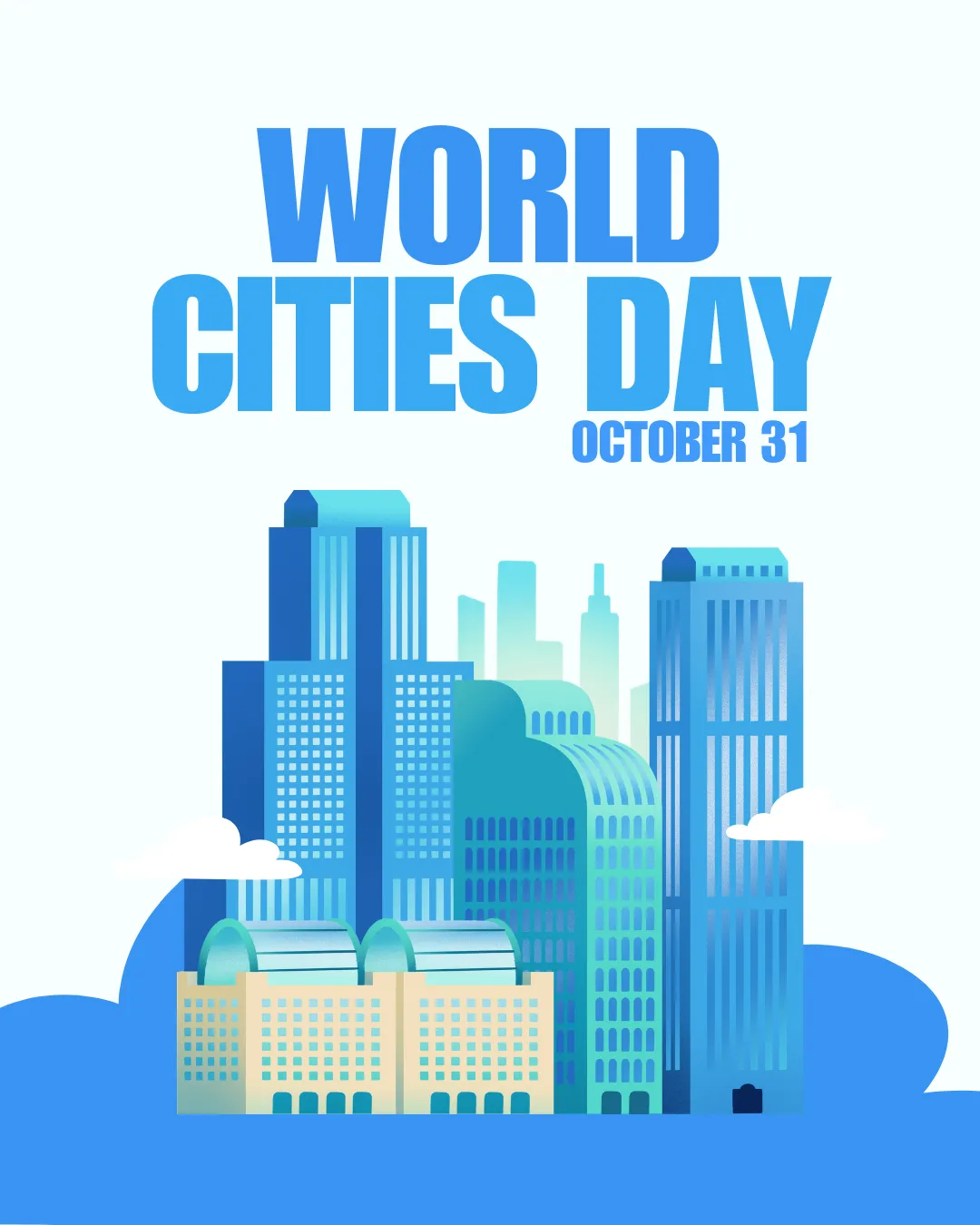
World Cities Day is celebrated every year on 31 October to raise awareness about the importance of sustainable urban development. Established by the United Nations, the day highlights how cities shape economic growth, environmental sustainability, and social progress across the globe.
Today, more than 55 percent of the world’s population lives in urban areas, and this number is projected to rise to nearly 68 percent by 2050. As cities continue to grow, they face increasing pressure to provide housing, jobs, transport, clean energy, and safe public spaces. World Cities Day reminds governments and communities that urban growth must be planned carefully to ensure a better future for everyone.
The observance is coordinated by UN-Habitat and supports Sustainable Development Goal 11, which focuses on making cities inclusive, safe, resilient, and sustainable.
| Fact | Details |
| Name of Observance | World Cities Day |
| Date | 31 October |
| First Celebrated | 2014 |
| Proclaimed By | United Nations General Assembly |
| Coordinated By | UN-Habitat |
| Main Focus | Sustainable urban development |
| Related Goal | SDG 11 – Sustainable Cities and Communities |
| Part of | Urban October |
| Type | International Observance |
| Holiday Status | Not a Public Holiday |
World Cities Day was officially proclaimed by the United Nations General Assembly in December 2013 through Resolution 68/239. The first celebration took place on 31 October 2014.
The day was created in response to rapid global urbanization. Cities are now home to billions of people and generate more than 80 percent of global GDP. They are centers of education, culture, innovation, and opportunity. However, urban areas also face serious challenges such as pollution, traffic congestion, housing shortages, climate risks, and inequality.
The creation of World Cities Day also aligns with the New Urban Agenda, adopted in 2016, which sets global standards for sustainable urban development. The day encourages countries to strengthen cooperation, share solutions, and improve urban planning strategies.
World Cities Day has clear goals that guide its annual celebrations:
Promote Sustainable Urban Planning: Encourage cities to adopt green infrastructure, renewable energy, and efficient public transport systems.
Strengthen Global Cooperation: Urban challenges are shared worldwide. The day promotes collaboration between governments, experts, and communities.
Advance Climate Resilience: Many cities are vulnerable to floods, extreme heat, and rising sea levels. Sustainable policies reduce these risks.
Improve Social Inclusion: Cities must provide equal access to housing, healthcare, employment, and public services for all residents.
Each year, World Cities Day focuses on a theme that reflects current global priorities in urban development. Over time, these themes show how the conversation around cities has evolved.
Some notable themes include:
2014: Leading Urban Transformations
2015: Designed to Live Together
2016: Inclusive Cities, Shared Development
2017: Innovative Governance, Open Cities
2018: Building Sustainable and Resilient Cities
2019: Changing the World, Innovations, and Better Life for Future Generations
2020: Valuing Our Communities and Cities
2021: Adapting Cities for Climate Resilience
2022: Act Local to Go Global
2023: Financing Sustainable Urban Future for All
2024: Youth Leading Climate and Local Action for Cities
2025: People-Centered Smart Cities
Earlier themes focused on transformation and inclusion, while recent themes emphasize smart technology, climate action, financing, and youth leadership. This shift reflects the growing need for innovative and community-driven urban solutions.
Cities are at the center of global development. They drive economic growth, cultural exchange, and technological advancement. At the same time, they are responsible for a large share of global energy use and carbon emissions.
Without proper planning, rapid urban growth can lead to:
Expansion of informal settlements
Increased pollution
Traffic congestion
Limited access to clean water and sanitation
Greater social inequality
World Cities Day highlights that sustainable urbanization is not just about infrastructure. It is about people. Safe housing, green spaces, affordable transport, and equal opportunities are essential for healthy communities.
World Cities Day is observed worldwide through both global and local activities. Each year, a selected host city organizes the main global event in partnership with UN-Habitat.
Common activities include:
International conferences and high-level dialogues
Policy discussions on urban innovation
Release of research such as the World Cities Report
Workshops on climate resilience and smart cities
Youth engagement programs and community initiatives
Cities also organize local campaigns to promote sustainable living and raise awareness about urban challenges.
World Cities Day directly supports Sustainable Development Goal 11, which aims to make cities inclusive, safe, resilient, and sustainable.
Key targets under SDG 11 include:
Access to adequate and affordable housing
Safe and sustainable transportation systems
Reduced the environmental impact of cities
Improved disaster preparedness
Protection of cultural and natural heritage
Because cities influence economic, environmental, and social systems, progress in urban areas contributes to achieving the broader 2030 Agenda for Sustainable Development.
The future of humanity is closely linked to the future of cities. As urban populations grow, innovation and responsible governance become more important than ever. Smart technology, green energy, inclusive planning, and citizen participation will shape the cities of tomorrow.
World Cities Day serves as a global reminder that sustainable urban development is essential for long-term prosperity. By encouraging cooperation, resilience, and inclusivity, the observance inspires cities around the world to build environments where people can live safely, work productively, and thrive together.