
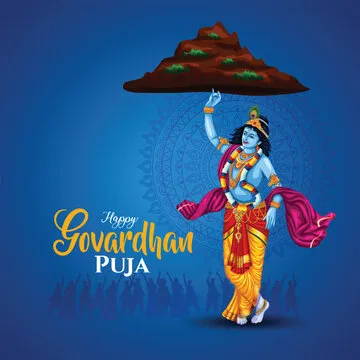
Govardhan Puja 2083 falls on Kartik 24. That is Tuesday 10 November 2026.
In courtyards across Nepal this morning, a small hill is built out of cow dung, decorated, and worshipped. It stands for Govardhan Parvat, the hill Krishna is said to have lifted to shelter an entire village from a storm.
It is the fourth day of Tihar, and the day is busy. Govardhan Puja is done in the morning. Mha Puja and the Nepal Sambat new year follow in the evening, and Hali Tihar runs alongside for farming households.
In Nepali, the day is गोवर्धन पूजा. You will also see it written Gobardhan Puja or Gobardan Puja.
|
Nepali name |
गोवर्धन पूजा (Govardhan Puja) |
|---|---|
|
Also written |
Gobardhan Puja, Gobardan Puja |
|
Also called |
Annakut, mainly in India |
|
Tithi |
Kartik Shukla Pratipada |
|
Date in 2083 BS |
Kartik 24, Tuesday 10 November 2026 |
|
Which day of Tihar |
The fourth |
|
When in the day |
Morning |
|
What is worshipped |
A hill of cow dung standing for Govardhan Parvat, along with the ox and calf |
|
The story |
Krishna lifting Govardhan hill to shelter Gokul from Indra's rain |
|
Also on this day |
Mha Puja, Nepal Sambat 1147, Hali Tihar |
|
Public holiday |
Yes, it falls inside the Tihar holiday block |
Kartik 24, 2083. That is Tuesday, 10 November 2026.
Govardhan Puja falls on Kartik Shukla Pratipada, the first day of the bright fortnight of Kartik, and the fourth day of Tihar. The rule followed in Nepal is that the puja is done on the day Pratipada is running at sunrise, which is why the date can shift by a day between calendars.
|
Bikram Sambat |
Nepali date |
English date |
Day |
|---|---|---|---|
|
2082 |
Kartik 5 |
22 October 2025 |
Wednesday |
|
2083 |
Kartik 24 |
10 November 2026 |
Tuesday |
The date is later than usual this year because of Adhik Jyeshtha Maas, the extra lunar month that ran from 17 May to 15 June 2026, which pushed the festivals after it about nineteen days later instead of eleven days earlier.
This is one of the better-known Krishna stories, and unlike most festival stories, it is an argument before it is a miracle.
Every year the people of Gokul, the cowherd village where Krishna grew up, held a great harvest offering to Indra, king of the gods and lord of rain and storms. It was the biggest thing they did all year.
The young Krishna questioned it. His case was practical. Indra sends the rain whether you worship him or not, and it is the hill, Govardhan, that actually keeps the village alive. It holds the grass the cattle graze on, the water, the firewood, and the shelter. So the offering should go to the hill and to the cattle that feed off it, not to a god who takes credit for weather he sends anyway.
The villagers were convinced. They redirected the year's offering to Govardhan.
Indra took it badly. He sent a storm down on Gokul meant to wash the village away, and it rained without stopping.
Krishna lifted Govardhan hill off the ground and held it up over the village like an umbrella. In the usual telling, he balances the whole hill on one finger. The people, the cattle, and the crops sheltered underneath it, and he held it there for seven days until Indra gave up.
Indra came down, understood who he had been arguing with, and the storm ended.
It is worth not skipping past the argument to get to the miracle, because the argument is the part that made the festival.
Krishna's point was that you should honour the thing that actually sustains you. The hill, the grass, the cattle, the land. Not the most powerful name available.
That is why the day is observed the way it is. People do not worship an image of Krishna on Govardhan Puja. They worship a hill, made out of cow dung, and the working animals that live off the land. The festival keeps the argument rather than the miracle.
The whole thing happens in the courtyard, in the morning.
The ground is prepared. The aangan, the courtyard, is swept and plastered clean, the way it is before any household puja.
The hill is built. Cow dung is collected and shaped into a small mountain, sometimes a cone, sometimes a ring, sometimes a rough figure of a hill with peaks. This is Govardhan Parvat, and it is treated as the hill itself, not a model of it.
It is decorated. Flowers, grass, straw, and sometimes small figures of cattle are set on and around it. Marigold is the usual flower, as it is throughout the whole of Tihar.
It is worshipped. Tika, flower garlands, incense, coloured powder and lamps are offered to it, and food is placed before it.
Parikrama. In many households, people walk around the mound, circling it as an act of devotion, the way people circle a shrine.
The ox and calf are worshipped too. The goru and the bachha are washed, given tika and a garland, and fed good food. In Nepal, these are worshipped alongside the hill rather than separately, because the story ties the cattle and the land together.
There is a well-known rhythm to Kartik 24 in the Kathmandu Valley: Govardhan Puja in the morning, Mha Puja in the evening.
The morning belongs to the courtyard, the dung hill, and the animals. The evening belongs to the family sitting on the floor indoors. If you are in a Newar household, you will do both on the same day.
In much of India, the day is called Annakut, which means a mountain of food.
There, the hill is built out of cooked food rather than dung. Temples pile up an enormous spread of dishes in front of the deity, in some places running to fifty-six items, and the food mountain stands for Govardhan. It is later distributed as prasad.
The story behind both is the same. Nepal's version keeps the cattle and the courtyard at the centre. The Indian temple version keeps the harvest offering at the centre, which is closer to the original Indra Puja that Krishna redirected.
Govardhan Puja does not sit on its own in Nepal. The same date carries [Hali Tihar](/events/national/hali-tihar), the ploughman's day, and for a farming household that is the more immediate observance.
The ox that pulls the plough all year is worshipped, garlanded and fed well, and the plough is worshipped with it. The logic is the same as the Govardhan story. You honour what actually does the work of keeping you fed.
This is also why Tihar gives days to the crow, the dog, the cow and the ox before it gives one to people. Bhai Tika, the only day about human relationships, comes last.
Note that in 2083 Digital Patro's calendar marks [Gai Goru Puja](/events/national/gaigoru-puja) on Kartik 23, the day before, with Govardhan Puja and Hali Tihar on Kartik 24. The arrangement of these days shifts between years with the tithis, so read them off the patro rather than from memory.
|
Day |
What it is |
Nepali date |
English date |
|---|---|---|---|
|
1 |
Kartik 21 |
Saturday 7 November 2026 |
|
|
2 and 3 |
Kartik 22 |
Sunday 8 November 2026 |
|
|
3 |
Kartik 23 |
Monday 9 November 2026 |
|
|
4 |
Govardhan Puja, Mha Puja, Nepal Sambat 1147, Hali Tihar |
Kartik 24 |
Tuesday 10 November 2026 |
|
5 |
Kartik 25 |
Wednesday 11 November 2026 |
|
|
After |
Kartik 26 |
Thursday 12 November 2026 |
When is Govardhan Puja 2083?
Kartik 24, 2083, which is Tuesday, 10 November 2026.
Which tithi does Govardhan Puja fall on?
Kartik Shukla Pratipada. In Nepal, the puja is done on the day that Pratipada is running at sunrise.
Which day of Tihar is Govardhan Puja?
The fourth, after Gai Goru Puja and before Bhai Tika.
What time of day is it done?
In the morning. Mha Puja and the Nepal Sambat new year follow in the evening of the same day.
What is Govardhan Puja?
The worship of Govardhan Hill, represented by a small hill built from cow dung in the courtyard, along with the ox and calf.
Why is the hill made of cow dung?
Because the festival honours the land and the cattle that live off it. The dung comes from the cows that graze the hill in the story, so the hill is built from what the cattle give back.
What is the story behind Govardhan Puja?
The people of Gokul used to make their annual harvest offering to Indra. Krishna argued it should go instead to Govardhan hill and the cattle, because those are what actually sustain the village. When the villagers agreed, Indra sent a storm to punish them, and Krishna lifted the hill and held it over the village for seven days to shelter them.
How long did Krishna hold up the hill?
Seven days, until Indra gave up. In the usual telling, he balances the whole hill on one finger.
Which text is the story from?
It is told in the Bhagavata Purana.
What is the meaning of Govardhan Puja?
That you honour what actually sustains you. The land, the hill, the grass and the cattle, rather than the most powerful name available. That is the argument Krishna made, and the festival keeps the argument rather than just the miracle.
How do you perform Govardhan Puja at home?
Sweep and plaster the courtyard, shape cow dung into a small hill, decorate it with flowers, grass and straw, and offer tika, garlands, incense, coloured powder, lamps and food. Many households also walk around the mound. The ox and calf are washed, given tika and a garland, and fed well.
What is parikrama?
Walking around the Govardhan mound as an act of devotion, the way people circle a shrine.
Is the ox worshipped on Govardhan Puja?
Yes. The goru and the bachha are washed, garlanded, given tika, and fed good food alongside the hill.
What is Annakut?
The same day as it is observed in much of India, where the hill is built from cooked food rather than dung. Temples lay out a huge spread, in some places fifty-six dishes, and it is distributed afterwards as prasad.
What is Hali Tihar?
The ploughman's day, on the same date. The ox that pulls the plough all year is worshipped and fed well, and the plough is worshipped with it.
Why are animals worshipped before people in Tihar?
The crow, the dog, the cow and the ox each get a day before any human does. Bhai Tika, the only day about people, comes last.
Is Govardhan Puja a public holiday?
In 2083, it falls on Kartik 24, inside the Tihar holiday block that runs Kartik 22 to Kartik 26.
What else falls on the same day?
Mha Puja, the start of Nepal Sambat 1147, and Hali Tihar.
When is Gai Goru Puja 2083?
Kartik 23, Monday, 9 November 2026, the day before Govardhan Puja.
When is Bhai Tika 2083?
Kartik 25, Wednesday 11 November 2026, the day after.
Why is Tihar so late in 2026?
Because of Adhik Jyeshtha Maas, an extra lunar month that ran from 17 May to 15 June 2026. Festivals after it moved about nineteen days later instead of eleven days earlier.