
Quick Reference Card
| Date | Kartik 21-26, BS 2083 (November 6-11, 2026) |
| Duration | 5 days |
| Observance | National Public Holiday |
| Celebrated in | Nepal and Nepali communities worldwide |
| Observing Communities | Hindu, Newari, Buddhist communities |
| Type of Event | Religious/Cultural Festival |
| Purpose of Event | To worship animals and deities across five sacred days, honor Goddess Laxmi for prosperity, and celebrate the bond between siblings through rituals and gift exchange. |
| Holiday Status | Yes (Public Holiday in Nepal) |
| First Observed in | Centuries ago; rooted in ancient Hindu mythology and tradition |
Quick Fact: Tihar is also called Deepawali or Yama Panchak. Each of its five days is dedicated to a different creature or deity—crows, dogs, cows, oxen, and finally siblings—making it Nepal's most ecologically and spiritually diverse festival.
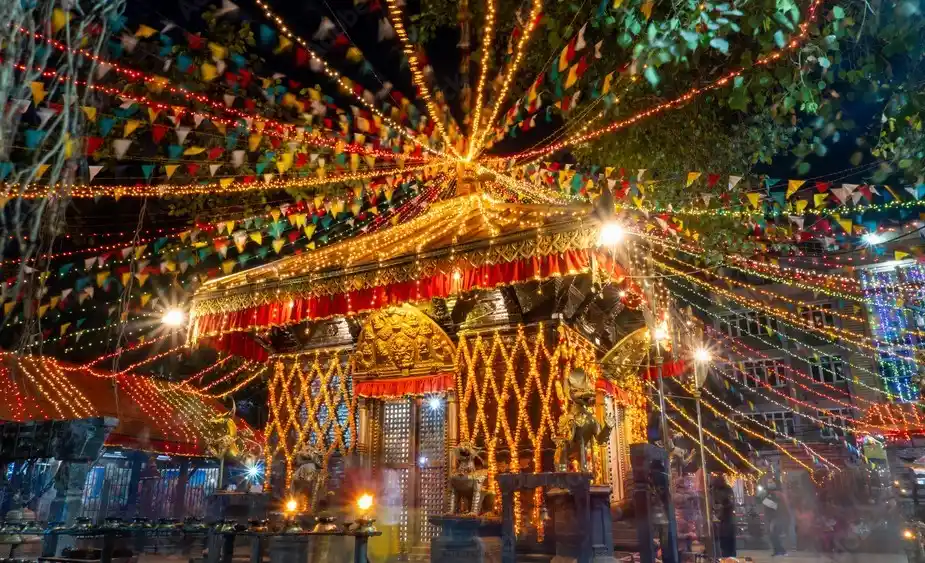
Tihar Holiday marks Nepal's second-longest and second most important Hindu festival after Dashain, celebrated over five days during Kartik month. Known as Deepawali or Yama Panchak, this Festival of Lights honors various animals as sacred messengers and culminates with Bhai Tika, a beloved sibling blessing ceremony.
History and Background
Tihar, also known as Deepawali or Yama Panchak, originated from the Hindu tradition of celebrating the triumph of good over evil and the victory of light over darkness. The festival has been celebrated for centuries as part of Nepal's rich cultural and spiritual heritage, deeply embedded in Hindu mythology and the astronomical observations of the lunar calendar. Each of the five days honors a different animal or deity, reflecting the profound Nepali belief in the sacredness of all living beings. The festival is observed across Nepal and by Nepali communities worldwide, making it one of the most far-reaching cultural expressions of Nepali identity.
Purpose of Tihar Holiday
This festival is mainly observed to:
Worship various animals including crows, dogs, cows, and oxen as messengers and divine protectors.
Honor Goddess Laxmi for wealth, prosperity, and good fortune through the illumination of homes.
Celebrate the sacred bond and gratitude between siblings, particularly through the Bhai Tika ceremony.
Invoke blessings for health, happiness, and protection from calamities throughout the year.
How is Tihar Holiday Observed?
This festival is observed through joyous rituals across five days:
Day 1 (Kag Tihar): Crows are worshipped with offerings of sweets, rice, and fruits placed on rooftops as their cawing is believed to warn of calamities.
Day 2 (Kukur Tihar): Dogs are decorated with flower garlands, tilaka marks, and offered special foods as messengers of Yama, the god of death.
Day 3 (Gai Tihar and Laxmi Puja): Cows are worshipped in the morning and homes are illuminated with oil lamps in the evening for Laxmi Puja.
Day 4 (Gobardhan Puja): Cattle are worshipped and fires are lit as symbols of guidance and divine light.
Day 5 (Bhai Tika): Sisters place seven-colored tika on their brothers' foreheads and pray for their long life, while brothers offer gifts in return.
Importance of Tihar Holiday
This festival is important for several reasons:
It represents the victory of light over darkness and good over evil in Hindu cosmology.
It strengthens family bonds and sibling relationships through rituals and gift exchanges.
It brings communities together in celebrations, feasting, and mutual respect for all living creatures.
It serves as a period of renewal, hope, and gratitude for the year's blessings.
It holds economic importance as families purchase new items, gifts, and celebrate with festivities.
Conclusion
Tihar Holiday is a radiant celebration of life, light, and love that unites Nepali communities across the world. Its unique five-day format honoring animals alongside deities reflects a deeply compassionate spiritual worldview, and its culminating Bhai Tika ceremony ensures that the bonds of family remain central to the nation's identity.