
Quick Reference Card
| Date | Third day of Tihar / Gai Tihar (November 9, 2026) |
| Duration | Single day (third of five-day Tihar festival) |
| Observance | Religious/Animal Worship |
| Celebrated in | Throughout Nepal, in homes and public spaces nationwide |
| Observing Communities | Hindu and all Nepali communities |
| Type of Event | Cattle/Cow and Ox Worship Ceremony |
| Purpose of Event | Honor cows and oxen as sacred embodiments of divine motherhood, prosperity, and agricultural sustenance |
| Holiday Status | Part of official Tihar public holiday |
| First Observed in | Ancient Hindu period; fundamental to Hindu spiritual tradition |
Quick Fact: Gaigoru Puja (Gai Tihar) is the third and most sacred day of Tihar, honoring cows and oxen. In Hindu theology, cows are considered to contain all 33 crore (330 million) deities within them, making a single act of reverence to a cow equivalent to worshipping the entire divine pantheon. The sacred Janai thread worn after Janai Purnima is traditionally tied to the cow's tail on this day, symbolically entrusting one's spiritual welfare to the sacred cow.
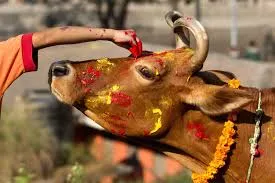
Gaigoru Puja (Gai Tihar Cow and Ox Festival) is the third and most spiritually central day of Nepal's five-day Tihar festival. On this auspicious occasion, cows (Gai) and oxen (Goru) are honored, decorated, and worshipped as sacred embodiments of divine motherhood, agricultural prosperity, and spiritual sustenance. This celebration expresses the profound Hindu reverence for the cow as both a practical provider of life-sustaining gifts and a living manifestation of divine grace.
History and Background
The cow's sacred status in Hinduism stretches back to the Vedic period, when cows were considered the most valuable possessions of early Indo-Aryan communities. The Rigveda contains numerous hymns praising cows as divine beings, and the cow is identified with Kamadhenu the divine cow of plenty who fulfills all wishes. In Hindu theology, the cow is said to house all 33 crore deities within her body, making worship of the cow equivalent to worship of the entire divine cosmos. The cow's daily gifts, milk, butter, ghee, yogurt, and even dung and urine (used for purification in ancient times) were seen as divine provisions from a sacred creature. The Mahabharata, Vishnu Purana, and other scriptures extensively document the meritorious nature of cow worship and protection. In Nepal, where the cow was the national animal until the adoption of the republic in 2008, Gai Tihar holds special national and cultural significance alongside its religious meaning. The oxen (Goru) worship aspect Goru Tihar specifically honors bulls and male cattle for their essential role in agricultural plowing and land cultivation, recognizing their vital contribution to Nepal's farming communities.
Purpose of Gaigoru Puja
This festival is mainly observed to:
Worship cows and oxen as sacred embodiments of divine motherhood, agricultural prosperity, and spiritual sustenance.
Express deep gratitude for cows' provision of milk, nourishment, and countless spiritual gifts to human communities.
Honor oxen for their indispensable role in Nepali agriculture plowing fields and enabling food production for generations.
Celebrate fertility, abundance, and nurturing qualities represented by the sacred cow in Hindu cosmology.
Strengthen spiritual bonds to ancestors through cow-related rituals including tying of the Janai thread to the cow's tail.
How is Gaigoru Puja Observed?
Gaigoru Puja is observed through colorful and reverent cattle worship ceremonies:
Cows are bathed, cleansed, and their bodies decorated with colorful tika powder, marking them as sacred divine beings for the day.
Beautiful garlands of marigold and other auspicious flowers are placed around the necks of cows and oxen.
Special sweets, grains, and nutritious foods are offered to cows as acts of thanksgiving and reverence.
The sacred Janai (white thread) worn by Hindu men since Janai Purnima is tied to the cow's tail in a symbolic ritual of ancestral connection.
Devotees prostrate before cows and touch their feet as marks of deepest reverence and gratitude.
Community gatherings celebrate both cows and oxen throughout homes and public spaces in a festive atmosphere of Tihar celebrations.
Importance of Gaigoru Puja
Gaigoru Puja is important for several reasons:
It represents the central role of the cow in Hindu spiritual and daily life a relationship built over thousands of years of shared existence.
It celebrates the divine feminine principle embodied in the cow's mothering, nurturing, and life-sustaining gifts.
It demonstrates Hindu environmental and animal welfare ethics recognizing the sacred value of creatures beyond their economic utility.
It honors the agricultural oxen whose labor has fed Nepali families and built Nepali civilization across countless generations.
It expresses gratitude for creatures who sustain human life a reminder of humanity's profound dependency on the natural world.
Conclusion
Gaigoru Puja Gai Tihar is a festival of gratitude in its purest form: the recognition that we are not self-sufficient, but deeply indebted to the creatures who nourish and sustain us. As Nepalis garland and worship their cows and oxen on this Tihar morning, they participate in one of humanity's oldest acts of thanksgiving acknowledging the sacred lives that make human civilization possible and expressing reverence for the divine gift of life in all its forms.