Falgunanda Jayanti falls on Kartik 25. In 2083, that is Wednesday, 11 November 2026.
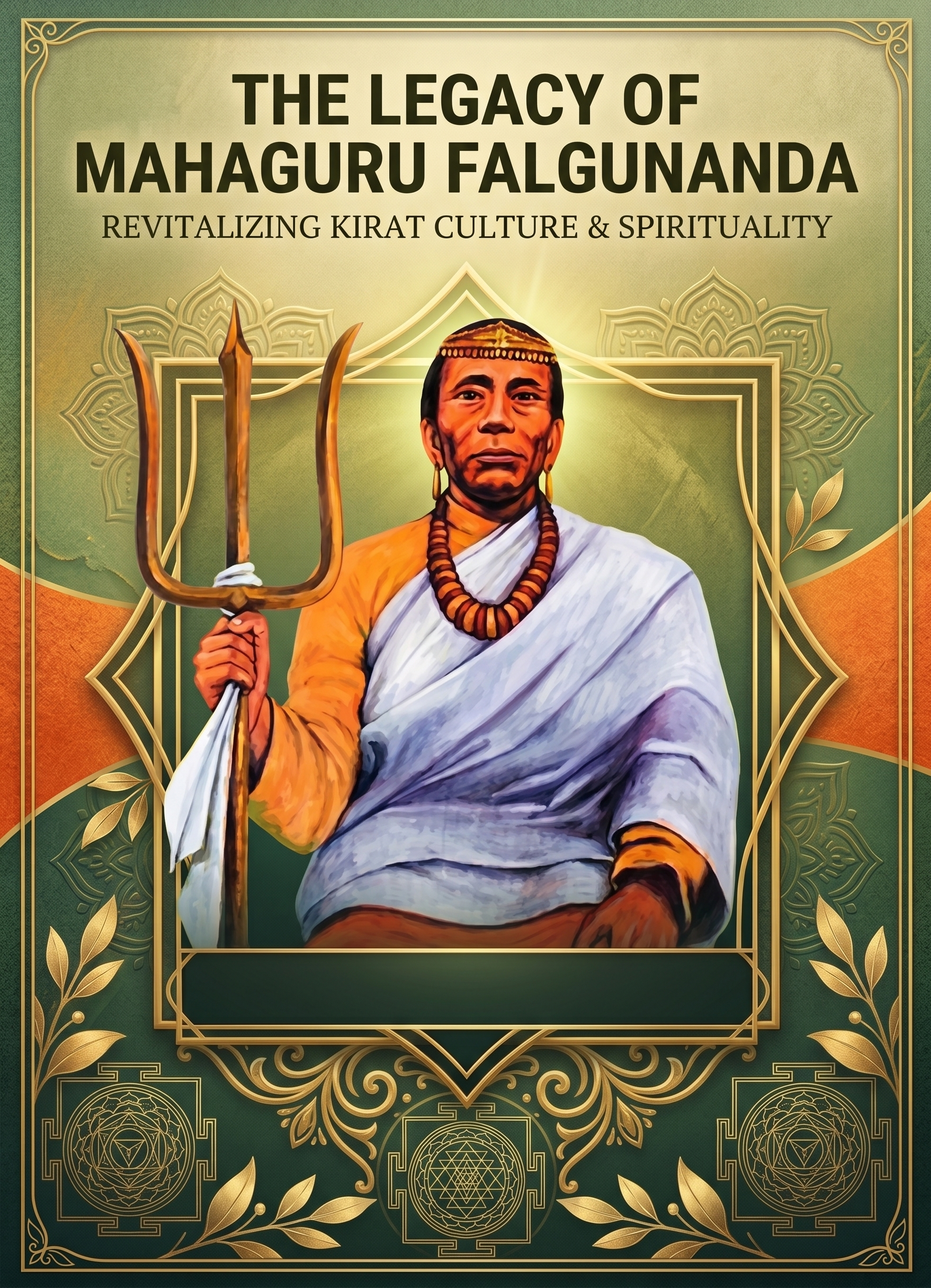
It is the birth anniversary of Mahaguru Falgunanda Lingden, the Kirat religious leader and social reformer who put the Mundhum into writing, founded the Satyahangma movement, and changed how a large part of eastern Nepal practises its own religion.
The day is a public holiday for followers of the Kirat religion. It is one of the few days on the Nepali calendar set aside for one community's own figure rather than for a festival everyone shares.
In Nepali the day is महागुरु फाल्गुनन्द जयन्ती.
|
Full name |
Mahaguru Falgunanda Lingden (महागुरु फाल्गुनन्द लिङदेन) |
|
Birth name |
Naradhwaj |
|
Born |
Kartik 25, 1942 BS, which is November 1885 |
|
Birthplace |
Chukchinamba, formerly Ibhang Ward 5, now Mangsebung Rural Municipality Ward 2, Ilam |
|
Parents |
Jagunbaj Lingden and Hansamati Begha Lingden |
|
Community |
Limbu, of eastern Limbuwan |
|
Movement founded |
Satyahangma, declared Baisakh 25, 1988 BS |
|
Script he promoted |
Srijanga, the Limbu script |
|
Died |
2005 BS, which is 1949 |
|
National luminary |
Declared Rastriya Bibhuti on Mangsir 16, 2066 BS, in 2009 |
|
Jayanti date |
Kartik 25, a fixed date every year |
|
Holiday |
Yes, for followers of the Kirat religion |
Kartik 25, every year. In 2083, that is Wednesday, 11 November 2026.
This is worth understanding, because it works differently from most days in the Tihar season.
Falgunanda was born on Kartik 25, 1942 BS, and his jayanti is marked on Kartik 25 every year. It is a fixed Nepali solar date, not a tithi. It does not follow the moon, so it does not drift the way Dashain, Tihar, or Laxmi Puja do. Kartik 25 lands on roughly the same English date each year, give or take a day.
|
Bikram Sambat |
Nepali date |
English date |
|---|---|---|
|
2082 |
Kartik 25 |
November 2025 |
|
2083 |
Kartik 25 |
Wednesday 11 November 2026 |
In 2083, Kartik 25 also happens to be [Bhai Tika](/events/national/bhai-tika), the last day of Tihar.
That is a coincidence, not a connection. Bhai Tika moves with the lunar calendar, and Falgunanda Jayanti does not, so the two only meet in some years. In 2083 they meet.
For Kirat families, the two observances simply share a day, and both are marked.
Sources differ slightly on the exact English date of his birth, giving either 8 or 10 November 1885. The Nepali date, Kartik 25, 1942 BS, is consistent across sources and is the one the jayanti follows.
Falgunanda was born in 1942 BS at Chukchinamba, in what was then Ibhang ward 5 of Ilam district and is now ward 2 of Mangsebung Rural Municipality, in Koshi Province. This is eastern Limbuwan, the Limbu homeland.
His father was Jagunbaj Lingden and his mother Hansamati Begha Lingden. They were an ordinary farming family, and he was one of the middle sons.
He was given the name Naradhwaj at birth.
There is a detail attached to it that says something about the family. Children born before him had not survived, so an iron charm was put on him as protection. The name Falgunanda came later, with his religious life.
As a young man, he left for the British Indian Army and served as a Gurkha soldier. He fought in the First World War and spent roughly a decade in British India before returning home.
That period matters. He came back to Limbuwan having seen a great deal of the world outside it, and what he did next was shaped by that.
The Mundhum is the body of Kirat oral scripture. It holds the community's cosmology, its ritual, its law and its history, and for most of its existence it lived in the memories of ritual specialists and was passed on by mouth.
Oral transmission is fragile. Falgunanda's central work was to put the Mundhum into written form.
To do it he used Srijanga, the Limbu script, and he pushed for it to be taught. Writing the Mundhum in a Limbu script rather than in Devanagari was a choice with weight behind it. It meant the community's scripture was preserved in the community's own letters.
On Baisakh 25, 1988 BS, Falgunanda declared what is known as the Satya Dharma Muchulka, also called the Satyahangma Muchulka. It is the founding document of the Satyahangma movement.
Satyahangma became the vehicle for the reformed Kirat religion, and it drew large numbers of followers across the Kirat communities of eastern Nepal.
Falgunanda was a reformer as much as a religious leader, and his changes were not small ones.
Taken together, these were an argument that a community could reform its own practice from the inside, on its own terms, without giving up its identity. That is why he is remembered as a social reformer and not only as a religious figure.
Falgunanda died in 2005 BS, which is 1949.
Sixty years later, on Mangsir 16, 2066 BS, corresponding to 2009, the Government of Nepal declared him a Rastriya Bibhuti, a national luminary. He is counted as Nepal's sixteenth.
The recognition came in the years after 2006, when the state was reconsidering whose history it represented. Naming a Limbu religious reformer from Ilam as a national figure was part of that wider reckoning, and for Kirat communities it was a long overdue acknowledgement.
A full-length statue of him has since been unveiled, and schools, institutions and community organisations carry his name.
The Kirat are a group of indigenous peoples of eastern Nepal, including the Limbu, Rai, Yakkha and Sunuwar communities. The Kirat religion, sometimes called Kirat Mundhum, is their own faith tradition, distinct from Hinduism and Buddhism, though it has lived alongside both for centuries.
Its scripture is the Mundhum. Its practice centres on ancestors, on nature, and on ritual specialists who carry the oral tradition.
Falgunanda's place in it is as the figure who reformed and codified the modern practice. That is why the title Mahaguru, great teacher, is his.
Kirat communities also keep their own festivals through the year, including Sakela and Chasok Tangnam, which sit on their own calendar alongside the national ones.
The jayanti is observed mainly by Kirat communities and organisations in eastern Nepal, in Kathmandu and among Kirat communities abroad.
The day brings community gatherings and processions, programmes at Satyahangma centres and Kirat organisations, readings and discussion of the Mundhum, speeches on his reforms, and traditional Limbu and Kirat music and dance. Wreaths are laid at his statues.
It is a public holiday for followers of the Kirat religion, which is how Digital Patro's calendar marks it: महागुरु फाल्गुनन्द जयन्ती (किराँत धर्मावलम्बीहरूलाई मात्र).
When is Falgunanda Jayanti 2083?
Kartik 25, which in 2083 is Wednesday 11 November 2026.
Does the date change every year?
No. It is fixed at Kartik 25 in the Nepali calendar, because that is the date he was born. It does not follow the moon, so it does not drift the way the Tihar days do.
Why does it fall on Bhai Tika in 2083?
Coincidence. Bhai Tika moves with the lunar calendar and Falgunanda Jayanti is a fixed Kartik 25, so they meet only in some years. In 2083 they land on the same date.
Who was Mahaguru Falgunanda?
A Limbu religious leader and social reformer from Ilam who put the Kirat Mundhum into written form, founded the Satyahangma movement, and ended animal sacrifice in Kirat religious practice.
When and where was he born?
Kartik 25, 1942 BS, which is November 1885, at Chukchinamba in Ilam. The place was then Ibhang ward 5 and is now ward 2 of Mangsebung Rural Municipality in Koshi Province.
What was his birth name?
Naradhwaj. The name Falgunanda came later, with his religious life.
Who were his parents?
Jagunbaj Lingden and Hansamati Begha Lingden, a farming family.
Was he a soldier?
Yes. As a young man, he served as a Gurkha soldier in the British Indian Army and fought in the First World War, spending about a decade in British India before returning home.
What is the Mundhum?
The body of Kirat scripture, holding the community's cosmology, ritual, law, and history. It existed as an oral tradition, carried by ritual specialists, before Falgunanda's work.
What did Falgunanda do with the Mundhum?
He put it into written form, using the Srijanga script rather than Devanagari, and pushed for that script to be taught.
What is the Srijanga script?
The Limbu script. Falgunanda used it for writing the Mundhum and campaigned for it to be taught, so that the community's scripture stayed in the community's own letters.
What is Satyahangma?
The movement he founded. He declared the Satya Dharma Muchulka, also called the Satyahangma Muchulka, on Baisakh 25, 1988 BS, and it became the vehicle for the reformed Kirat religion.
What reforms did he introduce?
He ended animal sacrifice in Kirat religious practice, promoted vegetarianism, opposed alcohol, and pushed for education and the teaching of the Limbu script.
When did he die?
In 2005 BS, which is 1949.
Is he a national luminary?
Yes. The Government of Nepal declared him a Rastriya Bibhuti on Mangsir 16, 2066 BS, corresponding to 2009. He is counted as Nepal's sixteenth.
Who are the Kirat?
Indigenous peoples of eastern Nepal, including the Limbu, Rai, Yakkha and Sunuwar communities. The Kirat religion, sometimes called Kirat Mundhum, is their own faith tradition.
What does Mahaguru mean?
Great teacher. It is the title given to Falgunanda for his place in reforming and codifying modern Kirat religious practice.
Is Falgunanda Jayanti a public holiday?
Yes, for followers of the Kirat religion. Digital Patro's calendar marks it as किराँत धर्मावलम्बीहरूलाई मात्र, for followers of the Kirat religion only.
How is the day marked?
With community gatherings and processions, programmes at Satyahangma centres and Kirat organisations, readings and discussion of the Mundhum, speeches on his reforms, traditional Limbu and Kirat music and dance, and wreath-laying at his statues.
What other Kirat festivals are there?
Sakela and Chasok Tangnam are among the main ones, kept on the Kirat calendar alongside the national festivals.
What else falls on Kartik 25 in 2083?