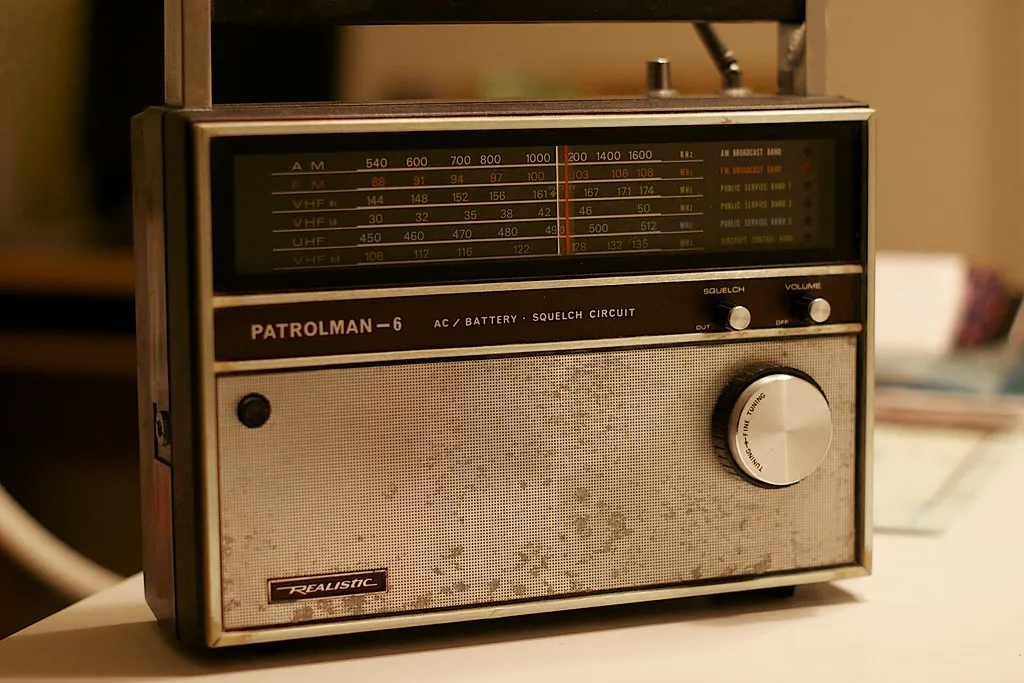
World Radio Day is celebrated every year on 13 February to honor radio as one of the most dependable and widely accessible communication media. It recognizes radio’s ability to inform, educate, and entertain audiences across different regions and social groups. Despite the growth of digital media, radio continues to be a trusted source of information for millions of people worldwide.
|
Date: |
13 February |
|
First Radio Invention: |
1895 by Guglielmo Marconi |
|
Established By: |
United Nations Educational, Scientific, and Cultural Organization(UNESCO) |
|
Headquarters: |
Paris, France |
|
First officially observed: |
2012 |
|
Type of Events: |
International Awareness Day |
|
Observance: |
International |
|
Observed By: |
Radio broadcasters, media organizations, governments, educational institutions, and listeners worldwide |
|
Celebrated in: |
Globally |
|
Why this day? |
Commemorates the establishment of United Nations Radio on 13 February 1946 |
|
Purpose: |
To recognize the importance of radio in information, education, and cultural diversity |

World Radio Day was proclaimed by UNESCO in 2011 and later endorsed by the United Nations General Assembly. The date marks the establishment of United Nations Radio on 13 February 1946, which was created to share news and promote international understanding. The day was introduced to acknowledge radio’s contribution to global communication and development.
The invention of radio was a gradual process involving multiple pioneers:
James Clerk Maxwell (1860s): Predicted the existence of electromagnetic waves.
Heinrich Hertz (1887): Proved the existence of radio waves through experiments.
Guglielmo Marconi (1895–1901): Developed the first practical wireless telegraphy system and is often credited as the “father of radio.”
Reginald Fessenden (1906): Achieved the first audio broadcast, transmitting music and voice over radio waves.
Over time, radio evolved from simple wireless telegraphy to voice broadcasting, FM radio, satellite radio, and today’s digital and internet-based streaming platforms, becoming a vital communication tool worldwide.
The purpose of World Radio Day is to raise awareness about the value of radio in society and to encourage access to information for all. It aims to support freedom of expression, promote media diversity, and strengthen community and public service broadcasting. The observance also encourages governments and media institutions to recognize radio as a vital tool for education and social inclusion.
Each year, World Radio Day is celebrated with a specific theme selected by UNESCO. These themes focus on global issues such as peace, climate change, diversity, gender equality, and trust in the media. The annual theme encourages broadcasters to create responsible and impactful content that addresses existing social challenges.
Here are recent themes:
|
2013 |
Radio in the first half of the 20th century |
|
2014 |
Gender equality in radio |
|
2015 |
Youth and radio |
|
2016 |
Radio in Times of Disaster and Emergency |
|
2017 |
The Radio Is You |
|
2018 |
Radio and Sports |
|
2019 |
Dialogue, Tolerance, and Peace |
|
2020 |
Diversity |
|
2021 |
New World, New Radio |
|
2022 |
Radio and Trust |
|
2023 |
Radio and Peace |
|
2024 |
Radio: A Century of Informing, Entertaining and Educating |
|
2025 |
Radio and Climate Change |
These themes encourage broadcasters to produce content that is socially responsible, inclusive, and responsive to current global challenges.
Despite its continued relevance, radio faces several challenges today. These include financial limitations, declining advertising revenue, competition from digital media platforms, and political pressure in some regions. In developing areas, limited access to modern technology further restricts radio’s growth. Addressing these challenges is essential to ensure radio’s independence and sustainability.
Radio plays a significant role in preserving cultural identity by promoting local languages, music, and traditions. It fosters social connection by giving communities a voice and encouraging public participation. Radio also supports education, health awareness, and disaster communication, making it an essential medium for social development.
In the modern era, radio has adapted to technological advancements through online streaming, podcasts, and mobile applications. Its simplicity, affordability, and reliability make it especially valuable during emergencies and natural disasters. These qualities ensure that radio remains relevant and widely trusted in today’s media landscape.
Individuals and organizations can participate in World Radio Day by listening to radio programs, supporting local and community stations, and promoting awareness through social media. Broadcasters can organize special shows, discussions, and interviews that highlight radio’s importance and ethical journalism.
World Radio Day serves as a reminder of radio’s enduring power as a medium that informs, educates, and connects people across the globe. As communication technologies continue to evolve, supporting radio ensures that information remains inclusive, accessible, and reliable for future generations.
"Radio doesn’t just broadcast sound—it broadcasts knowledge, culture, and the power to unite people everywhere"