
| Date | Shravan Shukla Purnima (Full Moon, August 28) |
| Duration | Single day (full moon timing) |
| Observance | Religious and cultural festival |
| Celebrated in | Across Nepal and India; pilgrimage to Gosaikunda Lake |
| Observing Communities | Brahmins, Chhetris, Newars, and all Hindu communities |
| Type of Event | Full moon festival and sacred thread ceremony |
| Purpose of Event | Change sacred thread (Janai), perform ritual bathing, and celebrate spiritual renewal through Lord Vishnu and Shiva's blessings. |
| Holiday Status | Yes — Official public holiday in Nepal |
| First Observed in | Vedic period (recorded in ancient Hindu texts) |
Quick Fact: Jya Punhi (Janai Purnima) draws 20,000 to 40,000 pilgrims annually to Gosaikunda Lake at 4,380 meters elevation in the Langtang region, one of the highest-altitude sacred pilgrimage sites in the world. On this day, Brahmin and Chhetri men change their sacred thread (Janai), and Newar communities prepare Kwati, a nutritious sprouted bean soup unique to this festival.
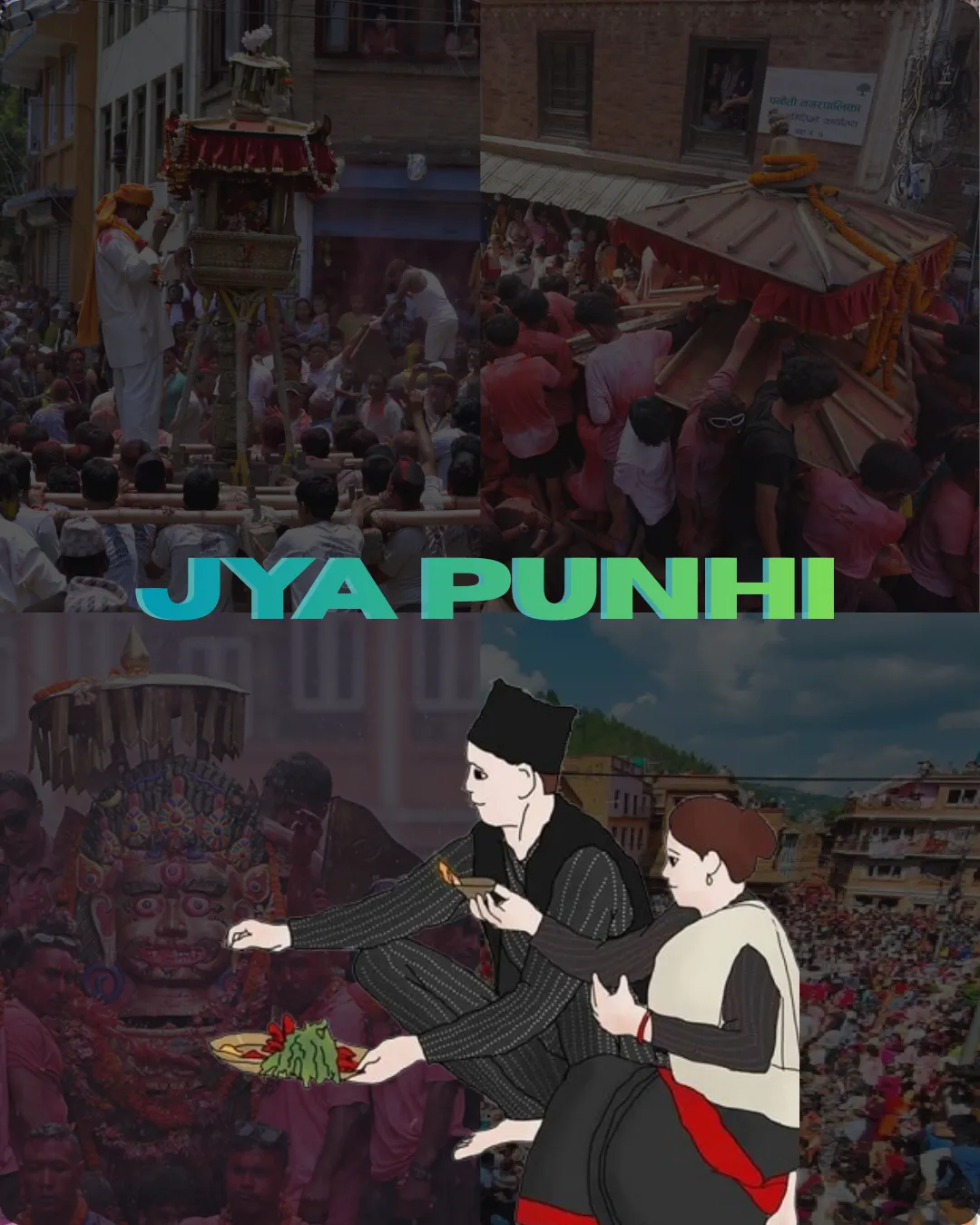
Jya Punhi, known widely as Janai Purnima, is one of Nepal's most sacred and spiritually significant festivals. Observed on the full moon day of the Shravan month, it marks the annual renewal of the sacred thread (Janai) worn by Brahmin and Chhetri men, and draws tens of thousands of pilgrims to the holy Gosaikunda Lake high in the Himalayas. For the Newar community, the same full moon is celebrated as Gunhi Punhi, marked by the preparation and sharing of Kwati soup. This is an official public holiday in Nepal, reflecting its nationwide importance across communities.
Janai Purnima is rooted in Vedic traditions dating back thousands of years. According to Hindu mythology, Lord Indra received a protective thread (Janai) from his wife Sachi before battling the demon king Bali, this divine thread gave him the strength and protection needed for victory. The sacred thread itself consists of three cords representing the three aspects of human existence: body, speech, and mind. Men of Brahmin and Chhetri communities change their old Janai for new ones, symbolically shedding past impurities and beginning a cycle of spiritual renewal. In the Newar community, the same festival is celebrated as Gunhi Punhi with the preparation of Kwati, a sprouted bean soup combining nine types of beans representing abundance and vitality.
This festival is observed to:
Change the sacred thread (Janai) for spiritual renewal and purification of body, speech, and mind.
Seek divine protection and blessings from Lord Vishnu and Lord Shiva for the year ahead.
Celebrate spiritual advancement and affirm one's commitment to dharmic living.
Perform ritual bathing in sacred waters (rivers, lakes, and springs) for physical and spiritual cleansing.
Jya Punhi is observed through sacred rituals and community celebrations:
Ritual bathing (snan) in sacred rivers, ponds, or high-altitude lakes before dawn for spiritual purification.
Brahmin and Chhetri men change their old Janai with a new sacred thread received from a priest (purohit).
Worship of Lord Vishnu and Lord Shiva at temples across Nepal with flowers, incense, and prayers.
Mass pilgrimage to Gosaikunda Lake (4,380 m) where 20,000-40,000 devotees gather for sacred bathing.
Preparation and sharing of traditional Kwati soup (nine-bean sprouted soup) in Newar households.
Jya Punhi is one of Nepal's most important religious observances:
It is a major religious event connecting Nepali communities with ancient Vedic traditions of purity and renewal.
It represents one of the most visible expressions of spiritual renewal in Hindu society.
It fosters community bonds through shared celebration, pilgrimage, and traditional food culture.
The sacred pilgrimage to Gosaikunda, one of the highest-altitude pilgrimages in the world, attracts tens of thousands annually.
It is an official public holiday recognized by the Government of Nepal, affirming its national significance.
Jya Punhi (Janai Purnima) is a festival of threads the sacred thread that links a devotee to dharma, the thread of community that binds people together, and the thread of tradition that connects generations across time. Whether high on the slopes of Gosaikunda or in the courtyards of Kathmandu, this full moon day reminds every Nepali of their commitment to purity, renewal, and the eternal blessings of the divine.