
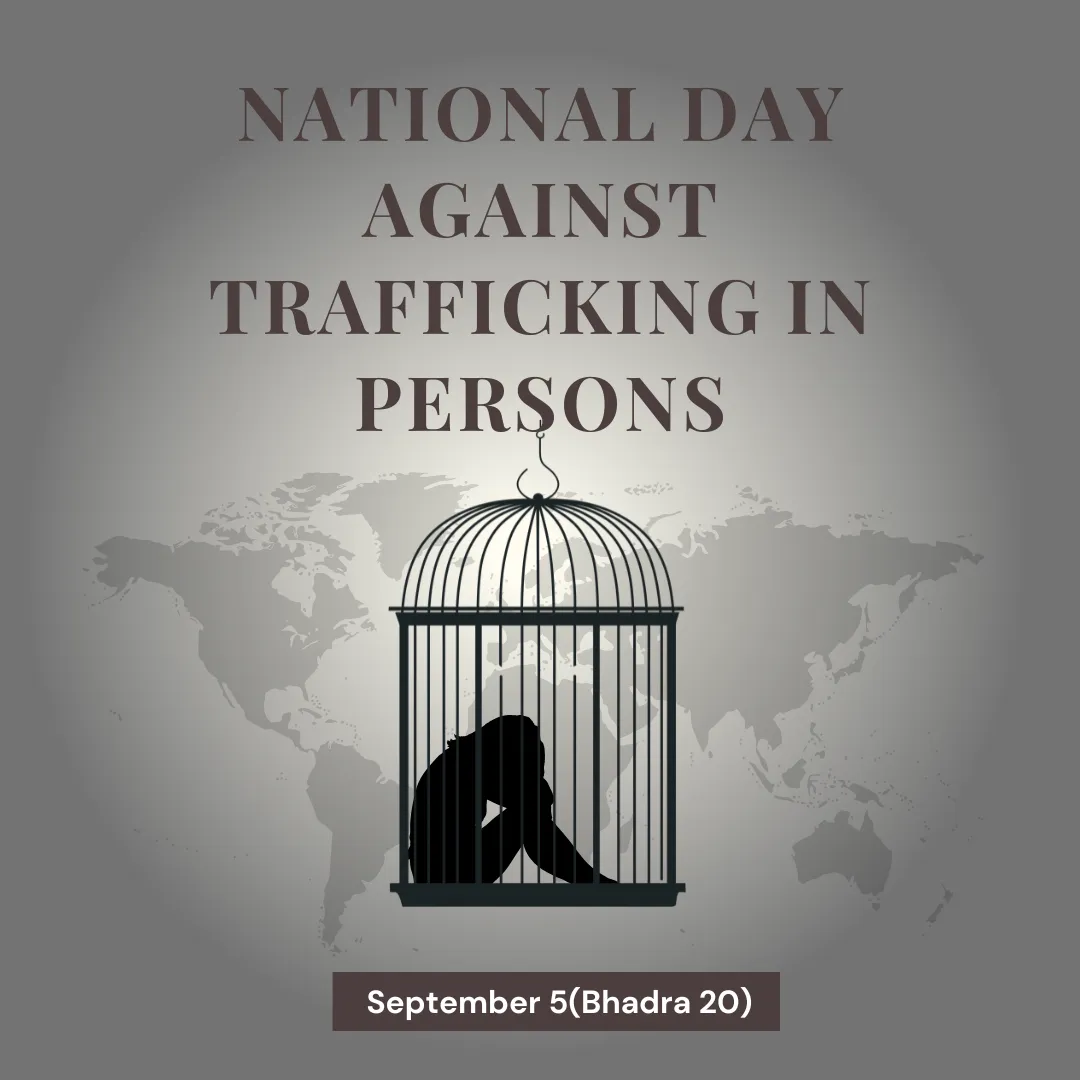
The National Day Against Trafficking in Persons is observed in Nepal every year on September 5(Bhadra 20) to raise awareness about one of the country’s most pressing human rights issues. This day highlights Nepal’s commitment to preventing human trafficking, protecting victims, and ensuring justice for those affected. Through government-led programs, community initiatives, and public engagement, the day serves as a reminder of the country’s ongoing efforts to combat exploitation and promote social responsibility.
| Aspect | Details |
| Event Name | National Day Against Trafficking in Persons |
| Nepali Name | राष्ट्रिय मानव बेचबिखन विरुद्ध दिवस |
| Gregorian Date | September 5 |
| Nepali Date | Bhadra 20 |
| Country | Nepal |
| Established Under | Human Trafficking and Transportation Control Act, 2064 |
| Type | National awareness observance |
| Government Lead | Ministry of Women, Children and Senior Citizens |
| Main Focus | Prevention, protection, prosecution, rehabilitation |
| Holiday status | Not a public holiday |
The National Day marks the approval of the Human Trafficking and Transportation (Control) Act, 2064 (2007/08) by Nepal’s Parliament. This law provides the main legal foundation for preventing and combating human trafficking in Nepal. It defines trafficking crimes, outlines penalties, and emphasizes protection and rehabilitation of survivors.
By designating September 5 as a national observance, Nepal institutionalised a day for reflecting on progress, mobilising action, and raising awareness about trafficking issues within the country.
Human trafficking in Nepal has historically been driven by structural vulnerabilities such as poverty, limited opportunities, and migration pressures. Nepal’s open border with India and demand for cheap labour abroad have made its citizens, especially women and children, vulnerable to exploitation. Internal trafficking and rural‑to‑urban migration add further complexities to the issue.
Traffickers often exploit economic desperation, offering false promises of employment or education that turn into forced labour, sexual exploitation, or debt bondage. Despite long‑standing challenges, Nepal has taken significant steps to tackle trafficking through laws, institutions, public programs, and partnerships with civil society.
Nepal has recorded progress in many areas related to trafficking prevention and response. Some of the most significant developments in recent years include:
Nepal’s primary anti‑trafficking law, the Human Trafficking and Transportation (Control) Act, 2064, has provided a strong legal basis for defining trafficking, penalising offenders, and protecting victims. Under this law, traffickers are prosecuted, and penalties have been strengthened. The law’s enactment also made Nepal’s efforts more structured and enforceable.
According to official data, Nepal Police and related agencies rescued more than 4,400 trafficking victims through formal rehabilitation and community interventions in 2081/82. This includes foreign and domestic cases, and support such as shelter, counselling, and reintegration services have been provided to hundreds of survivors.
The Government of Nepal has empowered anti‑trafficking units within Nepal Police and border security to conduct targeted operations. These units have been instrumental in intercepting trafficking attempts and rescuing victims before exploitation. Over the past five years, authorities rescued more than 1,600 individuals in trafficking‑related operations, including women and children.
Several municipalities across Nepal, such as Sanfebagar in Sudurpashchim, Shivapuri in Bagmati, and Bhadrapur in Koshi Province, have adopted local laws or policies to prevent trafficking and assist survivors. Local governments are increasingly incorporating anti‑trafficking measures into their development and social protection agendas.
Bagmati Province has formulated a dedicated provincial policy to combat human trafficking and protect victims, aligning provincial efforts with national goals.
Civil society organisations continue to play a vital role in awareness, prevention, and survivor support. Many groups organise community workshops, school programs, and awareness campaigns, especially in high‑risk districts.
Despite progress, several important challenges persist in Nepal’s fight against trafficking:
Poverty, unemployment, and lack of economic opportunities continue to push people toward risky migration and exploitation. Many families still fall prey to traffickers who promise jobs abroad or in urban centres.
Only a fraction of trafficking cases are formally reported or documented. Many survivors do not come forward due to fear, stigma, or lack of access to legal mechanisms.
Open border areas, especially with India, remain vulnerable points for trafficking. Networks continue to exploit weak surveillance and informal migration routes.
While the legal framework exists, civil society and human rights advocates continue to call for clearer and more comprehensive definitions, stronger protections, and improved implementation at all levels.
Long‑term reintegration remains a challenge. Survivors often need skills training, education support, psychosocial counselling, and economic opportunities to rebuild their lives. Many reintegration services are still limited or underfunded.
Observances include:
Government-led programs and policy discussions
Awareness rallies in Kathmandu and other major cities
School and community education programs
Media campaigns and social media awareness
Collaboration with NGOs and civil society
The Ministry of Women, Children, and Senior Citizens typically coordinates national-level programs.
The National Day Against Trafficking in Persons plays an important role in Nepal’s social and human rights landscape. It:
Raises awareness in high‑risk communities
Encourages victims and families to seek support
Strengthens collaboration among government bodies, police, NGOs, and civil society
Highlights both progress and gaps in national anti‑trafficking initiatives
Reinforces Nepal’s legal and moral responsibility toward vulnerable populations
By observing this day every year, Nepal reinforces its dedication to protecting its citizens and preventing future exploitation.
Nepal has made meaningful progress in combating human trafficking through improved laws, dedicated rescue and rehabilitation efforts, strengthened enforcement, and increased community awareness. However, the threat persists due to complex socio‑economic factors, cross‑border vulnerabilities, and gaps in reporting and survivor support.
The National Day Against Trafficking in Persons is not just a date on the calendar. It is a day of reflection, education, and renewed determination. This observance unites government leaders, civil society, and everyday citizens in a shared mission: to protect the dignity, freedom, and future of every Nepali, and to work steadily toward a trafficking‑free Nepal.