
Quick Reference Card
| Date | Ashadh 15, 2083 BS (June 29, 2026) |
| Duration | 1–2 days |
| Observance | Agricultural festival |
| Celebrated in | Rice-farming communities throughout Nepal (particularly valley regions) |
| Observing Communities | Farmers, agricultural communities, general population |
| Type of Event | Seasonal agricultural celebration |
| Purpose of Event | To celebrate the commencement of the rice planting season, seek blessings for an abundant harvest, and honor the earth and the farming communities whose labor sustains Nepal's civilization. |
| Holiday Status | Not an official public holiday (widely observed cultural celebration) |
| First Observed in | Pre-modern agricultural tradition |
Quick Fact: Ropai Jatra (also known as Ropain or Chopai Jatra in different regions) celebrates the sacred moment when Nepali farmers begin transplanting rice seedlings into flooded paddies on the fifteenth day of Ashadh month. This agricultural festival transforms labor into celebration with farmers singing traditional songs, playfully splashing mud, and honoring the earth goddess as they perform one of the most important tasks of the agricultural year.
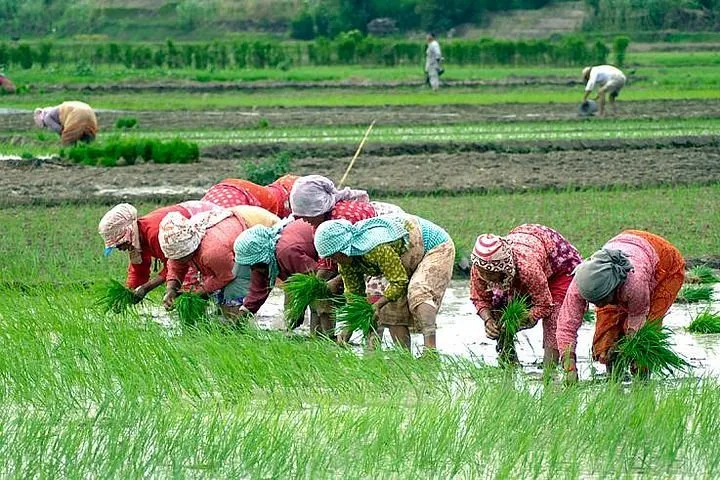
Ropai Jatra is Nepal's joyful agricultural festival celebrating the beginning of the rice planting season, observed on the fifteenth day of Ashadh month (June-July in the Gregorian calendar) when Nepali farmers begin the critical task of transplanting rice seedlings into flooded paddies. Known by different names across Nepal's diverse communities Ropain, Chopai Jatra, Sina Jya Jatra (Newari) this celebration transforms agricultural labor into a joyful communal ritual, honoring the sacred relationship between human beings, the earth, and the food that sustains civilization.
History and Background
Ropai Jatra has its roots in Nepal's ancient agricultural civilization, where rice cultivation has been the foundation of sustenance and culture for thousands of years. The fifteenth of Ashadh is traditionally observed as the auspicious day to begin transplanting rice seedlings, as it marks an optimal point in the monsoon season when soil conditions favor the delicate young plants. In the Kathmandu Valley, the observance has historically included ceremonial planting by royalty and noble families to symbolically sanctify the agricultural season. The tradition reflects the Hindu understanding of agriculture as a sacred covenant with the earth goddess (Prithvi) and the agricultural deities who govern harvest outcomes. Community cooperation in rice planting—with neighbors helping each other across fields embodied the collective spirit that Ropai Jatra continues to celebrate.
Purpose of Ropai Jatra
This agricultural festival is observed to:
Celebrate the commencement of the agricultural planting season with joy and community spirit.
Seek blessings from earth goddesses and agricultural deities for an abundant and successful harvest.
Honor the earth and acknowledge the sacred human dependence on agriculture and nature.
Foster community cooperation and collective spirit in farming activities.
How is Ropai Jatra Observed?
Ropai Jatra is celebrated through a vibrant combination of ritual and festive activities:
Ceremonial Planting: Farmers gather in rice fields for ceremonial first planting of the season.
Traditional Music: Folk songs celebrating agricultural work, rainfall, and earth's abundance fill the air.
Mud Play: Playful splashing and application of mud among participants, representing joyful earth connection.
Ritual Offerings: Offering of flowers, rice, and food to earth goddess and agricultural deities at field boundaries.
Community Feasts: Shared meals with traditional foods celebrating the agricultural community's spirit.
Street Processions: Decorated carts, traditional attire, and community parades marking the festive occasion.
Importance of Ropai Jatra
Ropai Jatra carries deep significance for Nepali communities:
It celebrates agriculture as the living foundation of Nepali civilization and cultural identity.
It demonstrates profound respect for the earth, the monsoon rains, and the natural agricultural cycles.
It strengthens community bonds through shared agricultural labor transformed into collective celebration.
It acknowledges and honors the crucial role of farming communities in sustaining national food security.
It preserves indigenous agricultural knowledge, practices, and the cultural wisdom embedded in traditional farming.
Conclusion
Ropai Jatra beautifully captures the Nepali spirit of finding celebration in labor, gratitude in toil, and community in shared effort. By transforming the planting of rice into a joyful cultural festival, Nepali agricultural communities affirm that the work of feeding a nation is sacred work worthy of song, ritual, and collective joy. This ancient tradition keeps alive the profound connection between human beings and the fertile earth that sustains all life.